How to Create High-Volume AI UGC Ads That Convert
TL;DR
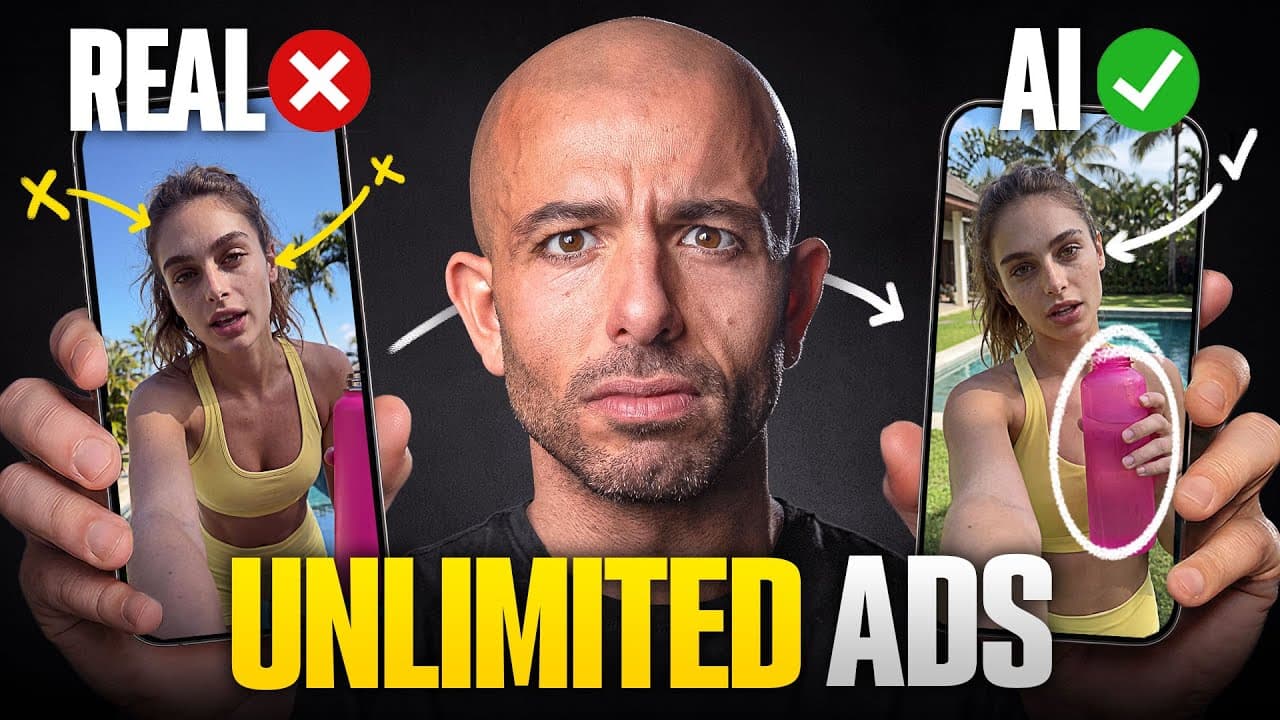
Create AI UGC ads by designing a demographic-matched influencer, collecting proven organic content from your niche, and using those examples to guide original scripts. Combine multiple hooks with two or three body-copy variations, generate the videos, and continually test the resulting ads on the platform they were written for.
Transcript
This is an AI influencer, and I'm going to show you the exact step-by-step process of how to create one for yourself in under an hour. Nothing converts better than UGC ads. And thanks to AI, you can now create 50 new ads every single day. By the end of this video, you will have the exact tools, scripts, and hooks to go out there and create ads that... Read More
Key Insights
- Audience matching is central to the avatar strategy because an influencer with the target customer's age, ethnicity, and accent creates a recognizable pattern match. The presenter recommends developing separate avatars for different age groups and targeting each character toward its corresponding demographic.
- A realistic AI influencer starts with a highly specific image prompt that describes the character, desired native phone-camera appearance, and 9:16 vertical format. Giving the character a name also makes future prompting easier because the same named identity can be referenced across additional advertisements.
- Visual authenticity depends on choosing candid output rather than an image that looks overly stylized or artificial. After selecting the strongest portrait, the workflow places it into a natural scene and uses that scene as the starting frame for generating the influencer's video.
- The biggest scripting mistake is asking an AI model to create a UGC advertisement from only a product description. The recommended process first supplies examples of organic content that already achieved strong views or engagement, giving the model concrete patterns on which to ground original scripts.
- Organic content research begins with bullseye keywords related to the exact market, product, and category. TikTok and Instagram Reels provide examples to evaluate, while the Sort Chrome extension helps rank a creator's posts by views and engagement for more systematic discovery.
- A dedicated research account can improve continuous content discovery by interacting only with material related to the products being promoted. Its feed then becomes a recurring source of relevant examples, supporting an ongoing swipe-file process rather than a one-time search.
- A useful swipe file contains both full transcripts and links to the original posts. The transcripts reveal the language and structure, while the links preserve context such as the setting and presentation, giving script development a clearer starting point without directly copying creators.
- Creative volume comes from combining many hooks with a smaller number of body-copy variations. The presenter suggests roughly 15 hooks and two or three bodies, which can create hundreds of combinations and support production of as many as 500 ads per month through a repeated process.
Install to Summarize YouTube Videos and Get Transcripts
Explore YouTube Video Summarizer or Get YouTube Transcript Extractor
Questions & Answers
Q: How do you create an AI influencer for UGC ads?
Start by asking Claude for a detailed prompt describing a hyper-realistic influencer who matches the target demographic. Specify traits such as age and ethnicity, request a candid phone-camera look, and use a 9:16 vertical format. Generate the static portrait with Nano Banana Pro in Higgsfield, choose the most natural result, create a native-looking scene, and use that scene as the video's starting frame.
Q: Why should an AI influencer match the target demographic?
An avatar should match the intended customer's age, ethnicity, and accent because the presenter says this creates a pattern match for viewers. People are more likely to recognize the character as someone like themselves, which can improve resonance and conversion. The recommended approach is to build separate avatars for distinct age groups and direct each advertisement toward the matching audience segment.
Q: How do you find proven ideas for AI UGC advertisements?
Search TikTok and Instagram Reels with a bullseye keyword closely tied to the market, then repeat the process using the specific product and category. Review top-performing posts, investigate creators who publish related content, and use the Sort Chrome extension to rank their posts by views and engagement. Save strong examples in a spreadsheet for later scripting and production research.
Q: Why is a generic AI prompt ineffective for UGC ad scripts?
A request such as providing only a product and asking for a UGC-style advertisement gives the model little evidence about what already resonates in that niche. The recommended workflow grounds script generation in transcripts from successful organic posts, product details, a buyer avatar, and a call to action. This produces scripts informed by demonstrated content patterns instead of relying on a vague request.
Q: How do you build a swipe file for UGC advertising?
Collect links to high-performing TikTok and Instagram content in a spreadsheet, including posts found through product, category, and market keywords. Use a transcription service such as Talk Script to capture what each creator said, then store those transcripts in a separate working document. Retaining both the words and original links preserves the script patterns, visual setting, and presentation context for future inspiration.
Q: How should proven organic content be used without copying creators?
Treat proven posts as research material rather than scripts to reproduce word for word. Supply their transcripts to Claude alongside your product information, buyer avatar, and desired call to action, then request original variations in styles suited to YouTube, TikTok, and Instagram Reels. The goal is to borrow useful structural patterns and hook ideas while writing distinct advertising content for your own product.
Q: How can multiple AI UGC ad variations be produced efficiently?
Generate a large selection of hooks, then create two or three versions of the body copy that explain and sell the product. Pairing roughly 15 hooks with those body variations and generated video assets creates hundreds of possible combinations. The presenter says this repeated workflow can produce 500 advertisements per month, providing enough volume for continuous creative testing rather than relying on one advertisement.
Q: Where should AI influencer content be used and tested?
Test multiple influencer and creative variations through Facebook or Meta ads to determine which versions convert best. Match the script style to its destination, using TikTok-style hooks for TikTok ads and Instagram Reels patterns for Instagram or Meta placements. The same influencer assets can also appear on landing pages, in email flows, retargeting ads, and video sales letters to humanize the wider funnel.
Summary & Key Takeaways
-
The workflow begins by creating a named, hyper-realistic influencer whose age, ethnicity, accent, and appearance match the intended audience. Claude generates the image prompt, Nano Banana Pro creates the static portrait, and Higgsfield places that character into a natural scene before turning the starting frame into video.
-
Effective scripts start with research rather than a generic request for AI-written advertising. Search TikTok and Instagram Reels using specific market and product keywords, sort creator content by views and engagement, save promising examples and links in a spreadsheet, and transcribe their dialogue to build a reusable swipe file.
-
The swipe file becomes inspiration for original scripts, not material to copy directly. Give Claude the proven transcripts, product information, buyer avatar, and call to action, then request five platform-appropriate variations. Combining about 15 hooks with two or three body-copy versions can produce hundreds of testable ad combinations.
Read in Other Languages (beta)
Share This Summary 📚
Summarize YouTube Videos and Get Video Transcripts with 1-Click
Try YouTube Summary with ChatGPT & Claude or YouTube Transcript Generator
Explore More Summaries from Sabri Suby 📚
Summarize YouTube Videos and Get Video Transcripts with 1-Click
Try YouTube Summary with ChatGPT & Claude or YouTube Transcript Generator