How to Use Trust Engineering in Meta Ads
TL;DR
Trust engineering across ads, proof, and branded search is essential. Build an army of ads with diverse angles, create strong proof on multiple platforms, and align your funnel with a parallel branded search experience. This approach reduces skepticism and speeds conversions by saturating proof across channels.
Transcript
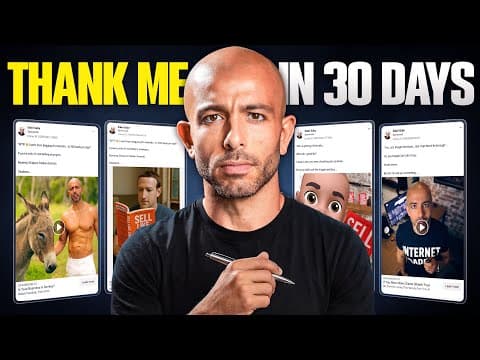
Look at these four ads. All from the same brand. They are just one piece of a four brand empire. A Norwegian brandhouse called Air Holistic. And all four brands run the same playbook. Right now they are running 12,928 live ads and driving 1.5 million clicks a month. And almost none of it works for the reason that you'd think. And today I'm going to... Read More
Key Insights
- Trust is earned through a multi channel proof system, not a single claim. The second click, branded search, validates claims across platforms your audience uses. An army of ads outruns a single viral hit by covering more customer intents. Diversifying creatives helps reach different micro audiences and reduce fatigue. Real proof on external platforms is crucial for trust in a noisy internet.
- The brand uses a large library of ads with different angles to “attack every paypoint,” ensuring there is content for various customer states and objections. This approach is designed to preempt skepticism before a sale.
- Landing pages that emphasize social proof, guarantees, and risk reversal convert more reliably by emphasizing outcomes and third party validation. The proof stack includes customer results, media coverage, and independent endorsements.
- The concept of the Google sniff test describes how buyers verify claims by researching the brand online across platforms, not just reading an ad. This drives the need for consistent, verifiable messaging.
- Advertorials and native style pages extend the trust signal beyond product claims, blending editorial credibility with direct sales copy to improve perceived legitimacy.
- The speaker recommends using static ads for scalable testing, then converting the best performers into high end video style assets (VSSLs) to maximize engagement without sacrificing breadth.
- A parallel funnel is created by deliberate content across platforms, so users encounter consistent story lines, proofs, and guarantees even if they do not click the first ad.
- The overall strategy treats TikTok and other platforms as a trust network, where daily proofs from micro influencers overwhelm skepticism and build durable brand equity.
- More videos from this channel:
- More from this channel: Sabri Suby
Install to Summarize YouTube Videos and Get Transcripts
Explore YouTube Video Summarizer or Get YouTube Transcript Extractor
Questions & Answers
Q: What is trust engineering in the context of Meta ads
Trust engineering is a three phase system that combines diverse ads, cross platform proof, and a branded search experience to create a parallel funnel. It aims to verify claims across multiple touchpoints, making potential customers feel confident about the product before they convert. This approach reduces reliance on a single ad and instead builds an ecosystem of proof.
Q: Why is a large ad library recommended
A large ad library allows you to attack every paypoint and audience segment with different angles. By deploying hundreds of static and video assets, you can test which messages resonate for different people, reduce fatigue, and identify the most compelling combinations of creative and copy. This breadth improves overall performance and resilience.
Q: How does the branded search component function
Branded search evaluates what people find when they look up your brand. It combines various media assets to form a parallel funnel that supports the ad narrative. The goal is to ensure that searches reveal credible evidence about your product, not just a sales page, thereby boosting trust and conversion likelihood.
Q: What role do third party proofs play
Third party proofs validate your claims on platforms you do not control, such as independent reviews or media coverage. These proofs are essential because customers distrust synthetic testimonials. Including third party validation around your brand creates a more credible picture that supports the claims made in ads and on your site.
Q: How can advertorials aid conversion
Advertorials blend editorial credibility with sales messaging to deliver a more persuasive narrative. They provide additional context, demonstrate real world impact, and reinforce claims with a credible presentation. This format helps audiences who are skeptical or who require more information before purchasing.
Q: What is the recommended testing approach for ads
Test a wide array of static ads to discover reliable angles. Once you identify promising ones, convert them into high quality video style assets to maximize engagement. This approach scales testing while ensuring creative quality, enabling rapid iteration across channels.
Q: How should a funnel be evaluated against competitors
Side by side comparisons of your pages and a competitor’s pages reveal gaps in proof, guarantees, and offers. By analyzing claims, proof points, and the strength of social proof, you can strengthen your own funnel to be more compelling and credible while closing gaps that competitors exploit.
Q: What is the overall mindset for succeeding with Meta ads
The mindset is to treat ads as part of a trust building system rather than isolated messages. Focus on cumulative proof, a diverse creative library, and a robust branded search experience. This builds a durable, multi touchpoint presence that reduces uncertainty and improves conversion rates over time.
Summary & Key Takeaways
-
The video argues that modern ads succeed not by a single message but by a system that builds trust through diverse creative, broad proof, and a parallel brand presence across platforms.
-
It emphasizes a three phase trust engineering approach: ads, proof, and the branded search experience, to influence buyer behavior beyond the initial click.
-
The speaker provides a practical method to replicate this approach, including creating multiple ads, comparing landing pages for proof, and leveraging third party validation.”
Read in Other Languages (beta)
Share This Summary 📚
Summarize YouTube Videos and Get Video Transcripts with 1-Click
Try YouTube Summary with ChatGPT & Claude or YouTube Transcript Generator
Explore More Summaries from Sabri Suby 📚


Summarize YouTube Videos and Get Video Transcripts with 1-Click
Try YouTube Summary with ChatGPT & Claude or YouTube Transcript Generator