How to Test Meta Ads Without Flexible Format
TL;DR
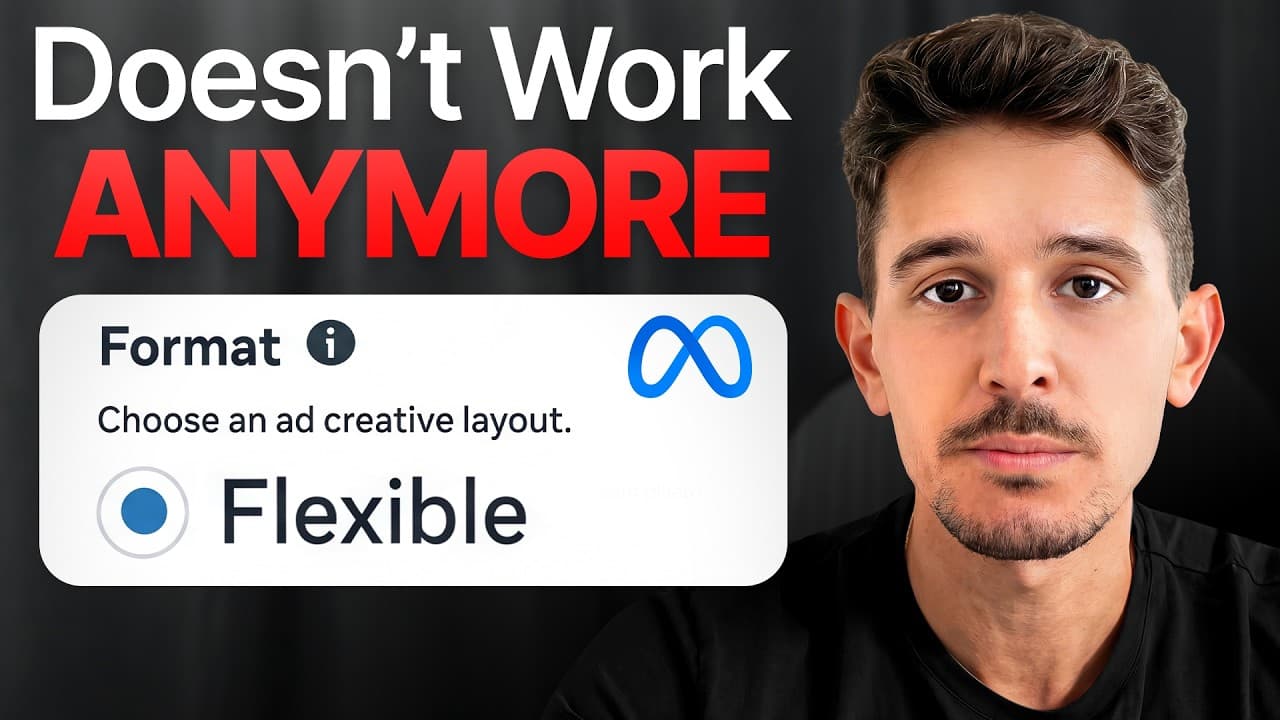
Group two to eight iterations of one creative concept inside a dedicated ad set instead of using Meta’s flexible format. Set an average daily minimum near one times the target cost per acquisition so each concept receives a fair test, then identify scalable winners by sorting ads by spend and reviewing incremental purchases and incremental ROAS.
Transcript
There's a new setting in Facebook ads that was specifically designed to attack [music] the problems that Andromeda created. And Facebook moves so fast that just [music] 30 days ago, this was an incredible setting and ad type that we were rolling out across dozens of new accounts. But because things changed so quickly, this setting is no longer the ... Read More
Key Insights
- Meta’s flexible format allows advertisers to upload as many as 10 images or videos within one ad unit, after which Facebook is supposed to crop the media for appropriate formats and show the strongest ads to suitable people.
- The original flexible-ad strategy grouped nearly identical iterations together, such as five images with small headline or visual changes. This approach initially performed well because the advertiser evaluated the collection as one ad unit rather than requiring detailed results for every variation.
- Flexible ads reduce creative-level visibility because advertisers cannot clearly determine which uploaded image or video worked best. That limitation seemed acceptable for tiny variations, but it became less useful once presentation problems and inconsistent delivery appeared in live Facebook and Instagram placements.
- Repetitive carousels are a customer-experience risk because Meta may combine similar iterations into one swipeable unit. Customers can consequently see the same basic photograph repeatedly, with only a small change between cards, even when the advertiser never intended that presentation.
- Automatic cropping can place creative elements incorrectly, including shifting horizontal images toward the middle or top. Although advertisers can manually choose and adjust crops, the reported account results showed repeated cases where Facebook’s automated placement produced unsuitable framing.
- A creative pack should represent one concept rather than an unrestricted collection of unrelated ads. Each new ad set can contain two to eight iterations of that concept, including several hooks, hook variations, review images, or videos built from the same central idea.
- An ad set minimum can give a creative concept an adequate opportunity to spend. The recommended average daily minimum is one times the target cost per acquisition, which helps prevent Meta from allocating no money to assets that required meaningful time, resources, and production expense.
- Scalable creative can be identified by sorting account-level ads from highest to lowest spend and examining incremental purchases and incremental ROAS. The concepts behind the strongest ads should then be briefed repeatedly, creating a continuing cycle of testing, identification, and iteration.
Install to Summarize YouTube Videos and Get Transcripts
Explore YouTube Video Summarizer or Get YouTube Transcript Extractor
Questions & Answers
Q: How should Meta advertisers test creative without flexible ads?
Advertisers can place each new creative concept into its own broad ad set and include several related iterations within that ad set. The transcript suggests using anywhere from two to about eight iterations at most. Those versions might test different hooks or small executions of one review image or video concept, while preserving ad-level visibility into spending and performance.
Q: What is Meta’s flexible ad format designed to do?
Meta’s flexible format lets an advertiser upload as many as 10 images or videos inside a single ad unit. Facebook is then supposed to crop those assets into appropriate formats and select the strongest ads for suitable people. The format was viewed as a replacement for dynamic media, but its automated presentation and reporting introduced practical limitations.
Q: Why did flexible Meta ads become less useful?
Flexible ads became less useful because live delivery produced awkward carousels and repeated cropping errors. Closely related versions of the same image could appear together as carousel cards, creating a repetitive customer experience. Facebook also positioned some horizontal images incorrectly. In addition, advertisers could not clearly see which individual asset performed best inside the flexible unit.
Q: Why can flexible ads create repetitive carousels?
A flexible ad can contain multiple similar assets, and Facebook may decide to assemble those assets into a carousel. When the uploaded batch consists of tiny variations of one photograph, customers may swipe through essentially the same image several times with only minor changes. That output conflicts with the advertiser’s intention to test iterations as alternatives rather than display them together.
Q: How many creative iterations should go into one ad set?
The recommended structure uses at least two and as many as roughly eight creative iterations in a single ad set. Every version should belong to the same underlying concept instead of mixing unrelated ideas. Examples from the transcript include one ad with different hooks, iterations of those hooks, several review images, or related videos built around one concept.
Q: How can advertisers ensure a new concept receives enough spend?
Advertisers can edit the ad set spending limit and apply an average daily minimum. The preferred starting point described in the transcript is a dollar amount equal to one times the target cost per acquisition, although a percentage can also be used. This minimum helps the ad set begin spending and gives newly produced creative a fair opportunity to generate results.
Q: Is uneven spending across ads inside an ad set acceptable?
Uneven spending can be acceptable because Meta may direct almost the entire ad set budget toward one iteration. In the example provided, one version received $7,300 of the ad set’s $7,382 total spend. A broader distribution across versions may indicate that a true winner has not emerged, rather than proving that equal allocation is inherently preferable.
Q: How should advertisers identify and expand winning Meta ads?
Advertisers should remove ad set filters, review ads across the entire account, and sort them by highest spend. They can then examine incremental purchases and incremental ROAS to judge which ad appears most scalable. After identifying the leading ad, the next step is to brief that same creative concept repeatedly and produce further iterations, forming a continuing testing flywheel.
Summary & Key Takeaways
-
Meta’s flexible format accepts as many as 10 images or videos and is intended to crop assets for placements while showing suitable ads to different people. Although batches of closely related iterations initially performed well, advertisers lost visibility into which individual creative produced the strongest results within each flexible ad unit.
-
The flexible format created presentation problems in actual feeds. Similar variations could be combined into repetitive carousels, while automatic cropping sometimes positioned horizontal assets incorrectly. Results were described as strong during Q4 but poor during Q1, leading the agency to stop treating flexible ads as the preferred testing method.
-
The replacement structure puts each creative concept in its own broad ad set with two to eight related iterations, such as different hooks for one video or variations of a review image. Spending minimums help each concept receive delivery, while ad-level reporting reveals winners that can inspire repeated creative briefs.
Read in Other Languages (beta)
Share This Summary 📚
Summarize YouTube Videos and Get Video Transcripts with 1-Click
Try YouTube Summary with ChatGPT & Claude or YouTube Transcript Generator
Explore More Summaries from Sam Piliero 📚




Summarize YouTube Videos and Get Video Transcripts with 1-Click
Try YouTube Summary with ChatGPT & Claude or YouTube Transcript Generator