How Can AI Improve Research Efficiency with Elicit?
TL;DR
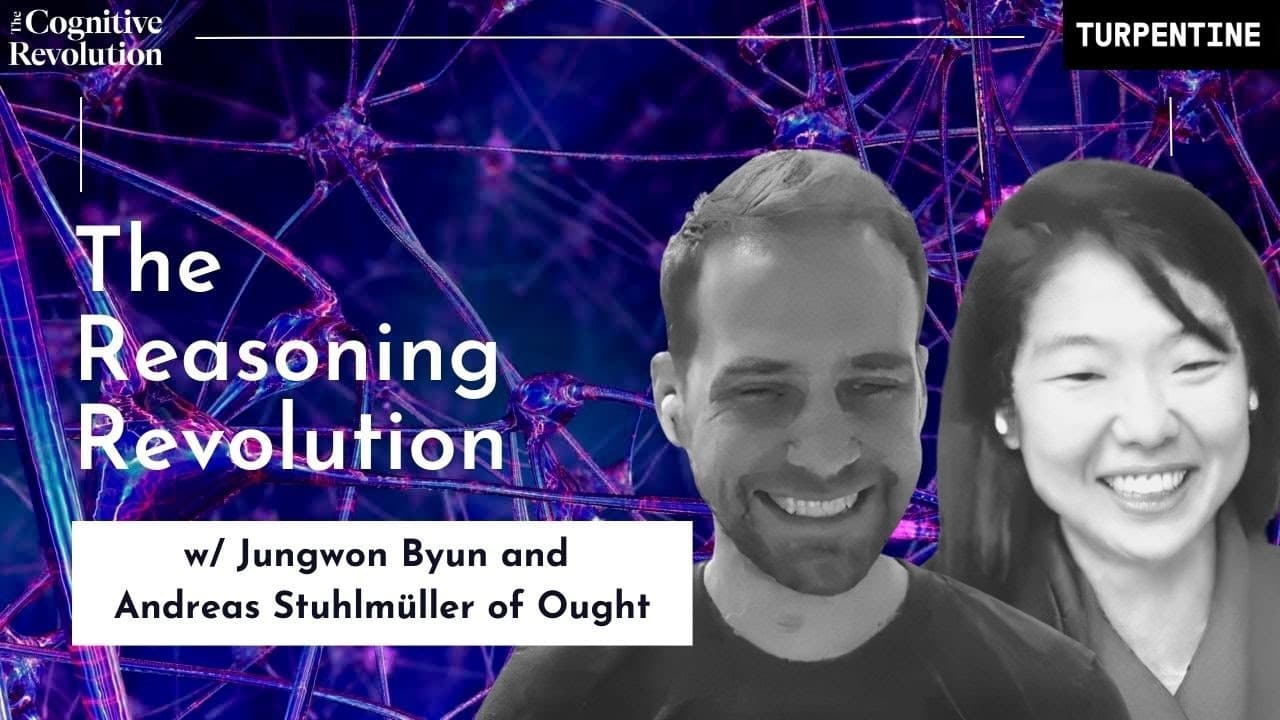
AI can significantly enhance research efficiency through Ought's Elicit, which automates literature reviews and promotes task decomposition for improved clarity and reliability. By breaking down complex tasks into smaller, manageable components, Elicit aids researchers in navigating existing knowledge, identifying gaps, and making informed decisions, ensuring transparency through interpretability by construction.
Transcript
there's like kind of a sense of wonder that has been lost and I think it's easy to lose sight of how much about ourselves and our world Still Remains to be discovered so I really want tools like illicit and just AI more broadly to be able to help us you know not just kind of really amplify existing research efforts but help us to discover entirely ... Read More
Key Insights
- Ought's mission is to automate and scale open-ended reasoning, aiming to improve AI's ability to assist in complex thinking tasks.
- Elicit, Ought's flagship product, is an AI research assistant designed to streamline literature reviews and enhance research workflows.
- The product focuses on interpretability by construction, ensuring AI processes are transparent and understandable for users.
- Ought's approach involves breaking down complex tasks into smaller, manageable components, allowing for more reliable AI assistance.
- The company envisions a three-phase plan for Elicit: discovering known information, identifying unknowns, and making informed decisions.
- Ought's research emphasizes the importance of error elimination and robust evaluation processes to improve AI reliability.
- The company is exploring how to enable users to create their own workflows, potentially using AI to assist in task decomposition.
- Ought is focused on serving researchers across various fields, aiming to generalize their AI solutions for broader applications.
Install to Summarize YouTube Videos and Get Transcripts
Explore YouTube Video Summarizer or Get YouTube Transcript Extractor
Questions & Answers
Q: What is the primary focus of Ought's mission?
Ought's mission is to automate and scale open-ended reasoning to improve AI's ability to assist in complex thinking tasks. They aim to make AI as helpful in reasoning and reflection as it is in tasks with clear short-term outcomes. This involves developing mechanisms for delegating open-ended thinking to advanced machine learning systems.
Q: How does Elicit enhance research workflows?
Elicit enhances research workflows by acting as an AI research assistant that streamlines literature reviews. It uses AI to automate time-consuming tasks, such as finding relevant papers, extracting details, and summarizing content. This helps researchers efficiently navigate large volumes of information and focus on high-value tasks.
Q: What is interpretability by construction?
Interpretability by construction is a product philosophy that ensures AI processes are transparent and understandable. Instead of focusing solely on outcomes, Ought emphasizes task decomposition and the training of high-quality reasoning processes. This approach allows users to understand how AI arrives at its conclusions, making it more reliable and trustworthy.
Q: What are the three phases of Ought's plan for Elicit?
Ought's three-phase plan for Elicit includes: 1) Discovering what is known by structuring unstructured data from texts into organized formats, 2) Discovering what is unknown by identifying gaps in literature and helping researchers address them, and 3) Deciding in the face of the unknown by enabling research consumers to make informed decisions based on structured data and personal values.
Q: How does Ought address the challenge of error elimination?
Ought addresses error elimination by focusing on task decomposition and robust evaluation processes. They emphasize the importance of creating AI systems that are transparent and can be evaluated by humans. This involves breaking down complex tasks into smaller components and ensuring that each step is understandable and can be assessed for accuracy.
Q: What is the role of AI in Ought's research process?
AI plays a central role in Ought's research process by assisting in task decomposition, information retrieval, and synthesis. Ought uses AI to automate time-consuming research tasks, allowing researchers to focus on higher-level analysis. The company is also exploring how AI can help users create their own workflows and assist in decision-making processes.
Q: Who are the primary users of Elicit?
The primary users of Elicit are researchers across various fields, including academia, government, and industry. Ought aims to serve researchers who are focused on evidence-based decision-making and scientific inquiry. While the initial focus is on academic researchers, the company plans to expand its user base to include research consumers in various domains.
Q: What are the future plans for Elicit?
Future plans for Elicit include expanding its capabilities to support more workflows and enabling users to create their own custom workflows. Ought aims to make Elicit a comprehensive tool for researchers by improving its ability to discover unknowns and assist in decision-making. The company is also exploring how to use AI to automate task decomposition and improve the overall research process.
Summary & Key Takeaways
-
Ought is revolutionizing research with its AI assistant, Elicit, which enhances literature reviews through task decomposition and interpretability by construction. The company aims to automate reasoning processes, making AI more effective in complex tasks.
-
Elicit's development is guided by a three-phase plan: discovering known information, identifying unknowns, and enabling decision-making in uncertain situations. This approach aims to improve research efficiency and reliability.
-
Ought's focus on breaking down tasks into smaller components allows for more transparent and reliable AI assistance. The company is exploring ways to enable user-created workflows, potentially using AI to assist in task decomposition.
Read in Other Languages (beta)
Share This Summary 📚
Summarize YouTube Videos and Get Video Transcripts with 1-Click
Try YouTube Summary with ChatGPT & Claude or YouTube Transcript Generator
Explore More Summaries from Cognitive Revolution "How AI Changes Everything" 📚





Summarize YouTube Videos and Get Video Transcripts with 1-Click
Try YouTube Summary with ChatGPT & Claude or YouTube Transcript Generator