What Is Night Herping and What Creatures Can You Find?
TL;DR
Night herping is the practice of searching for reptiles and amphibians in their natural habitats after dark, as demonstrated by Mario and Mark at the Costa Rican Amphibian Research Center. They encountered a variety of species, including frogs, stick insects, and the highly venomous fer-de-lance snake, which is responsible for the majority of snake bites in the tropics.
Transcript
- [Mark] That is a big venomous snake. Easy, Mario. Easy, Mario, easy, easy.
- Watch out. - [Mario] He's fast, guys, he's fast. - [Mark] Oh, oh, Trent. (menacing thud) (cat growls) (threatening music) - Hey guys, Mario Aldecoa, here. - And I'm Mark Vins and welcome to a very special adventure, sponsored by our friends at B&H Photo. Mario, what are ... Read More
Key Insights
- 👨🔬 Night herping involves searching for reptiles and amphibians in their natural habitats during nighttime.
- 🌃 The Costa Rican Amphibian Research Center is a popular location for night herping due to its diverse wildlife.
- 💋 Animals encountered while night herping include frogs, stick insects, anoles, and various reptiles.
- 🐍 The fer-de-lance snake is one of the most dangerous snakes in the tropics, responsible for a majority of venomous snake bites in the region.
- 🐍 Handling venomous snakes requires controlled and open areas to ensure the safety of both the handler and the snake.
- 👋 Good lighting equipment is essential for filming at night and ensuring the safety of the crew.
- 🤝 B&H Photo sponsored the adventure and offers exclusive gear packages and deals for fans.
Install to Summarize YouTube Videos and Get Transcripts
Explore YouTube Video Summarizer or Get YouTube Transcript Extractor
Questions & Answers
Q: What is night herping?
Night herping is searching for reptiles and amphibians at night. Mario Aldecoa and Mark Vins practice it at the Costa Rican Amphibian Research Center, one of their favorite tropical locations for finding species.
Q: How do Mario Aldecoa and Mark Vins find animals at night?
Mario scans slowly while walking and looks for differences in texture, color, and contrast. Movement is the strongest indication because if something moves, it is probably an animal.
Q: What equipment does Mario use for night herping?
Mario begins the search wearing a headlamp and carrying his snake hook. He says putting on the headlamp and having the hook in hand makes him feel excited and ready to go.
Q: Which creatures do Mario and Mark find during the jungle search?
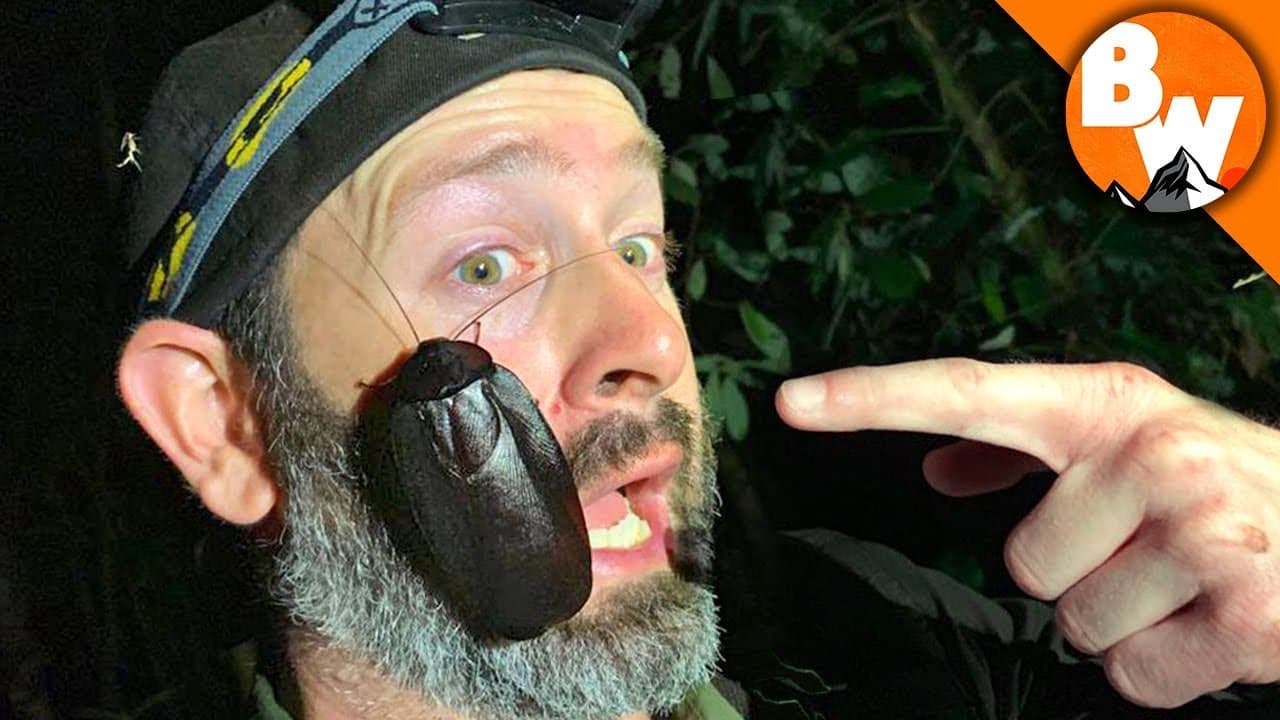
Their discoveries include a dirt frog, stick insect, sleeping anole, giant cockroach, leaf frog, cat-eyed snake, scorpion, katydid, casque-headed lizard, and fer-de-lance. The cat-eyed snake is their first snake of the night.
Q: Why are some daytime animals found sleeping at night?
Although night searches commonly reveal nocturnal species, Mario explains that they sometimes find diurnal animals too. Anoles are a common example, and the one they encounter is sleeping while splayed across vegetation.
Q: How do the frog embryos develop above the stream?
The developing frog embryos are contained in gelatinous material attached beneath leaves that overhang streams. As they develop, the tadpoles fall into the stream and continue their metamorphosis into adult frogs.
Q: How do tropical animals use camouflage during the search?
The katydid looks moss-covered and can blend into its environment, while the casque-headed lizard uses cryptic coloring and remains motionless on a branch. Mario leaves the lizard untouched so it can continue resting.
Q: What happens when Mario encounters the fer-de-lance?
Mario identifies a good-sized fer-de-lance and approaches it very slowly. When the venomous snake begins moving quickly, he tries to get it under control while Mark repeatedly urges him to take his time and move back.
Summary & Key Takeaways
-
Mario and Mark are conducting night herping, which involves searching for reptiles and amphibians in the Costa Rican jungle.
-
They explore the Costa Rican Amphibian Research Center, a prime location for finding unique species.
-
Along the way, they encounter various animals, including frogs, stick insects, anoles, and even a venomous fer-de-lance snake.
Read in Other Languages (beta)
Share This Summary 📚
Summarize YouTube Videos and Get Video Transcripts with 1-Click
Try YouTube Summary with ChatGPT & Claude or YouTube Transcript Generator
Explore More Summaries from Brave Wilderness 📚
Summarize YouTube Videos and Get Video Transcripts with 1-Click
Try YouTube Summary with ChatGPT & Claude or YouTube Transcript Generator