How Does a Shark Cage Submarine Work for Great Whites?
TL;DR
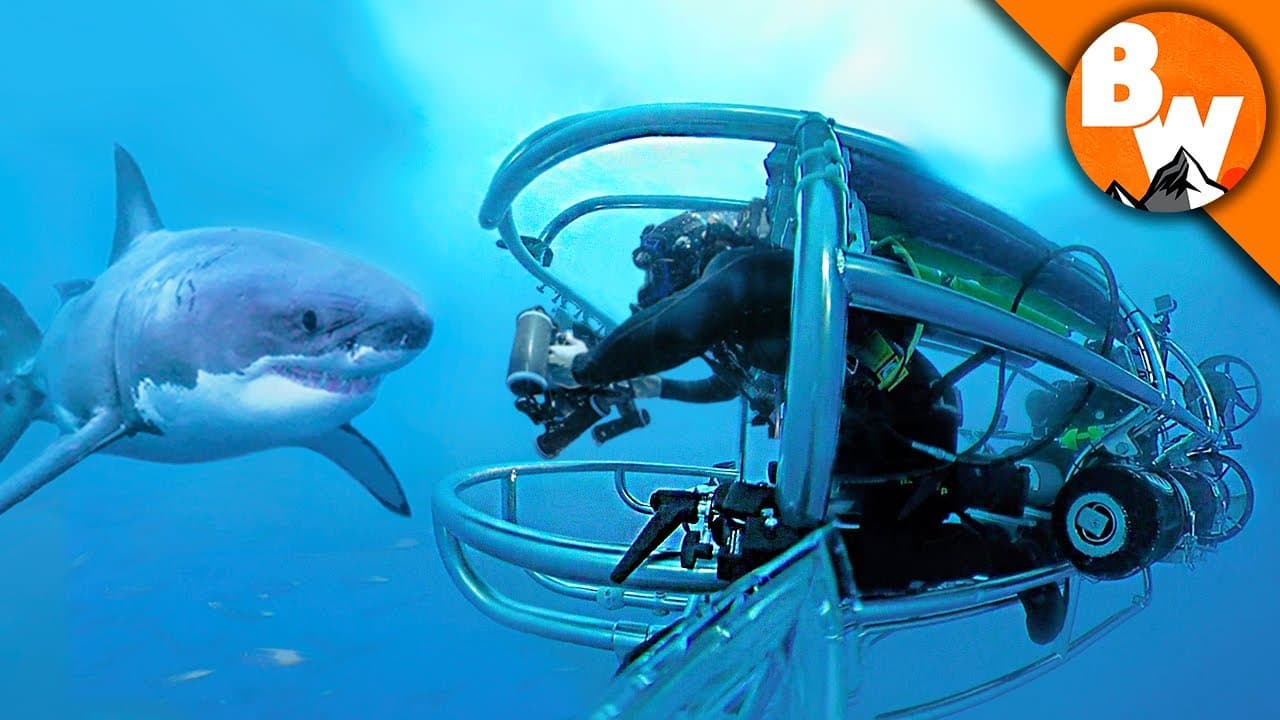
A shark cage submarine, or S.P.O.C., allows researchers to get remarkably close to great white sharks while providing a safeguard against danger. This innovative craft enables unique underwater encounters, revealing more about these magnificent predators' behavior and biology, making it a significant advancement in shark observation.
Transcript
(dramatic music) (splash) - Believe it or not, this was potentially the most dangerous step of my entire life. Oh, and did I mention this was an experimental craft? Jump in, and miss grabbing the cage, you sink, fast. (splash) (dramatic music) (dramatic music) (light music) (sound of waves) Welcome back to Guadalupe, Mexico, the site of our very fi... Read More
Key Insights
- 😚 The self-propelled ocean cage submarine allows for unique and close encounters with great white sharks, providing a new perspective on these creatures.
- 🎟️ The mission involved significant risks, including the potential for sinking, equipment failure, and injury.
- 🤗 The team relied on hand signals and non-verbal communication due to the failure of underwater communication systems.
- 😤 The encounter with the great white shark was a thrilling and awe-inspiring experience, deepening the team's understanding and appreciation for these predators.
- 🦈 The S.P.O.C. represents an evolution in shark observation and has the potential to reveal more about the behavior and biology of great white sharks.
- 🤍 Guadalupe, Mexico, is a favored hunting ground for great white sharks and offers unique opportunities for studying these animals.
- 🤍 The mission highlights the importance of respectful and non-invasive approaches to studying and filming great white sharks.
Install to Summarize YouTube Videos and Get Transcripts
Explore YouTube Video Summarizer or Get YouTube Transcript Extractor
Questions & Answers
Q: How does the self-propelled ocean cage submarine work?
The self-propelled ocean cage submarine, or S.P.O.C., is an experimental craft that can only be piloted by two people in the world. It allows for close encounters with great white sharks and is controlled using hand signals.
Q: Why did the Blue Wilderness team embark on this daring mission?
The team wanted to go beyond traditional methods of shark observation, such as cage diving and free diving. They aimed to use the S.P.O.C. to gain a deeper understanding of great white sharks and capture unique footage.
Q: What were the risks involved in this mission?
The mission was highly dangerous, as one wrong move could result in sinking or injury. The team had to deal with unreliable underwater communications, the risk of running out of air, and the exposed and delicate mechanisms of the experimental craft.
Q: What did the team achieve during the mission?
Despite the challenges, the team successfully encountered great white sharks and captured footage of their close interactions. The mission provided valuable insights into the behavior and nature of these misunderstood creatures.
Summary & Key Takeaways
-
The Blue Wilderness team travels to Guadalupe, Mexico, to explore the world's most famous and largest predatory shark, the great white shark.
-
They join Erick Higuera, a marine biologist and ocean photographer, on a one-of-a-kind mission to use a self-propelled ocean cage to get closer to the sharks.
-
Despite the risks and technical challenges, they successfully encounter great white sharks and capture unique footage.
Read in Other Languages (beta)
Share This Summary 📚
Summarize YouTube Videos and Get Video Transcripts with 1-Click
Try YouTube Summary with ChatGPT & Claude or YouTube Transcript Generator
Explore More Summaries from Brave Wilderness 📚




Summarize YouTube Videos and Get Video Transcripts with 1-Click
Try YouTube Summary with ChatGPT & Claude or YouTube Transcript Generator