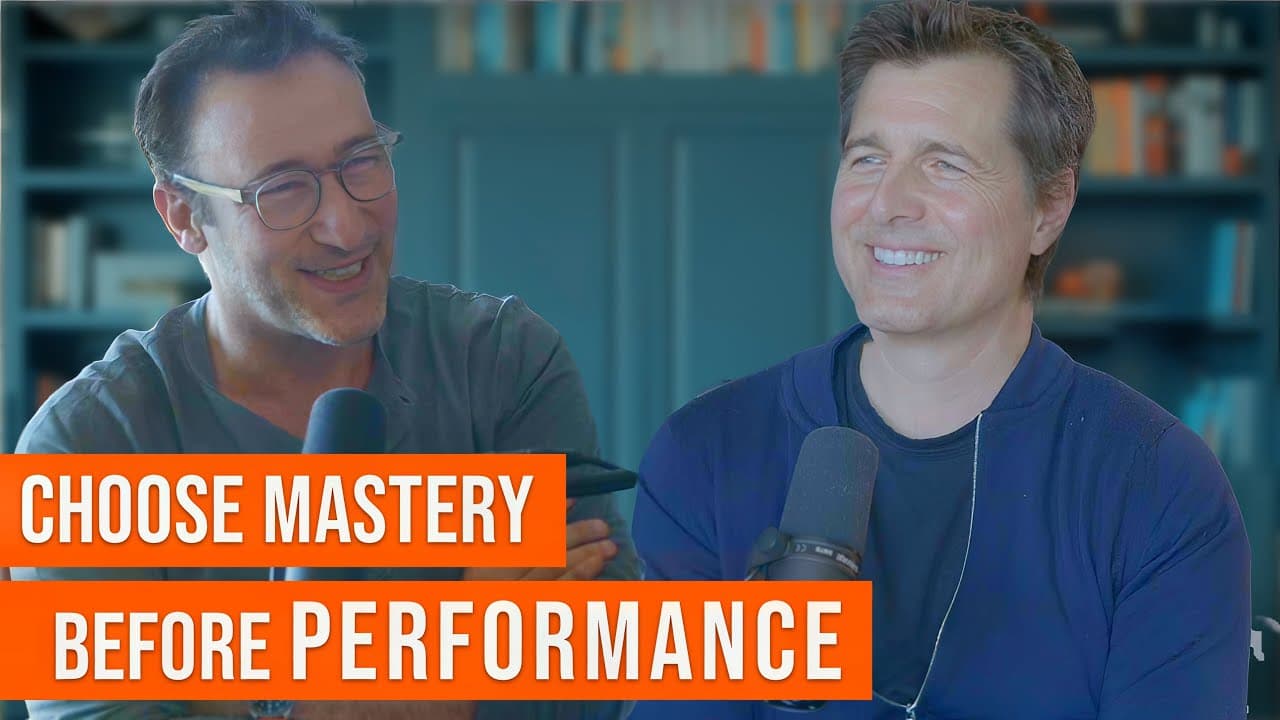
What is mastery and how to master performance?
TL;DR
Mastery is an input focused path that deepens craft and self understanding, not just delivering on demand. The approach contrasts with pure high performance by emphasizing curiosity, authentic practice, and resilience built through deliberate, ongoing self awareness. This mindset helps people sustain excellence under pressure.
Transcript
confidence is super interesting like it only comes from one place and one place only go on what you say to yourself but how on Earth do I actually stop caring about what people think about me when as social animals I want to be included I want to feel like I belong I want to be trusted I want to be a member of the tribe I want to be welcomed and in... Read More
Key Insights
- Mastery of craft and self is the path that deepens performance and sustains growth over time.
- High performance focuses on executing on demand, while mastery emphasizes a contour and depth in the learning journey.
- Confidence is generated from credible self-talk and a realistic assessment of one’s abilities in a given moment.
- The inner voice and self perception shape how one handles challenging environments and perceived threats.
- A strong sense of purpose provides a competitive edge that outlasts short term outcomes.
- Recovery is a critical element of elite performance, enabling sustainability and long term excellence.
- Mastery requires humility and an ongoing commitment to improvement, not just results.
- The difference between being a B student and excelling lies in curiosity, persistence, and willingness to refine the craft.
- More videos from this channel:
- More from this channel: Simon Sinek
Install to Summarize YouTube Videos and Get Transcripts
Explore YouTube Video Summarizer or Get YouTube Transcript Extractor
Questions & Answers
Q: What is the difference between mastery and high performance?
Mastery is about mastering craft and self, using the craft to go deeper and understand the human condition first, then others. It is an input and a commitment to a long, authentic path. High performance is about executing on demand and achieving outcomes under pressure. The contrast lies in focus, process, and the nature of growth.
Q: Why is confidence described as state specific in the talk?
Confidence is state specific because it depends on the perceived challenge against my internal skills at that moment. It changes with the environment and demands, and it is built through credible self-talk and accurate assessment of what I can handle now. External feedback can influence it, but it must be grounded in a realistic self-view.
Q: How does purpose relate to performance according to the interview?
Purpose provides a sustainable edge by aligning effort with meaningful goals beyond just winning. It grounds motivation, reduces burnout, and fuels endurance during tough periods. When purpose drives action, the mind handles setbacks more resiliently and recovery becomes a strategic asset rather than a sign of weakness.
Q: What role does recovery play in elite performance?
Recovery is essential for sustaining high levels of function and avoiding burnout. It supports rebuilding cognitive and physical resources, reduces fatigue, and maintains readiness. In elite contexts like sport and business, recovery strategies enable consistent performance over time rather than peak bursts followed by crash.
Q: What can we learn from the samurai sword maker story?
The story illustrates patience, long apprenticeship, and humility in mastery. It shows that true skill develops over decades, with ongoing curiosity and a willingness to improve. This contrasts with a shortcut mindset and highlights that deep expertise comes from sustained practice and reflection.
Q: How should one frame mindsets to reframe limitations?
Reframing mindsets involves recognizing that limitations can be opportunities for deeper learning and growth. By focusing on the process of improvement rather than fixed outcomes, people build resilience, reduce fear of failure, and stay curious. This approach supports consistent progress even in challenging environments.
Q: What is the advantage of being a “B student” as discussed?
Being a B student suggests a willingness to stay curious, not settle for easy explanations, and persist through difficulty. This mindset fosters deeper understanding and ongoing development, which strengthens mastery. It emphasizes process over initial talent and aligns effort with long term growth rather than short term validation.
Q: How does social belonging impact performance and mastery?
Belonging provides safety and trust, enabling people to contribute meaningfully. When individuals feel included, they engage more deeply with their craft, share ideas openly, and recover faster from setbacks. Mastery thrives in environments that support authentic collaboration and reduce fear of judgment.
Summary & Key Takeaways
-
Mastery centers on developing skill and self understanding before performance, shaping how people approach challenges and recovery.
-
The discussion contrasts mastery with high performance, highlighting that mastery emphasizes process and inner growth over end results.
-
The conversation explores confidence as self talk, purpose driven motivation, and practical recovery strategies to maintain excellence under stress.
Read in Other Languages (beta)
Share This Summary 📚
Summarize YouTube Videos and Get Video Transcripts with 1-Click
Try YouTube Summary with ChatGPT & Claude or YouTube Transcript Generator
Explore More Summaries from Simon Sinek 📚




Summarize YouTube Videos and Get Video Transcripts with 1-Click
Try YouTube Summary with ChatGPT & Claude or YouTube Transcript Generator