How to Ask a Friend for Help When Life Gets Hard
TL;DR
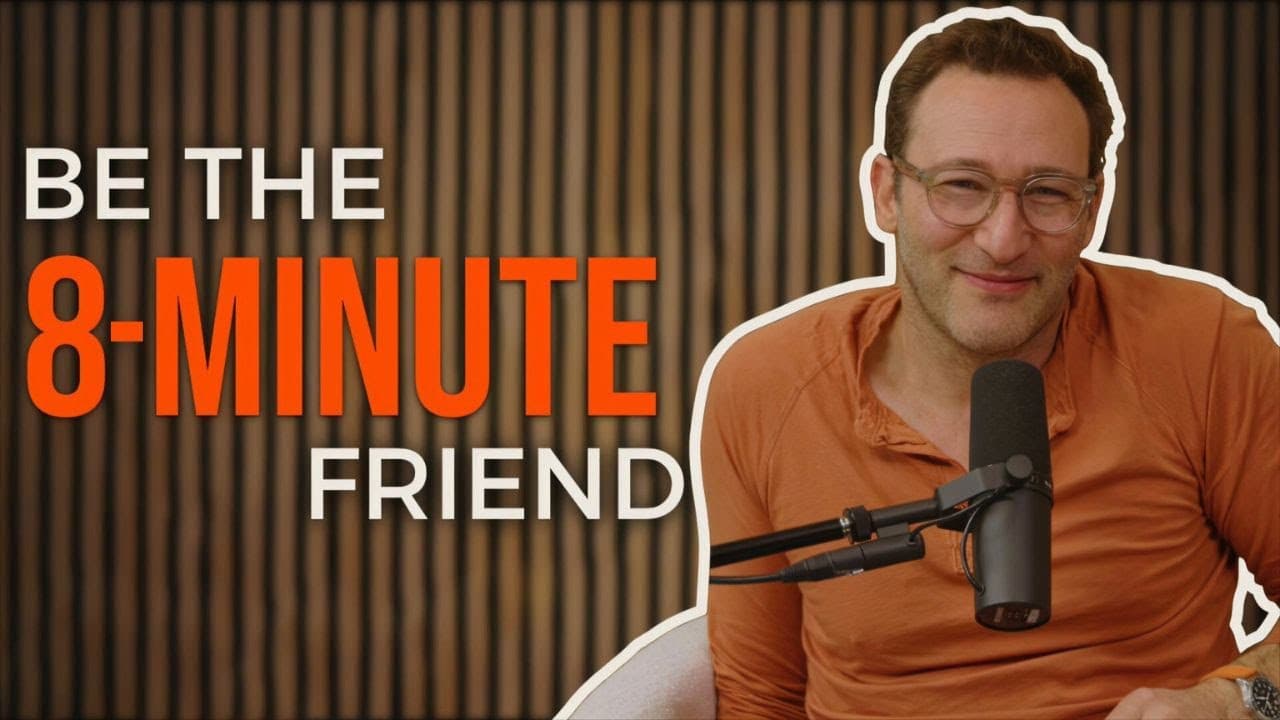
Ask a trusted friend for help by saying plainly that you are struggling and requesting a few minutes of their time. Speaking the problem aloud makes it real and may feel frightening, especially for high performers, but it also begins the process of facing it and reduces the isolation that allows emotional strain to accumulate.
Transcript
the best part of doing a podcast with you is that I get to talk to you I miss you and and I get to see you I get to see like on work time like it's not like I'm trying to call you in the middle of work and I know I'm Not Gon to catch you because you're in the middle of your work I just have a moment yeah we we're getting we're we're this is yeah th... Read More
Key Insights
- True friendship is strengthened when people share difficult emotions, not only enjoyable experiences. Tosi and Sinek recall crying together during the COVID period, and Sinek says that vulnerable conversation changed their friendship from something fun into a bond that felt solid and dependable.
- Asking for help is difficult because speaking a struggle aloud makes it feel real. A private thought can remain intangible, but telling another person removes that distance, puts the speaker on notice, and creates a need to acknowledge and eventually address the underlying problem.
- High performers may confuse vulnerability with defeat. Because they are accustomed to solving problems and avoiding failure, they may resist naming a difficulty when no solution is ready, even though sharing it with a trustworthy person can be an important first step toward dealing with it.
- Emotional compartmentalization can help temporarily during chaos, but unresolved feelings still require attention. Sinek argues that people can postpone emotional processing for a limited period, yet continuing to avoid it is where mental health challenges can appear and accumulated strain becomes harder to manage.
- Trust is built before a crisis through language, attention, and repeated conversations. Tosi knew whom to call because earlier discussions with Sinek had created space for vulnerability and acknowledged that people cannot remain at emotional highs continuously, even when their work brings them purpose and joy.
- Cereal milk ice cream is designed to evoke recognition, comfort, and childhood safety. Tosi describes the flavor as more than tasty ice cream because it connects with the familiar experience of a cereal bowl and can help someone feel seen, loved, calm, and trusted.
- Dessert is an optional course, which makes choosing it meaningful. Tosi treats that choice seriously because dessert competes with leaving, going home, concerns about weight, and a person's internal arguments, rather than merely competing with other sweets on a menu.
- Dessert is associated with care during major life moments. Tosi notes that cake appears at birthdays and that sweets also show up at wakes, funerals, and difficult occasions, giving dessert a role in comfort, connection, celebration, remembrance, and emotional support.
Install to Summarize YouTube Videos and Get Transcripts
Explore YouTube Video Summarizer or Get YouTube Transcript Extractor
Questions & Answers
Q: How do you ask a trusted friend for help when you are struggling?
State honestly that you are struggling, ask whether the friend has a few minutes, and allow yourself to describe what is happening without first producing a solution. Tosi did this when she felt unable to add more pressure to her husband during a difficult period. She called Sinek directly, shared the moment with him, and they cried together, strengthening their friendship.
Q: Why do people avoid calling friends when they need emotional support?
People may fear burdening someone, feel shame or embarrassment, or worry that saying the problem aloud will make it undeniably real. High performers may also interpret vulnerability as defeat. Once they acknowledge a problem, they can feel responsible for solving it, which is especially intimidating when they cannot yet imagine a solution or a clear path forward.
Q: Why can speaking about a problem help someone begin dealing with it?
Speaking changes a struggle from a private, intangible thought into something another person has witnessed. Sinek describes this as decompartmentalization because the speaker can no longer pretend the issue went unnoticed. Although that recognition can feel frightening, releasing the problem to someone trustworthy may accomplish much of the early work required to face it and begin moving through it.
Q: How can high performers become more comfortable with vulnerability?
High performers can separate vulnerability from defeat and recognize that acknowledging difficulty does not erase competence or commitment. Tosi and Sinek suggest that naming a struggle is often the first meaningful step, even when no solution is available. Trustworthy friends can provide space for that admission, reducing isolation and helping the person start grappling with what has happened.
Q: How does vulnerability make a friendship stronger?
Vulnerability gives friends an opportunity to demonstrate that the relationship can hold distress as well as enjoyment. During the COVID period, Tosi called Sinek while she was struggling, and they cried together. Sinek says this interaction made their friendship feel real and solid because trust was no longer merely assumed. It had been practiced during a difficult emotional moment.
Q: Why did Christina Tosi choose Simon Sinek when she needed support?
Tosi chose Sinek because their earlier conversations had already created language and space for vulnerability. He had acknowledged both the emotional highs connected to purposeful work and the reality that people cannot remain at those highs continually. That foundation made him feel trustworthy, so she planned to call him during her walk instead of trying several people first.
Q: Why does Christina Tosi view dessert as emotionally meaningful?
Tosi views dessert as something people actively choose and as something that regularly appears during significant moments. Cake accompanies birthdays, while desserts also appear at wakes, funerals, and other difficult occasions. Because people can decline dessert, she considers their decision to accept it a meaningful invitation into a space connected with celebration, comfort, memory, care, and human connection.
Q: How do you make Christina Tosi's ice cream loaf?
Use 2 cups, or 1 pint, of softened ice cream, 1 cup of self-rising flour, and 1 egg. Preheat the oven to 350°F and grease a loaf pan. Mix the melty ice cream, flour, and egg in a large bowl without overmixing. Pour the batter into the pan and bake for 45 minutes, or until a toothpick comes out clean.
Summary & Key Takeaways
-
Christina Tosi and Simon Sinek describe friendship as a relationship built through both joyful experiences and vulnerable conversations. During the COVID period, Tosi called Sinek while struggling because she trusted him with her feelings. They cried together, and that moment transformed an already warm friendship into one that felt solid and dependable.
-
People may avoid requesting support because they fear burdening others, feel ashamed, or associate vulnerability with defeat. High performers may find disclosure especially difficult because naming a problem makes it real and creates pressure to solve it. Yet expressing the struggle to someone trustworthy can accomplish much of the initial emotional work.
-
Tosi connects dessert with care, nostalgia, safety, and shared human moments. Cereal milk ice cream seeks to evoke the comfort of childhood cereal, while desserts appear at birthdays, wakes, funerals, and other significant occasions. Because dessert is optional, she treats a person's decision to choose it as a meaningful invitation and responsibility.
Read in Other Languages (beta)
Share This Summary 📚
Summarize YouTube Videos and Get Video Transcripts with 1-Click
Try YouTube Summary with ChatGPT & Claude or YouTube Transcript Generator
Explore More Summaries from Simon Sinek 📚




Summarize YouTube Videos and Get Video Transcripts with 1-Click
Try YouTube Summary with ChatGPT & Claude or YouTube Transcript Generator