I've Created 20,000+ Ads, Which Meta Ad Formats Are Converting in 2026?
TL;DR
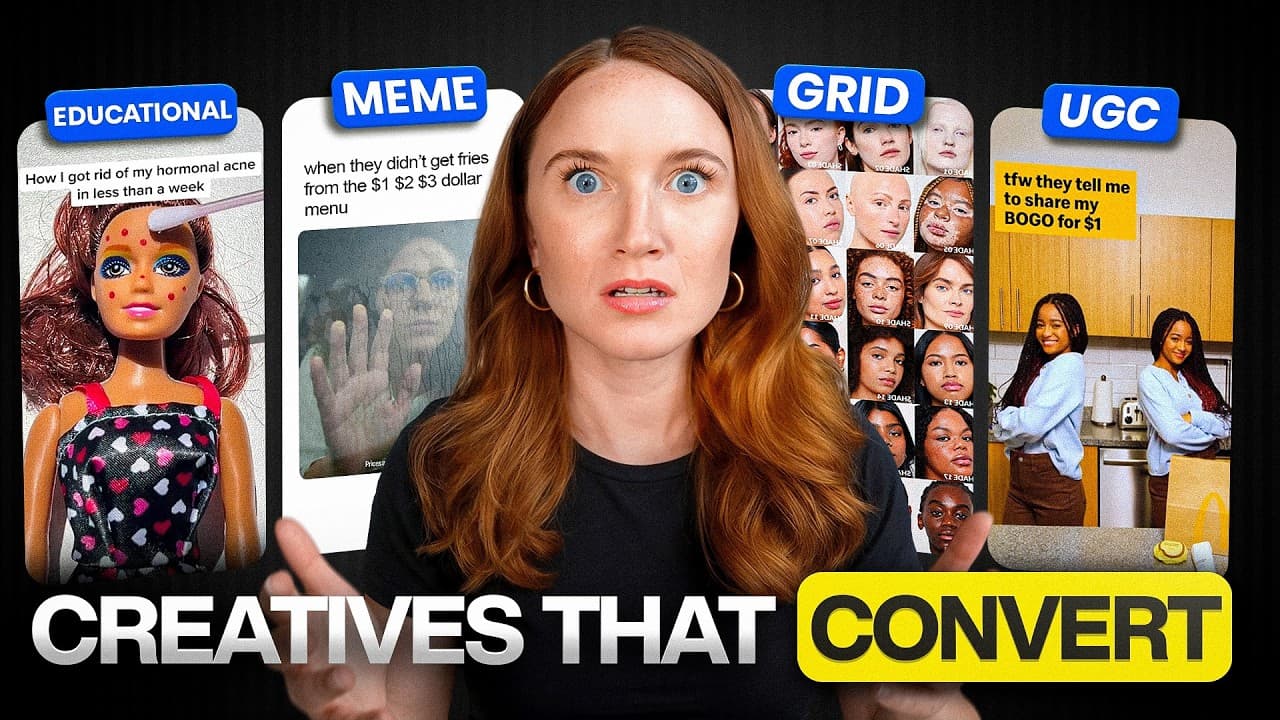
The Meta ad formats converting in 2026 include David and Goliath narratives, obvious AI animations, TikTok love letters, viral shorts, price objection ads, apology creatives, and listicles. Drawing on a career involving over 20,000 ads and thousands of creatives tested in Q1, the central lesson is that formats need strong audience messaging, angles, and benefits. Read on to see how each format works and what to test first.
Transcript
So, I've had a part of making over 20,000 ads in my entire career, and today we're going to be talking about the formats that are converting like crazy right [music] now. Now, I love doing this video every single year because there's always a little bit of an arbitrage opportunity for what is driving revenue on Meta ads. And our clients have spent ... Read More
Key Insights
- David and Goliath ads are underdog narratives that identify an industry, scam, or other enemy before contrasting it with a founder or brand. Their effectiveness depends on quickly supplying proof, explaining core differentiators, and connecting those differences to concrete benefits for the customer.
- The choice of Goliath is often the largest performance variable within an underdog ad concept. Initial variations should therefore test different enemies or opposing forces, rather than changing every creative element simultaneously, because the enemy framing can substantially alter how the audience receives the message.
- Scientific explanations can strengthen claims about why a brand is better, especially when animation makes research-heavy details easier to understand. The agency observed higher retention and stronger performance when animations communicated problems, mechanisms, or product differences instead of relying only on spoken claims.
- Obvious AI animation works best when it openly presents itself as artificial rather than attempting to imitate a real person. Outrageous animated characters can deliver embarrassing or intentionally awkward messages that creators or conventional talent might struggle to communicate convincingly without making the presentation feel forced.
- TikTok love letters are short videos covered with comparatively long text that immediately addresses a specific audience. Their success depends heavily on using the audience's own vernacular, which can be found by studying comments on viral TikToks and observing the language used in popular Reels.
- TikTok viral shorts are text-led creatives built around only one or two lines, often using a point-of-view opening. They can borrow familiar structures appearing organically on Reels, making them a low-lift way to test whether a message resonates before producing more resource-intensive creator content.
- Visual preferences can differ by audience age. Creator content or iPhone B-roll generally worked best for text-led formats, while audiences aged 55 plus tended to respond better to stock footage. Because these ads require limited production, brands can test several visual approaches efficiently.
- Price objection ads work by stating that the product is not cheap and explaining why. The tested hook, "We're not cheap, and we don't want to be," directly addresses a common purchase barrier, turning customer concerns from comments, social media, or website feedback into performance creative.
Install to Summarize YouTube Videos and Get Transcripts
Explore YouTube Video Summarizer or Get YouTube Transcript Extractor
Questions & Answers
Q: Which Meta ad formats are converting in 2026?
The highlighted formats include David and Goliath ads, obvious AI animations, TikTok love letters, viral shorts, price objection ads, apology creatives, and listicles. Formats alone are not enough: each must be paired with an understanding of the target persona, persuasive messaging, effective angles, and clear customer benefits.
Q: How do David and Goliath Meta ads work?
These ads name an enemy, such as an industry or widespread scam, and contrast it with the founder or brand. They then provide proof, explain the brand’s differentiators, and connect those differences to customer benefits. Some effective versions take an educational approach before introducing the brand.
Q: What should brands test first in a David and Goliath ad?
Initial variations should test who or what plays the Goliath because the chosen enemy was often the biggest differentiator in performance. Brands can compare an industry, scam, or another opposing force while keeping the rest of the concept relatively consistent.
Q: Why can animation improve Meta ad performance?
Animation can make detailed research and scientific explanations easier to understand. The agency observed higher retention rates and ultimately stronger performance when animations communicated why a brand was better. These visuals can illustrate customer problems, mechanisms, or product differences.
Q: Why do obvious AI animated ads convert?
Obvious AI animations let fictional characters deliver outrageous, awkward, or intimate messages that could feel forced when spoken by human creators. The ads openly look animated instead of pretending the character is real. According to the transcript, more outrageous executions tended to work better.
Q: How do TikTok love letter ads work?
A TikTok love letter places long text over a short video and directly calls out a target audience. Its success depends on getting the message and audience language right. Brands can study comments on viral TikToks to identify the vocabulary and phrasing their audience uses.
Q: What is the difference between a TikTok love letter and a viral short?
A TikTok love letter uses comparatively long text over short footage, while a viral short generally uses only one or two lines. Viral shorts often begin with a point-of-view setup. Both are low-lift, text-led formats that can draw inspiration from structures already appearing organically on Reels.
Q: How should Meta ads handle price objections?
Price objection ads directly acknowledge that the product is not cheap and then explain why. One tested hook was “We’re not cheap, and we don’t want to be.” Brands can turn concerns found in customer comments, social media discussions, and website feedback into creative angles.
Summary & Key Takeaways
-
Successful Meta advertising in 2026 requires more than selecting a popular creative format. Brands also need a clear understanding of their target persona, the language that audience uses, persuasive messaging angles, and meaningful differentiators. The strongest concepts connect each format to customer problems, objections, benefits, or recognizable social media behavior.
-
David and Goliath ads position an industry, established competitor, or widespread scam as the enemy, then contrast it with the brand or founder. Effective versions quickly provide proof, explain differentiators, and show customer benefits. Scientific explanations can strengthen the argument, while animations can make technical information clearer and improve viewer retention.
-
Several lower-lift formats provide practical testing opportunities. TikTok love letters use long text over short footage, while viral shorts rely on one or two lines, often beginning with a point-of-view setup. Brands can test many messages cheaply, identify winners, and later translate successful angles into creator content or other larger creative productions.
Read in Other Languages (beta)
Share This Summary 📚
Summarize YouTube Videos and Get Video Transcripts with 1-Click
Try YouTube Summary with ChatGPT & Claude or YouTube Transcript Generator
Explore More Summaries from Dara Denney 📚

Summarize YouTube Videos and Get Video Transcripts with 1-Click
Try YouTube Summary with ChatGPT & Claude or YouTube Transcript Generator