What Makes Turkish Language Unique?
TL;DR
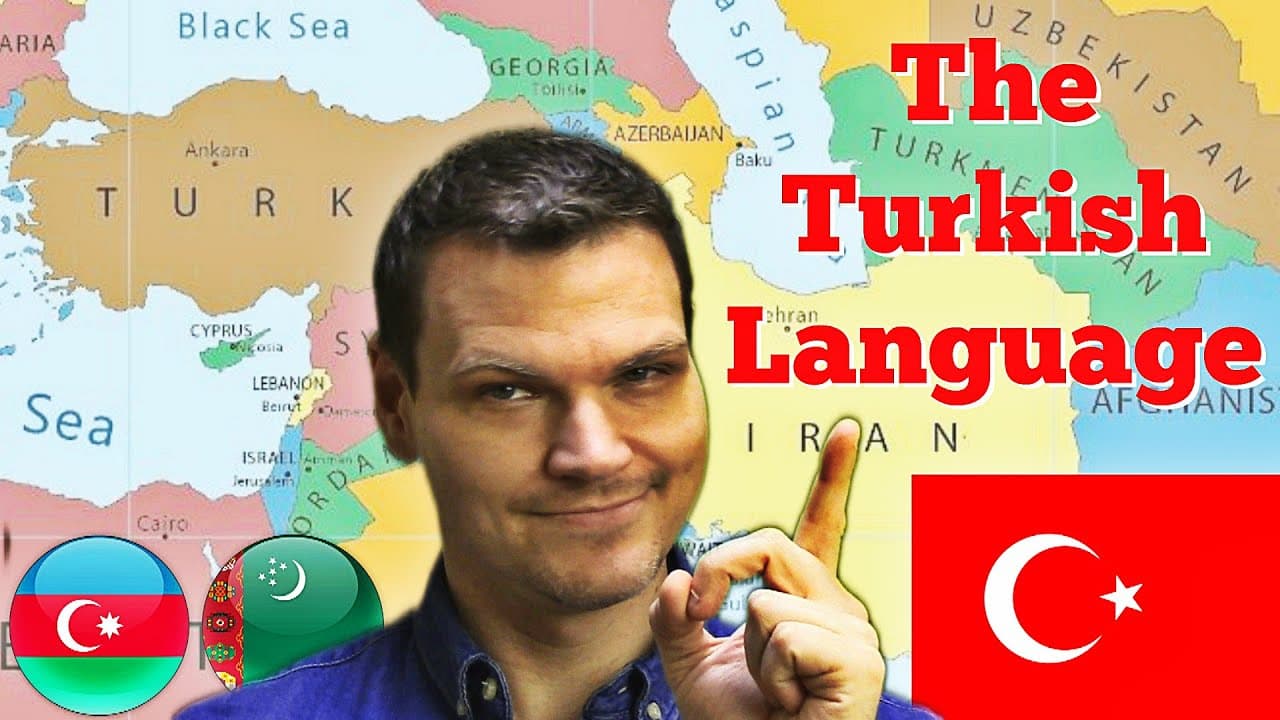
Turkish is a fascinating language with around 75 million native speakers, primarily in Turkey. It belongs to the Turkic language family and is part of the Oghuz branch, sharing mutual intelligibility with Azerbaijani and Turkmen. Turkish is an agglutinative language with a systematic and phonetic grammar, making it unique and interesting to learn.
Transcript
Hello everyone. Welcome to the Langfocus channel and my name is Paul. Today I'm going to talk about the Turkish language Now, right off the bat, the first thing I want to say is that there is a Turkish language. Because Turkey is situated at the edge of the Middle East, some people think that Turkey is an Arabic country but it is not an Arabic c... Read More
Key Insights
- Turkish is the official language of Turkey and has around 75 million native speakers.
- Turkish belongs to the Turkic language family, specifically the Oghuz branch.
- The Oghuz branch includes Azerbaijani and Turkmen, languages with mutual intelligibility to Turkish.
- Turkish is an agglutinative language, meaning words are formed by adding suffixes to roots.
- The Turkish language underwent significant reform in 1923, led by Mustafa Kemal Atatürk.
- The reform replaced Ottoman Turkish with a new standard language based on Istanbul's dialect.
- Turkish switched from the Arabic alphabet to a modified Latin alphabet, improving literacy rates.
- Turkish grammar is systematic and phonetic, with consistent pronunciation and writing rules.
Install to Summarize YouTube Videos and Get Transcripts
Explore YouTube Video Summarizer or Get YouTube Transcript Extractor
Questions & Answers
Q: How many native speakers does Turkish have?
Turkish has approximately 75 million native speakers. This number includes people in Turkey and a significant population in Southeastern Europe, particularly in the part of Turkey located in Europe and the Balkan region. Additionally, Turkish is spoken by communities in Anatolia, the Asian part of Turkey.
Q: What is the Turkic language family?
The Turkic language family is a group of languages spoken across a vast area from Siberia to the Balkans. It includes languages like Turkish, Azerbaijani, and Turkmen. These languages share a high degree of mutual intelligibility, especially within the Oghuz branch, which Turkish is a part of.
Q: What are the features of the Turkish language?
Turkish is an agglutinative language, meaning words are formed by adding suffixes to roots. It has a systematic and phonetic grammar, ensuring consistent pronunciation and writing. Turkish uses a modified Latin alphabet, which replaced the Arabic script, significantly improving literacy rates. The language's structure allows for complex expressions with fewer words.
Q: What was the Atatürk reform of the Turkish language?
The Atatürk reform of the Turkish language, initiated in 1923, replaced Ottoman Turkish with a new standard language based on the everyday dialect spoken in Istanbul. This reform included switching from the Arabic alphabet to a modified Latin alphabet, which improved literacy rates and aimed to reduce Persian and Arabic influences in the vocabulary.
Q: What is the relationship between Turkish and Azerbaijani?
Turkish and Azerbaijani are both part of the Oghuz branch of the Turkic language family and share a high degree of mutual intelligibility. Azerbaijani, sometimes called Azeri Turkish, is spoken in Azerbaijan and parts of Iran, Iraq, Dagestan, and Georgia. It uses more Persian and Arabic loanwords compared to modern standard Turkish.
Q: How did the switch to the Latin alphabet affect Turkish literacy?
The switch to the Latin alphabet significantly improved Turkish literacy rates. The Arabic script, previously used, was ill-suited for Turkish phonetics, as it lacked enough vowel representations. The Latin alphabet, being more phonetic, made reading and writing easier and more accessible, leading to a rapid increase in literacy among Turkish speakers.
Q: What are some challenges of learning Turkish?
Learning Turkish can be challenging due to its agglutinative structure, which may be unfamiliar to speakers of non-agglutinative languages. However, its systematic grammar and phonetic nature make it easier to learn pronunciation and writing. Familiarity with other agglutinative languages can ease the learning process, and an interest in Turkish culture can provide motivation.
Q: Why is Turkish considered a phonetic language?
Turkish is considered a phonetic language because it has a one-to-one correspondence between sounds and letters. This means that each sound in the language is represented by a specific letter in the alphabet, making it easier for learners to pronounce words correctly and write them accurately based on their pronunciation.
Summary & Key Takeaways
-
Turkish is an agglutinative language with around 75 million native speakers, primarily in Turkey. It is part of the Oghuz branch of the Turkic language family, sharing mutual intelligibility with Azerbaijani and Turkmen. The language underwent significant reform in 1923, replacing Ottoman Turkish with a new standard language based on Istanbul's dialect.
-
The reform led by Mustafa Kemal Atatürk included switching from the Arabic alphabet to a modified Latin alphabet, greatly improving literacy rates. Turkish grammar is systematic and phonetic, making it easier for learners to understand pronunciation and writing. The language's unique structure and history make it a fascinating subject for language enthusiasts.
-
Turkish's agglutinative nature means words are formed by adding suffixes to roots, allowing for complex expressions with fewer words. The language's phonetic consistency ensures that each sound corresponds to a specific letter, aiding in learning and comprehension. These characteristics, along with its rich cultural context, make Turkish a compelling language to explore.
Read in Other Languages (beta)
Share This Summary 📚
Summarize YouTube Videos and Get Video Transcripts with 1-Click
Try YouTube Summary with ChatGPT & Claude or YouTube Transcript Generator
Explore More Summaries from Langfocus 📚
Summarize YouTube Videos and Get Video Transcripts with 1-Click
Try YouTube Summary with ChatGPT & Claude or YouTube Transcript Generator