How to Raise Muslim Children With a Strong Why
TL;DR
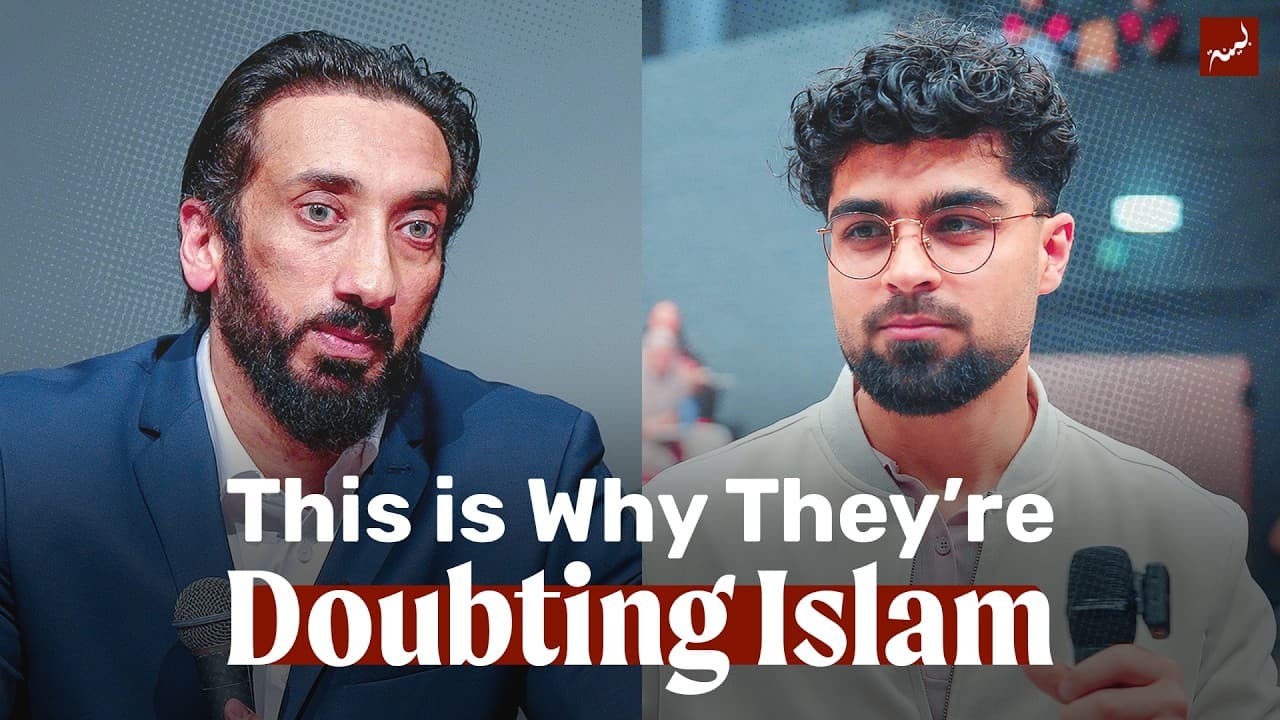
Give children a deep understanding of why they are Muslim before concentrating on what Muslims do and how they practice. Parents must first develop that clarity and passion themselves, because children absorb what their parents genuinely carry. This challenge is global rather than uniquely Western, since media and internet culture reach young Muslims in both Western and Muslim-majority countries.
Transcript
This is a concern all of us have. The first school our children have is the parents. Before there's any other school, it's the parents. We have to give our children a really deep understanding of why they are Muslim before what to do as a Muslim. If you don't have the why yourself, if you're not clear and deep, then you cannot give it to your child... Read More
Key Insights
- Parents are a child's first school, shaping religious understanding before any teacher, institution, or formal curriculum becomes involved. Their own convictions, conduct, clarity, and enthusiasm therefore establish the foundation from which children first encounter Islam and understand its significance.
- Islamic education often emphasizes what Muslims do and how they do it, including prayer, wudu, Quran memorization, recitation, tajwid, and purification. These subjects teach valuable practices, but they do not automatically answer why a child should believe or remain committed.
- Children begin asking why they pray, dress differently, avoid certain activities, believe in Allah, or follow Islam. If their education has covered only rules and procedures, they may reach this questioning stage without the intellectual and emotional foundation needed to understand those choices.
- Parents can only transmit convictions they genuinely possess. A father or mother who lacks a clear, deep understanding of why they follow Islam cannot provide that clarity to a child merely by assigning lessons, enforcing practices, or relying on an Islamic curriculum.
- Religious passion can spread through a parent's example much like excitement about football or the Afghan cricket team. Children notice what genuinely energizes their parents, so visible enthusiasm and sincere conviction can communicate Islam in ways that formal instruction alone cannot.
- The challenge of preserving Muslim identity is global rather than limited to Western countries. The same internet, social media, music, and cultural influences reach children across national boundaries, creating different forms of pressure in both Western and Muslim-majority societies.
- Knowledge of fiqh, aqidah, Sharia, Quran, tafsir, or Arabic does not guarantee that a young person will love or retain Islam. Some people raised and educated in Muslim countries still want to leave the faith, demonstrating that extensive factual knowledge may not supply a compelling why.
- Justice requires addressing wrongdoing without severing family relationships. Quran 4:135 is presented as requiring believers to uphold justice even against themselves, parents, close relatives, rich people, or poor people, without manipulating language or avoiding difficult conflicts.
- More videos from this channel:
- More from this channel: Nouman Ali Khan - Official - Bayyinah
Install to Summarize YouTube Videos and Get Transcripts
Explore YouTube Video Summarizer or Get YouTube Transcript Extractor
Questions & Answers
Q: How should parents raise Muslim children in the West?
Parents should begin by developing a deep explanation of why they themselves are Muslim, then share that clarity and passion with their children. Instruction should not stop at what Muslims do or how practices are performed. Children also need meaningful answers about why they believe in Allah, pray, dress differently, avoid prohibited things, and follow Islam when others make different choices.
Q: Why should Islamic education focus on the reasons for faith?
Children eventually move beyond procedural questions and ask why they should believe, worship, follow religious rules, or live differently from people around them. Teaching only what to do and how to do it leaves those deeper questions unanswered. A strong education in reasons gives children an intellectual and emotional basis for understanding their practices and maintaining a meaningful commitment to Islam.
Q: What must parents understand before teaching children about Islam?
Parents must understand clearly and deeply why they are Muslim. The central principle is that a container can only give what it contains, so adults cannot transmit conviction that they have never developed themselves. Formal lessons may teach practices and information, but a parent's own clarity, passion, and visible commitment are necessary if children are to receive more than instructions.
Q: Why are Islamic rules and rituals alone insufficient for children?
Rules and rituals answer what Muslims do and how they do it, but children also ask why those actions matter. They may know how to make wudu, pray, recite, memorize, or observe purification while remaining uncertain about why they believe or accept religious limits. Without deeper reasons, procedural knowledge may not become personal conviction or lasting commitment.
Q: At what stage do Muslim children begin asking deeper questions?
The talk identifies roughly ages ten, eleven, and twelve as a stage when children may stop needing basic explanations of what to do or how to do it and begin asking why. They may question prayer, clothing, belief, prohibited actions, and differences from others. Parents need to prepare for that transition by providing reasons before those questions become urgent.
Q: Is raising Muslim children harder only in Western countries?
The challenge is not described as uniquely or necessarily greater in the West. Western and Muslim-majority societies face different versions of the same global problem because internet platforms, media, music, and culture cross borders. A child in a Muslim country may encounter the same online influences as a child in Belgium, so location alone does not preserve religious commitment.
Q: Can extensive Islamic knowledge prevent young people from leaving Islam?
Extensive knowledge alone does not guarantee attachment to Islam. The speaker describes young people raised in Muslim countries who know fiqh, aqidah, Sharia, Quran, tafsir, and Arabic but still want to escape or reject the religion. Their example supports the argument that teaching information, rules, and methods without developing a compelling understanding of why may leave a serious educational gap.
Q: How can Muslims uphold justice without cutting family ties?
Muslims can maintain family relationships while drawing clear boundaries and speaking against wrongdoing. Quran 4:135 is cited as requiring justice even when it goes against oneself, parents, close relatives, wealthy people, or poor people. Justice should not be weakened by fear, sympathy, manipulated wording, or silence. Avoiding a difficult family conflict can itself allow injustice to continue.
Summary & Key Takeaways
-
Parents are a child's first school, so meaningful Islamic education begins with them rather than with a formal curriculum. Teaching children how to pray, make wudu, recite the Quran, and follow rules is insufficient unless parents also help them understand why they believe, worship, dress, and make distinct moral choices.
-
Children may learn the actions and procedures of Islam when they are young, then begin asking deeper questions as they approach ten, eleven, or twelve. Parents cannot communicate convincing reasons if they lack personal clarity. Like enthusiasm for football or cricket, genuine religious passion is transmitted naturally through a parent's visible commitment and understanding.
-
Raising Muslim children is not exclusively a Western problem because internet platforms, media, music, and globalized culture affect families everywhere. Young people can know Islamic theology, law, Arabic, Quran, and commentary yet still reject the religion. The central educational need is therefore a compelling understanding of why Islam deserves their commitment.
Read in Other Languages (beta)
Share This Summary 📚
Summarize YouTube Videos and Get Video Transcripts with 1-Click
Try YouTube Summary with ChatGPT & Claude or YouTube Transcript Generator
Explore More Summaries from Nouman Ali Khan - Official - Bayyinah 📚

Summarize YouTube Videos and Get Video Transcripts with 1-Click
Try YouTube Summary with ChatGPT & Claude or YouTube Transcript Generator