What Does the Lamp in a Niche Mean in Quran 24:35? | EP 11 | Striking Examples in the Quran | Nouman Ali Khan | Ramadan 2025
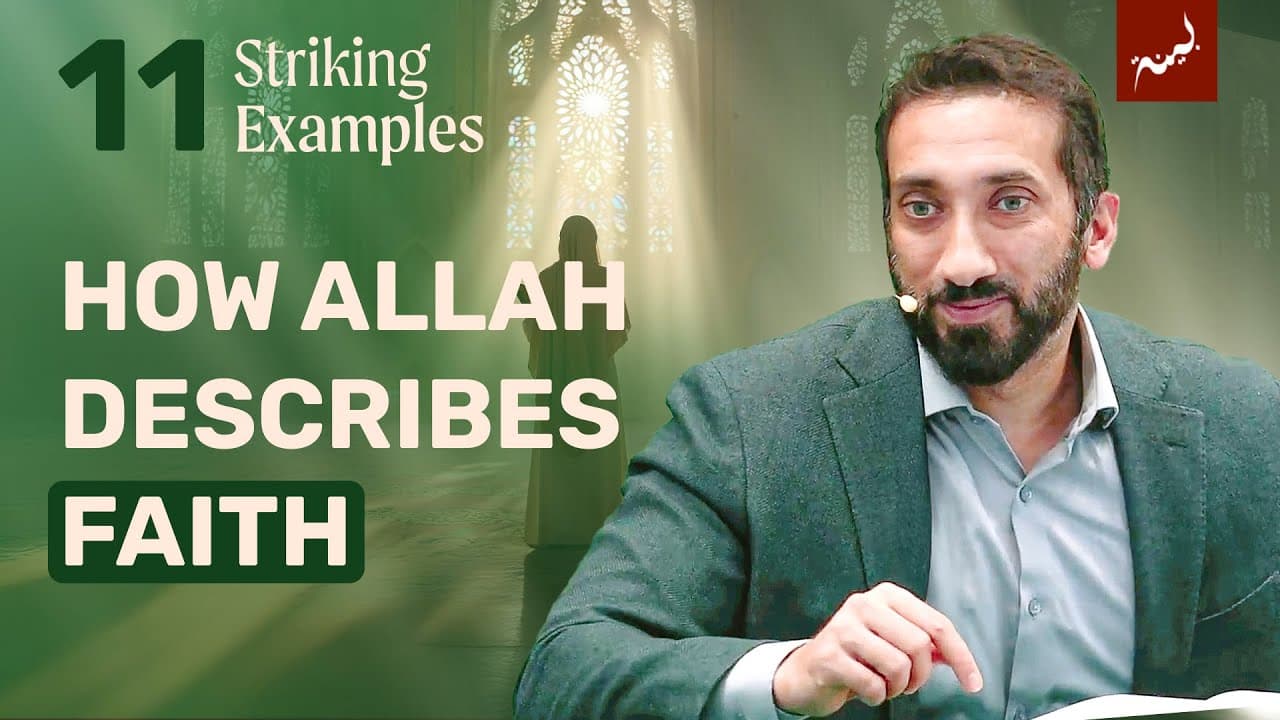
TL;DR
The Quran’s lamp-in-a-niche parable explains faith as divine guidance protected within the believer’s heart and gently illuminating life without becoming an obstacle to others. The niche also represents focused attention: serious sins, justice, and family responsibilities deserve more light than petty disputes or minor faults. Read on to see how Nouman Ali Khan applies this image from Quran 24:35 to priorities, relationships, and sharing guidance.
Transcript
are we live okay in everyone once again we're at the doors of this most incredible Parable in the Quran Allah is the light of the skies and the Earth where we talked about the outside light and the Divine Light um and what its meanings can be including like the sun for example the heavenly bodies and all of that that Allah has illuminated that we c... Read More
Key Insights
- The human soul contains a reflection of divine attributes, not a part of the Divine. Its natural attraction to guidance, wisdom, creativity, invention, and justice reflects how Allah's names inspire desires and qualities within human beings.
- The niche is a curved recess built into a wall to hold a lamp. Before electric lighting, its shape allowed light to strike the wall and spread through a home while keeping the lamp tucked safely away.
- The believer's heart is represented by the lamp within the niche. The shape of the rib cage resembles the wall recess, creating a physical image of divine guidance being placed, nurtured, and protected inside a person.
- Faith does not create unnecessary obstacles for other people. Like a lamp recessed into a wall, a believer can share goodness and guidance without imposing, interrupting, annoying, endangering, or disrupting those around them.
- The niche directs more light toward particular parts of a room. This represents a believer's need to prioritize attention, because greater illumination makes an issue more visible, conscious, and available for serious thought.
- Moral priorities require distinguishing major sins from minor mistakes. Focusing intensely on a forgotten phrase before eating while ignoring forbidden earnings or stolen inheritance directs religious attention toward lesser matters and leaves grave wrongdoing insufficiently examined.
- Petty family conflicts can consume excessive thought, energy, and conversation. The parable suggests leaving minor mistakes, social slights, and other people's faults in relative darkness so that more important responsibilities receive attention.
- Guidance should spread with gentleness rather than harshness. A niche produces soft ambient light by reflecting illumination from the wall, illustrating how a believer should avoid presenting religious truth like an intrusive bright beam pointed directly into someone's face.
Install to Summarize YouTube Videos and Get Transcripts
Explore YouTube Video Summarizer or Get YouTube Transcript Extractor
Questions & Answers
Q: What does the lamp in a niche represent in Quran 24:35?
The lamp represents divine guidance within the believer’s heart. The niche is likened to the rib cage surrounding the heart, presenting spiritual light as an inward gift that should be protected and allowed to illuminate a person’s life.
Q: What is a niche, and why was it used for lamps?
A niche is a curved, arched recess built into a wall. Before electric lighting, a lamp could be placed inside it so that its light struck the wall and spread around the room while remaining safely tucked away and saving space.
Q: Why is the believer’s heart compared to a lamp inside a niche?
The rib cage is described as resembling a wall niche, with the heart positioned inside it like a lamp. This physical image illustrates how a likeness of divine light exists within a human being and how Allah’s guidance can illuminate the believer from within.
Q: How does the niche symbolize a believer’s treatment of others?
A lamp tucked into a wall gives light without occupying the room or obstructing anyone. Likewise, believers should share goodness without creating interruptions, annoyance, danger, or disruption; their guidance should be gentle rather than imposing.
Q: Why does the lamp parable emphasize focus and priorities?
Because a curved niche directs more light toward some areas than others, it represents selective attention. Believers should give serious wrongdoing and essential responsibilities greater focus instead of letting minor errors, social slights, or petty disagreements consume disproportionate energy.
Q: How can religious attention become focused on the wrong things?
Attention becomes distorted when minor practices receive intense scrutiny while grave wrongdoing is neglected. The example given is repeatedly checking whether someone said a phrase before eating while overlooking forbidden earnings or stolen inheritance.
Q: What does ambient light teach about sharing guidance?
Light reflected from a niche’s wall spreads softly instead of shining harshly into someone’s eyes. The parable therefore suggests presenting guidance gently, since an intrusive bright beam may produce annoyance rather than receptiveness.
Q: How does the lamp parable apply to family conflicts?
Petty disputes, missed invitations, social slights, and other people’s minor mistakes can consume excessive thought, conversation, and emotional energy. The parable encourages leaving such matters in relative darkness when appropriate so that family responsibilities and concerns with greater moral weight receive more attention.
Summary & Key Takeaways
-
Allah's light illuminates the skies and Earth, while a likeness of that light exists within the human being. The soul reflects divine attributes without being part of the Divine. It naturally seeks guidance, wisdom, creativity, justice, and other qualities associated with Allah's names, making spiritual longing central to human nature.
-
The niche is a curved recess in a wall that once held a household lamp. Its surface reflected and distributed light throughout a room while keeping the lamp safely out of the way. The parable connects this protected source of illumination with the believer's heart inside the rib cage.
-
The niche teaches that faith should illuminate life gently and selectively. A believer should avoid becoming an obstacle, focus attention on serious moral responsibilities, and stop magnifying petty conflicts or minor faults. Like ambient light reflected from a wall, guidance should create a softer environment instead of striking people harshly.
-
Key Insights Lessons Based on the Transcript and Description
Read in Other Languages (beta)
Share This Summary 📚
Summarize YouTube Videos and Get Video Transcripts with 1-Click
Try YouTube Summary with ChatGPT & Claude or YouTube Transcript Generator
Explore More Summaries from Nouman Ali Khan - Official - Bayyinah 📚






Summarize YouTube Videos and Get Video Transcripts with 1-Click
Try YouTube Summary with ChatGPT & Claude or YouTube Transcript Generator