What Lessons Can We Learn from Uhud to Hajj?
TL;DR
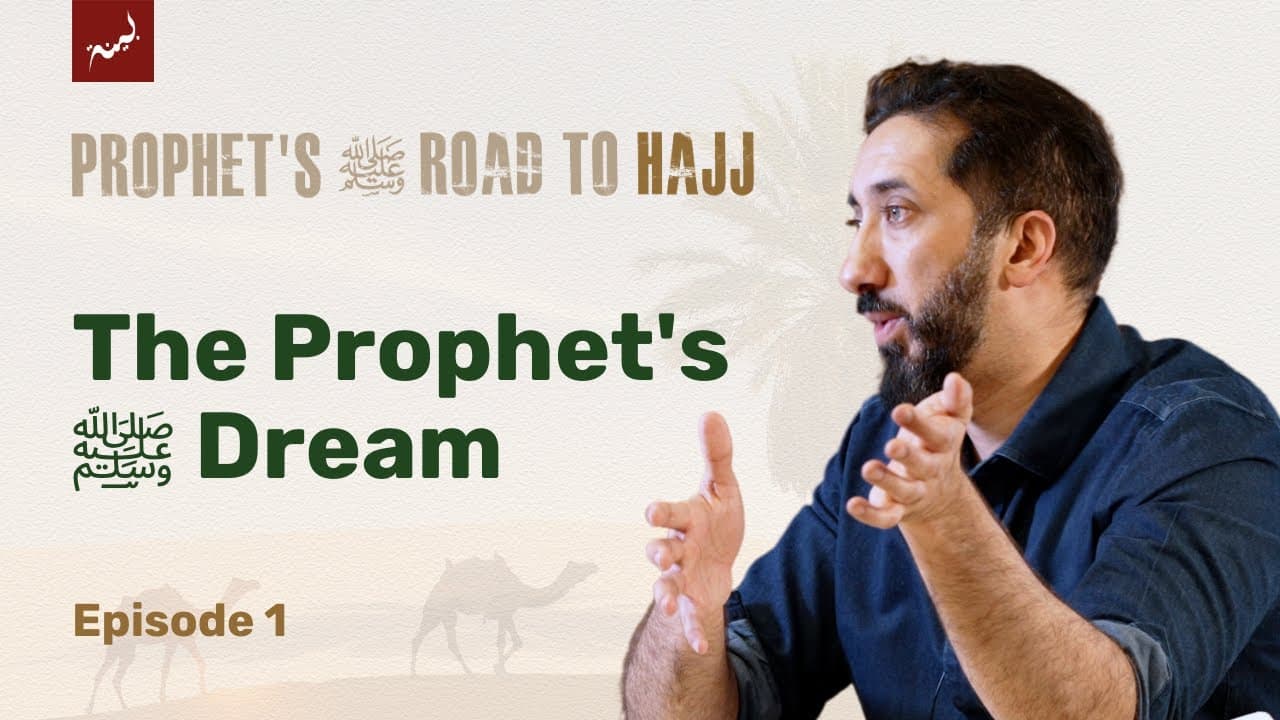
Prophet Muhammad's mission aimed to reestablish the Hajj, aligning it with the monotheistic legacy of Ibrahim. Amid significant resistance from Makkah's elite, he strategically navigated these challenges, showcasing strong leadership and unity among his diverse followers to restore the Ka'bah as a place of worship for the one true God.
Transcript
what makes you proud of your tribe who my father was and who his father was well you go far back enough who's everybody's father Adam which means we're all essentially from the tribe of humanity we're all equal you see so tribal superiority becomes a serious problem you cannot claim superiority based on race if all h... Read More
Key Insights
- Prophet Muhammad aimed to reestablish the Hajj pilgrimage, aligning it with Prophet Ibrahim's monotheistic vision by removing idols from the Ka’bah.
- The Ka’bah, before Islam, was a hub for polytheistic worship, and its purification was essential for restoring its monotheistic purpose.
- The mission faced significant resistance from Makkah's political and economic elite, who benefited from the existing polytheistic practices.
- The Prophet's mission was not just religious but also a socio-political movement, challenging the entrenched power structures in Makkah.
- The Prophet's journey to Hajj was fraught with danger, as the Quraysh sought to prevent the Muslims from reaching Makkah, fearing the loss of their economic and political power.
- Prophet Muhammad's followers, diverse in tribal and social backgrounds, showed unparalleled loyalty, which was unprecedented in Arab society.
- The Prophet's strategic decisions, such as taking alternative routes to Makkah, showcased his leadership and foresight in avoiding direct conflict.
- The negotiations and eventual treaty with the Quraysh were pivotal in establishing the Prophet's authority and paving the way for future Islamic expansion.
Install to Summarize YouTube Videos and Get Transcripts
Explore YouTube Video Summarizer or Get YouTube Transcript Extractor
Questions & Answers
Q: What was the primary mission of Prophet Muhammad regarding the Ka’bah?
The primary mission of Prophet Muhammad regarding the Ka’bah was to reestablish the Hajj pilgrimage in line with Prophet Ibrahim's monotheistic vision. This involved purifying the Ka’bah by removing the idols that had been placed there for polytheistic worship, thus restoring its original purpose as a center for the worship of one God.
Q: Why did the political and economic elite of Makkah resist the Prophet's mission?
The political and economic elite of Makkah resisted the Prophet's mission because they were deeply entrenched in the city's polytheistic practices, from which they derived significant economic benefits. The status quo allowed them to maintain power and wealth, and the Prophet's call for monotheism threatened to disrupt their established social and economic order.
Q: How did Prophet Muhammad's followers demonstrate loyalty?
Prophet Muhammad's followers demonstrated loyalty by uniting under the banner of Islam, despite their diverse tribal and social backgrounds. This unity was unprecedented in Arab society, where tribal affiliations typically dictated loyalty. The followers' willingness to risk their lives for the mission and adhere to the Prophet's leadership highlighted their deep commitment to the cause.
Q: What strategic decisions did the Prophet make to avoid conflict with the Quraysh?
To avoid conflict with the Quraysh, the Prophet made strategic decisions such as taking alternative routes to Makkah, which allowed the Muslims to bypass direct military engagement. These decisions showcased his foresight and leadership, ensuring the safety of his followers while maintaining the mission's focus on reaching Makkah for the Hajj pilgrimage.
Q: What was the significance of the negotiations with the Quraysh?
The negotiations with the Quraysh were significant because they led to a treaty that acknowledged the Prophet's authority and allowed for a peaceful resolution of tensions. This treaty was a turning point, as it paved the way for the future expansion of Islam and set the stage for the eventual peaceful conquest of Makkah. It demonstrated the Prophet's diplomatic acumen and commitment to achieving his mission through non-violent means.
Q: How did the Quraysh initially respond to the Prophet's attempt to perform Hajj?
The Quraysh initially responded to the Prophet's attempt to perform Hajj with hostility and prepared to prevent the Muslims from entering Makkah. They viewed the Prophet's mission as a direct threat to their economic interests and political power. However, as negotiations progressed, their stance softened, leading to a treaty that allowed for future peaceful interactions.
Q: What role did the Prophet's followers play in the success of his mission?
The Prophet's followers played a crucial role in the success of his mission by providing unwavering support and loyalty. Their commitment allowed the Prophet to pursue his objectives despite significant opposition. The followers' unity and willingness to face danger for the cause of Islam were instrumental in overcoming the challenges posed by the Quraysh and other adversaries.
Q: What were the long-term impacts of the Prophet's mission to reestablish Hajj?
The long-term impacts of the Prophet's mission to reestablish Hajj included the restoration of the Ka’bah's monotheistic purpose, the unification of diverse tribes under Islam, and the establishment of a foundation for the peaceful expansion of the Islamic state. The successful negotiations with the Quraysh and subsequent treaties enabled the spread of Islam and set a precedent for future diplomatic engagements.
Summary & Key Takeaways
-
Prophet Muhammad's mission to reestablish Hajj was central to his prophetic role, aiming to restore the Ka’bah's monotheistic purpose. This mission faced resistance from Makkah's elite, who were invested in the polytheistic status quo.
-
The Prophet's journey to Makkah was strategically planned to avoid direct conflict, showcasing his leadership. His diverse followers demonstrated unprecedented loyalty, challenging tribal norms and uniting under the banner of Islam.
-
Negotiations with the Quraysh, despite initial resistance, eventually led to a treaty that solidified the Prophet's authority. This was a turning point, allowing for the peaceful expansion of Islam and the eventual purification of the Ka’bah.
Read in Other Languages (beta)
Share This Summary 📚
Summarize YouTube Videos and Get Video Transcripts with 1-Click
Try YouTube Summary with ChatGPT & Claude or YouTube Transcript Generator
Explore More Summaries from Nouman Ali Khan - Official - Bayyinah 📚



Summarize YouTube Videos and Get Video Transcripts with 1-Click
Try YouTube Summary with ChatGPT & Claude or YouTube Transcript Generator