How Does the Quran Honor Prophet Muhammad?
TL;DR
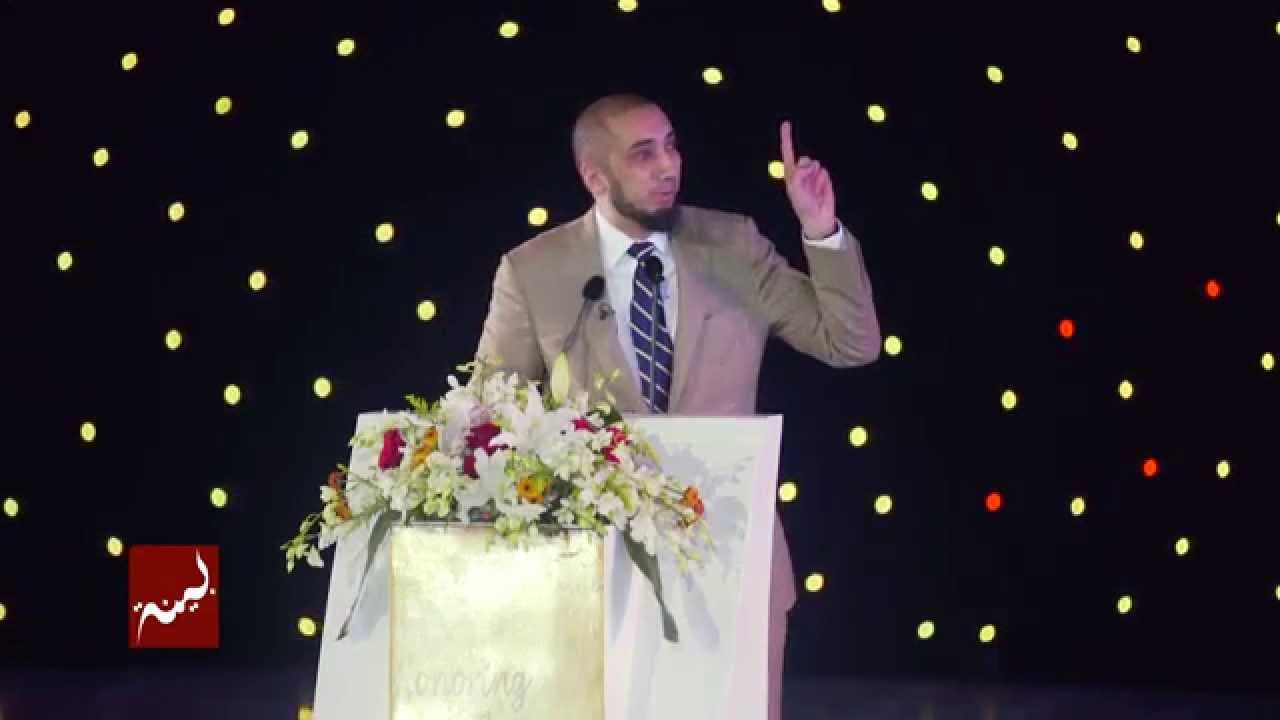
The Quran provides the greatest praise of Prophet Muhammad because Allah’s own words honor the Messenger in a way no human tribute can equal. Muslims should also honor every messenger, recognize how entertainment businesses profit from provocative reactions, and respond intelligently rather than through destructive acts that amplify offensive material.
Transcript
I think you guys have been sitt in the same place for a long time I think so stand up hurry up and do it stretch a little bit it's cold you need the blood to flow in your body it's cold for you it's not cold for me I'm from America all right good have a seat alhamd I will uh first give everybody here a disclaimer I got off a plane maybe three hours... Read More
Key Insights
- Postmodern entertainment culture treats nearly everything as potential comedy, including historical figures, sacred stories, religious beliefs, and revered individuals. This differs from premodern cultures, where communities generally protected particular people, monuments, stories, and national heroes from ridicule as part of their collective dignity.
- Entertainment media is a commercial system designed to generate revenue from attention and amusement. Executives, intellectuals, and other specialists invest research and labor in films, television, cartoons, and related content because laughter, audience interest, advertising, and widespread circulation can be monetized.
- Muslim respect extends to every messenger of Allah, including Jesus and Moses, rather than only to Prophet Muhammad. The Quranic principle of not distinguishing between the messengers means that ridicule directed at any of them should be regarded as offensive to Muslims.
- Reactionary conduct can amplify the provocation it opposes. Banning a platform or overturning cars does not restore respect for Prophet Muhammad, while highly visible outrage can generate attention, news reports, advertising, and further incentives for people who deliberately target Muslims.
- Provocateurs can treat Muslims as predictable targets because repeated offense often produces a strong public reaction. The lecture argues that Muslims must understand the motives, language, and commercial machinery behind such acts so they can respond intelligently instead of repeatedly serving those motives.
- The Quran is presented as the greatest source of praise for Prophet Muhammad. Human beings can honor and praise him in many ways, but none can match how Allah describes, consoles, and elevates His Messenger through His own words.
- Prophet Muhammad experienced the profound pain of losing a beloved child while his hostile uncle celebrated the death. The example emphasizes both the severity of the Messenger’s personal grief and the exceptional cruelty he faced from someone within his own extended family.
- Allah’s consolation redirects the Messenger from loss toward incomparable abundance. At a moment of grief, the Quran tells him that he has been granted extraordinary good, including his status and the Quran, teaching him to consider what Allah had given rather than only what had been taken.
- More videos from this channel:
- More from this channel: Nouman Ali Khan - Official - Bayyinah
Install to Summarize YouTube Videos and Get Transcripts
Explore YouTube Video Summarizer or Get YouTube Transcript Extractor
Questions & Answers
Q: How does the Quran honor Prophet Muhammad?
The Quran honors Prophet Muhammad through Allah’s own descriptions, commands, consolation, and declarations about what He granted His Messenger. The lecture presents this divine praise as unparalleled because no human being can equal Allah’s way of honoring him. One example comes after the Messenger loses a child, when Allah turns his attention toward the extraordinary abundance and goodness he has received.
Q: Why is Allah’s praise of Prophet Muhammad considered unmatched?
Allah’s praise is considered unmatched because it comes from the One who selected, guided, and granted the Messenger his status and revelation. Human beings may express love, admiration, and respect, but their words cannot approach the authority of Allah’s words. For this reason, the lecture looks to Quranic descriptions as the clearest and greatest acknowledgment of Prophet Muhammad’s honor.
Q: How should Muslims respond when a prophet is insulted?
Muslims should recognize an insult against any messenger of Allah as offensive, whether it targets Prophet Muhammad, Jesus, Moses, or another messenger. The response should also be intelligent rather than destructive. The lecture rejects actions such as overturning cars and questions platform bans as solutions, arguing that Muslims must understand how provocateurs benefit from predictable outrage and expanded publicity.
Q: Why should Muslims honor every messenger of Allah?
Muslims should honor every messenger because the Quran makes believers declare that they do not distinguish between Allah’s messengers in their fundamental acceptance and respect. The lecture therefore argues that ridicule of Jesus or Moses should concern Muslims just as ridicule of Prophet Muhammad does. Respect for the prophetic tradition is comprehensive, not limited to the final Messenger alone.
Q: Why can angry public reactions strengthen offensive media?
Angry public reactions can increase the visibility and commercial value of offensive material. According to the lecture, provocateurs understand that Muslims may respond strongly, so they repeat such acts after enough time has passed. Public outrage can push content into news reports and trends, attract attention, increase advertising opportunities, and give the people behind the provocation the sensation they seek.
Q: How does entertainment media profit from religious ridicule?
Entertainment media profits by turning laughter, shock, controversy, and attention into commercial value. The lecture describes an organized machinery involving executives, intellectuals, research, films, television, cartoons, and other formats. When religious ridicule produces a strong reaction, media organizations can circulate it more widely, sell news coverage, attract advertising, and benefit financially from the audience’s attention and emotional response.
Q: What does Prophet Muhammad’s loss of a child reveal about Quranic consolation?
The loss reveals how Quranic consolation meets the Messenger at a moment of intense personal grief. His pain was made worse when his hostile uncle celebrated the child’s death. Allah responded by emphasizing the unimaginable abundance and goodness granted to the Messenger, redirecting his attention from what had been lost toward gifts, status, and revelation that could not be compared with ordinary possessions.
Q: What is the difference between premodern and postmodern attitudes toward sacred things?
Premodern cultures generally treated certain stories, monuments, historical figures, religious persons, and national heroes as worthy of protection from mockery. Postmodern entertainment culture, as described in the lecture, permits nearly everything to become an object of humor. Historical leaders, classical material, God, Jesus, and other sacred subjects can all be used in parody, cartoons, satire, and commercial entertainment.
Summary & Key Takeaways
-
Modern entertainment culture allows nearly everything, including sacred figures and religious beliefs, to become material for ridicule. The lecture argues that this culture is supported by a commercial system in which attention, laughter, controversy, news coverage, and advertising can produce financial value for media organizations and content creators.
-
Muslims should feel offended when any messenger of Allah is insulted, not only when Prophet Muhammad is targeted. The Quran requires believers not to distinguish between Allah’s messengers in their fundamental respect for them, so ridicule directed at Jesus, Moses, or another messenger also concerns the Muslim community.
-
The strongest way to understand Prophet Muhammad’s honor is to examine how Allah describes and consoles him in the Quran. After the painful death of his child and his uncle’s cruel celebration, Allah directs his attention from what he lost toward the incomparable abundance and goodness he had received.
Read in Other Languages (beta)
Share This Summary 📚
Summarize YouTube Videos and Get Video Transcripts with 1-Click
Try YouTube Summary with ChatGPT & Claude or YouTube Transcript Generator
Explore More Summaries from Nouman Ali Khan - Official - Bayyinah 📚

Summarize YouTube Videos and Get Video Transcripts with 1-Click
Try YouTube Summary with ChatGPT & Claude or YouTube Transcript Generator