How to build 5 AI apps in 30 minutes today
TL;DR
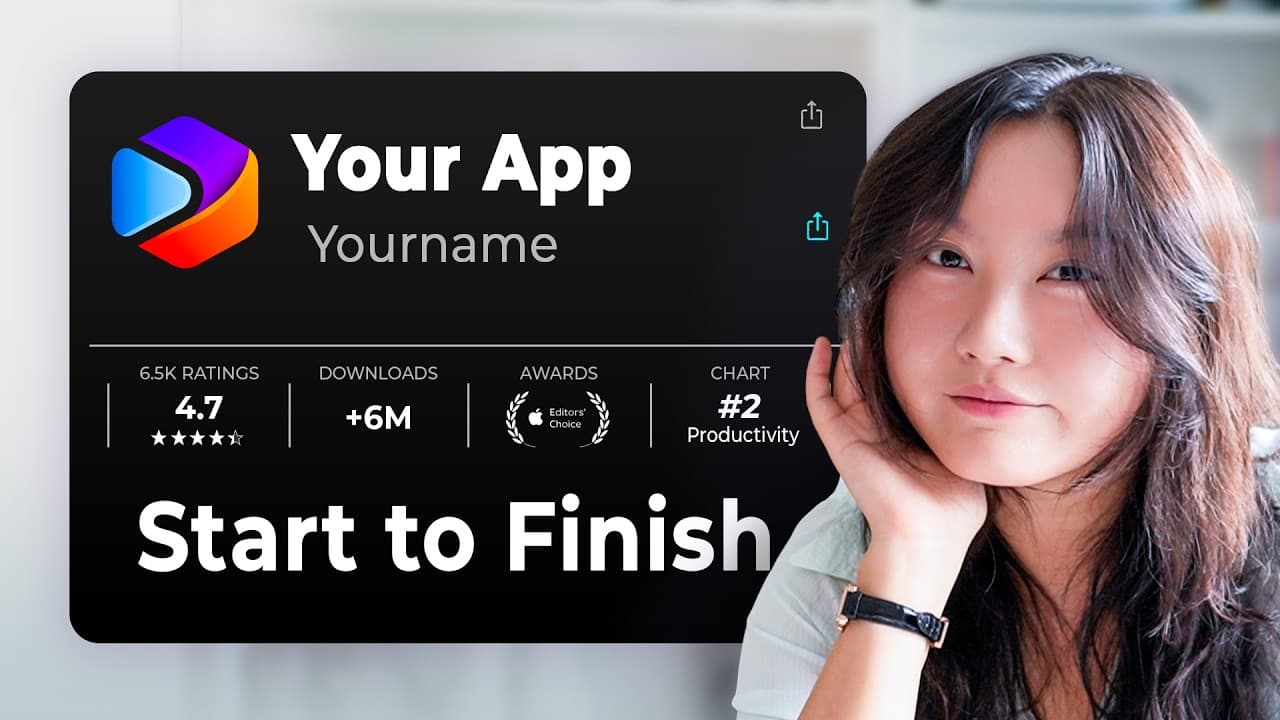
The video walks through five AI projects you can start building now using ChatGPT and Lovable, with three increasing levels of complexity for each. It covers a lightweight planning framework, practical prompts, and how to scale simple ideas into usable apps, emphasizing incremental progress and debugging strategy.
Transcript
In this video, I'm going to go over five AI projects that you can start building today using ChatGpt and Lovable. I tried my best to pick a diverse range of projects, including a web app, a dashboard, internal tool, mobile app, and an agent. I've added Call Mom to your evening routine. I notice you're more likely to complete calls after 7:00 p.m. S... Read More
Key Insights
- AI app projects can be started quickly by choosing safe, high impact ideas like calculators, toolkits, and mobile coach apps that scale with complexity.
- A structured thinking framework called Tiny Ferrets Carry Dangerous Code guides development through thinking, checkpoints, debugging, and context to reduce errors and reveal key requirements.
- A PRP, or product requirements prompt, helps articulate audience, experience, core features, and aesthetics before writing code, improving AI collaboration.
- Version control is essential and GitHub is the recommended standard for managing changes and collaboration across levels of development.
- Clear prompts and incremental changes enable AI tools to implement features without over committing to complex architectures at once.
- Debugging should be a primary mode, with detailed error messages and additional context provided to the AI for faster fixes.
- Prompts for frameworks like React, Tailwind, and 3.js help align AI generated code with established, robust libraries rather than reinventing the wheel.
- The video demonstrates a practical path from a single generative idea to a multi level platform that supports user accounts, sharing, and embedding capabilities.
- More videos from this channel:
- More from this channel: Tina Huang
Install to Summarize YouTube Videos and Get Transcripts
Explore YouTube Video Summarizer or Get YouTube Transcript Extractor
Questions & Answers
Q: What is the Tiny Ferrets Carry Dangerous Code framework and why is it useful
The Tiny Ferrets Carry Dangerous Code framework is a practical approach for AI assisted coding that emphasizes thinking, checkpoints, debugging, and context. It helps developers plan ahead with a PRP, reuse existing frameworks, maintain version control, and debug methodically. By treating development as a two mode process implementing features and debugging errors, teams can stay focused, reduce risk, and improve the clarity and quality of the output from AI tools.
Q: What is a PRP and how does it help in AI app building
A PRP, or product requirements prompt, is a structured prompt that captures target audience, user experience, core features, mockups, and design vibe before starting implementation. This prompt guides AI coding tools to generate code aligned with business goals and user needs. Using a PRP reduces guesswork, accelerates iteration, and provides clear criteria for success, enabling more productive collaboration between humans and AI.
Q: What is Project 1 called and what does level 1 aim to do
Project 1 is called the Everything Calculator. Level 1 aims to enable a user to describe any type of calculator and have the AI instantly build a clean interface for it. This initial milestone focuses on rapid prototyping and demonstrating the basic calculation capability without additional features or user accounts, setting a foundation for more complex levels.
Q: What features are added in level 2 for the calculator project
Level 2 expands the calculator project into a platform where users can browse, save, and rate calculators in a community marketplace. It introduces user accounts, login functionality, and the ability for users to create and share multiple calculators. This level emphasizes collaboration, discovery, and personalization rather than a single calculator.
Q: What is the broader goal of level 3 in the calculator project
Level 3 adds social sharing and embedding features, enabling users to publish calculators via social media links or QR codes and embed them into external websites. It also aims to help creators build a following, bridging the gap between individual tools and a creator ecosystem, while maintaining core calculator functionality.
Q: What does the video say about frameworks to help AI app development
The video stresses using established frameworks to accelerate AI app development and avoid reinventing solutions. It highlights React for front end, Tailwind for styling, and 3.js for graphics, noting that pointing the AI toward appropriate packages leads to more robust, production ready results and easier collaboration.
Q: What role do assessments play in the learning process described
Assessments are used throughout the video to reinforce learning and test understanding as projects progress. They prompt viewers to apply the Tiny Ferrets framework, build PRPs, and practice implementing features step by step. This approach ensures learners stay engaged, receive feedback, and steadily improve their ability to translate ideas into functioning AI apps.
Q: How should one manage complexity when using AI tools for coding
To manage complexity, the video recommends incremental changes and maintaining a clear mode distinction between implementing features and debugging. Start with Level 1, validate core functionality, then progressively add Level 2 capabilities, reserving Level 3 enhancements for when the team is ready. Clear context and error reporting help AI tools deliver accurate results without overwhelm.
Summary & Key Takeaways
-
The video presents five project ideas and shows how to prototype quickly using chat prompts and Lovable, highlighting a structured approach to AI app development.
-
It emphasizes thinking before coding with a PRP concept, using frameworks and version control, and layering features across three levels of complexity for each project.
-
It ends with practical advice on staying iterative and separating implementing from debugging modes to manage AI assisted coding effectively.
Read in Other Languages (beta)
Share This Summary 📚
Summarize YouTube Videos and Get Video Transcripts with 1-Click
Try YouTube Summary with ChatGPT & Claude or YouTube Transcript Generator
Explore More Summaries from Tina Huang 📚




Summarize YouTube Videos and Get Video Transcripts with 1-Click
Try YouTube Summary with ChatGPT & Claude or YouTube Transcript Generator