What Sparked the Outbreak of World War I?
TL;DR
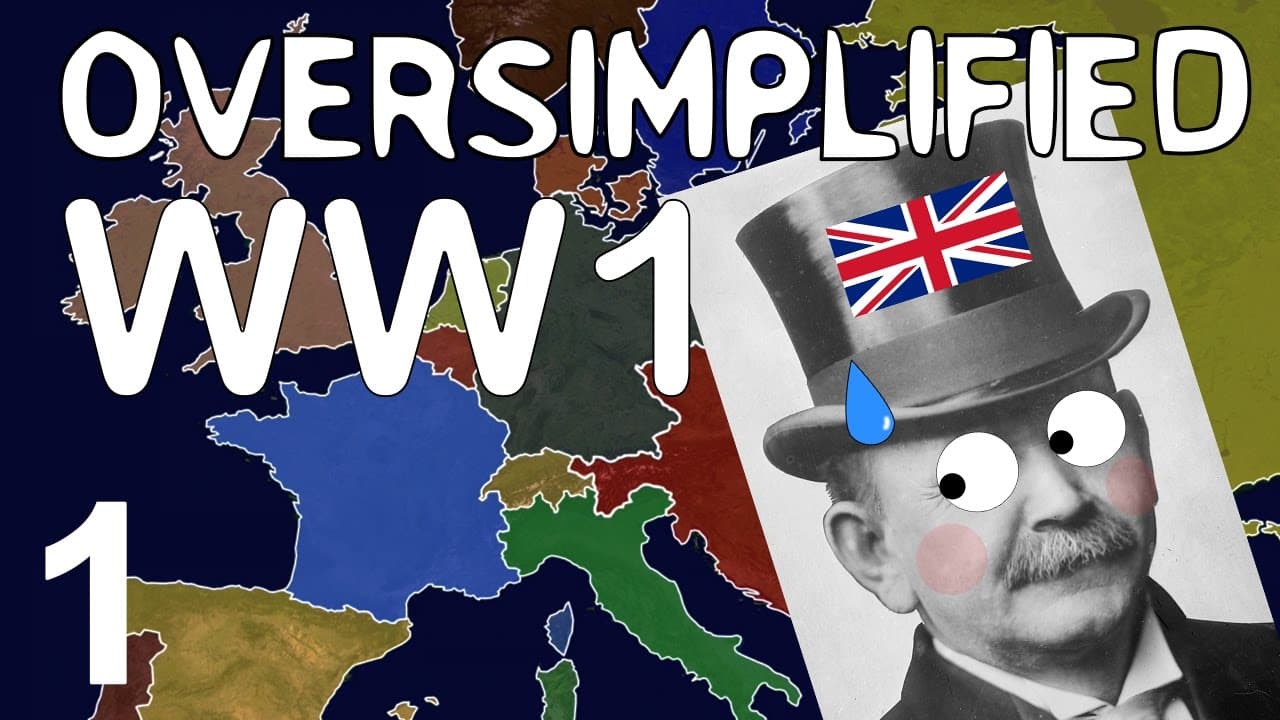
The assassination of Archduke Franz Ferdinand in 1914 set off a chain reaction leading to World War I. Tensions among European powers, fueled by alliances and rivalries, escalated into a large-scale conflict as nations declared war in response to the unfolding crisis.
Transcript
The world of 1914. A time of modern technology, culture, and fashion. Truly the height of civilization. Let's have a war. Everyone knew a big war was coming. France wanted some stuff back that Germany had taken from it, Germany wanted to take more of EVERYONE'S stuff, and they're building a big sexy navy that was making the British uncomfortable. T... Read More
Key Insights
- 🥺 The assassination of Archduke Franz Ferdinand sparked a series of events that led to the outbreak of World War I.
- 🫱 The complex system of alliances resulted in the escalation of the war, with various nations joining the conflict.
- 🥺 Trench warfare and technological advancements led to a stalemate on the Western front, with devastating consequences for soldiers.
- ▶️ Propaganda played a crucial role in shaping public opinion and influencing the perception of the war.
Install to Summarize YouTube Videos and Get Transcripts
Explore YouTube Video Summarizer or Get YouTube Transcript Extractor
Questions & Answers
Q: What were the main causes of World War I?
The main causes of World War I were the long-standing rivalries and territorial disputes between European nations, militarism, and the system of intricate alliances.
Q: How did the assassination of Archduke Franz Ferdinand lead to war?
The assassination of Archduke Franz Ferdinand by Serbian nationalists provided Austria-Hungary with a reason to declare war on Serbia, which then triggered a series of alliances and declarations of war among various European powers.
Q: How did trench warfare contribute to the stalemate on the Western front?
Trench warfare created a stalemate on the Western front as both sides dug in and defended their positions. The devastating effects of artillery bombardment and machine gun fire made it extremely challenging for attackers to advance, resulting in a prolonged and deadly struggle for territorial gains.
Q: How did propaganda influence the perception of the war?
Propaganda played a significant role in shaping public opinion during World War I. It was used by various nations to demonize the enemy, gain support for the war effort, and promote patriotism among their own populations.
Key Insights:
- The assassination of Archduke Franz Ferdinand sparked a series of events that led to the outbreak of World War I.
- The complex system of alliances resulted in the escalation of the war, with various nations joining the conflict.
- Trench warfare and technological advancements led to a stalemate on the Western front, with devastating consequences for soldiers.
- Propaganda played a crucial role in shaping public opinion and influencing the perception of the war.
- The war had far-reaching global implications and caused significant geopolitical changes.
Summary & Key Takeaways
-
The tensions between various European nations, including Austria-Hungary, Germany, Serbia, France, and Russia, led to a volatile atmosphere primed for conflict.
-
The assassination of Archduke Franz Ferdinand by Serbian nationalists in Sarajevo sparked Austria-Hungary's declaration of war on Serbia.
-
The complex web of alliances resulted in an escalating conflict, with nations like Germany, France, Britain, and Russia joining the war.
Read in Other Languages (beta)
Share This Summary 📚
Summarize YouTube Videos and Get Video Transcripts with 1-Click
Try YouTube Summary with ChatGPT & Claude or YouTube Transcript Generator
Explore More Summaries from OverSimplified 📚



Summarize YouTube Videos and Get Video Transcripts with 1-Click
Try YouTube Summary with ChatGPT & Claude or YouTube Transcript Generator