Why Does ICT Avoid Trading Non-Farm Payroll Week? Trade Conditions and the Coming Volatility Storm
TL;DR
ICT avoids trading after Tuesday’s New York session during Non-Farm Payroll week because his 27 years of records show that Wednesday through Friday produce more losses than wins for him. His approach uses calendar and trade-frequency filters to avoid low-probability conditions and prevent revenge trading from magnifying losses. Read on for his filtering rules, hard-earned account lessons, and NFP journaling method.
Transcript
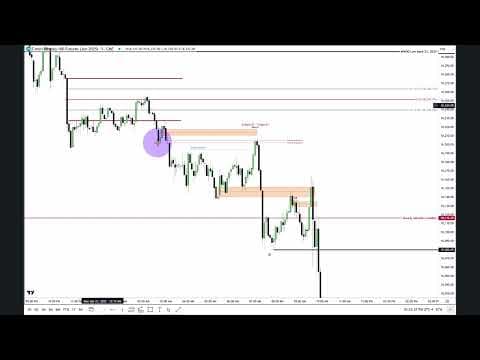
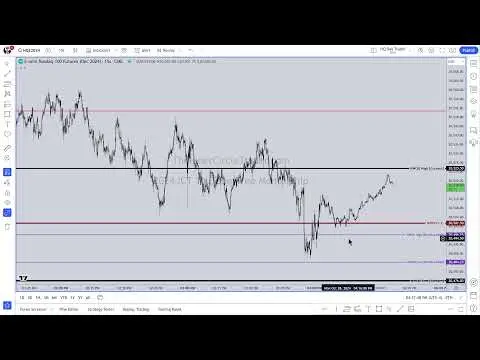
welcome back folks this is a short little discussion on why i stay on the sidelines after tuesday's new york session on the weeks of non-farm payroll and then i'll close this video with a short message about why i believe all of you should be careful going into the coming weeks this is a euro dollar chart it's a 15 minute time frame and you can see... Read More
Key Insights
- The week that begins every new month delivers skewed, wonky price action that is difficult to gauge with high probability, largely due to market expectation around the Non-Farm Payroll employment number released at the start of the month.
- Staying on the sidelines after the New York session on Tuesday of NFP week is the core rule, because reviewing nearly three decades of journals showed this specific window produced more losing trades than winning ones.
- Filters are essential to a trading plan, and they may be time-based or calendar-based, including limits on trade frequency and the number of trades taken inside a day, week, or month.
- Revenge trading turns a small mistake into a larger one, since taking a loss and re-entering to 'get it back' parlays into revenge part two, a bigger mistake, and a larger drawdown.
- Two commodity trading accounts were completely blown out trading the S&P during these specific NFP days, making the lesson one learned through real losses rather than theory.
- In this industry less is more, so abstaining from low-probability windows and limiting participation protects capital more than chasing every gyration in price.
- Honest back-testing means viewing data with a hard, critical, objective view rather than cherry-picking, because if you torture the numbers enough they will submit to anything.
- Journaling NFP-week price action involves hand-drawn line charts marking short-term highs and lows where liquidity was taken, plus the time, day, range in pips, and how far price moved beyond each prior high or low.
Install to Summarize YouTube Videos and Get Transcripts
Explore YouTube Video Summarizer or Get YouTube Transcript Extractor
Questions & Answers
Q: Why does ICT avoid trading after Tuesday during Non-Farm Payroll week?
His review of 27 years of executions, expectations, and journal entries showed that he was wrong more often than right on Wednesday, Thursday, and Friday leading into Non-Farm Payroll. Although those days can produce attractive price movements, he prefers protecting his capital by staying on the sidelines after Tuesday’s New York session.
Q: What are Non-Farm Payroll trade conditions like at the beginning of the month?
ICT describes price delivery during the week beginning each month as skewed, wonky, and difficult to assess with a high degree of probability. He connects these conditions to expectations surrounding the Non-Farm Payroll employment numbers released near the beginning of the month.
Q: Does ICT also avoid Monday and Tuesday of Non-Farm Payroll week?
His core rule is to stop participating after Tuesday’s New York session. However, his records also show that he typically loses more than he makes on the Monday and Tuesday of that week, so he approaches those sessions cautiously as well.
Q: What trading-plan filters does ICT recommend?
He recommends time-based and calendar-based filters, along with limits on trade frequency. A trading plan can restrict how many trades are taken within a day, week, or month and exclude periods in which the trader’s records show a higher likelihood of losing.
Q: Why is revenge trading especially dangerous during NFP week?
After taking a loss, ICT would re-enter the market intending to win the money back. If that trade also failed, another revenge trade could turn a small mistake into a larger mistake and a deeper drawdown.
Q: What losses led ICT to stop trading these NFP sessions?
He completely blew out two commodity trading accounts while trading the S&P during these specific NFP-week days. Those losses convinced him that he did not need to repeat the same mistake 500 more times before adopting a filter.
Q: How should traders evaluate their back-testing data?
ICT says traders should examine data with a hard, critical, and objective view, focusing on the periods when they lose more than they make. Looking only for confirming evidence amounts to cherry-picking, because numbers can be made to support almost anything when they are manipulated enough.
Q: How does ICT journal Non-Farm Payroll week price action?
He draws hand-made line charts for Wednesday through Friday and marks short-term highs and lows where liquidity was taken. He records the time, day, pip range, movement beyond prior highs or lows, and breaks in market structure, while also identifying order blocks through candle bodies and optimal trade entries.
Summary & Key Takeaways
-
The speaker explains he stays on the sidelines after Tuesday's New York session during Non-Farm Payroll week. He teaches that the week beginning each new month delivers skewed, difficult price action tied to employment-number expectations, and over 27 years he rarely regretted not participating on those days.
-
Traders need filters, whether time-based or calendar-based, covering trade frequency and number of trades per day, week, or month. Without them, traders invite adversity. He admits blowing out two commodity accounts trading the S&P on these days and entering revenge mode that parlayed small losses into larger drawdowns.
-
He journals Wednesday through Friday of NFP week with hand-drawn line charts, recording short-term highs and lows where liquidity was taken, the time, day, pip range, and break in market structure. He identifies order blocks using candle bodies and optimal trade entries, sharing the method without trading it himself.
Read in Other Languages (beta)
Share This Summary 📚
Summarize YouTube Videos and Get Video Transcripts with 1-Click
Try YouTube Summary with ChatGPT & Claude or YouTube Transcript Generator
Explore More Summaries from The Inner Circle Trader 📚
Summarize YouTube Videos and Get Video Transcripts with 1-Click
Try YouTube Summary with ChatGPT & Claude or YouTube Transcript Generator