How Did Louis Vuitton Rise From Poverty?
TL;DR
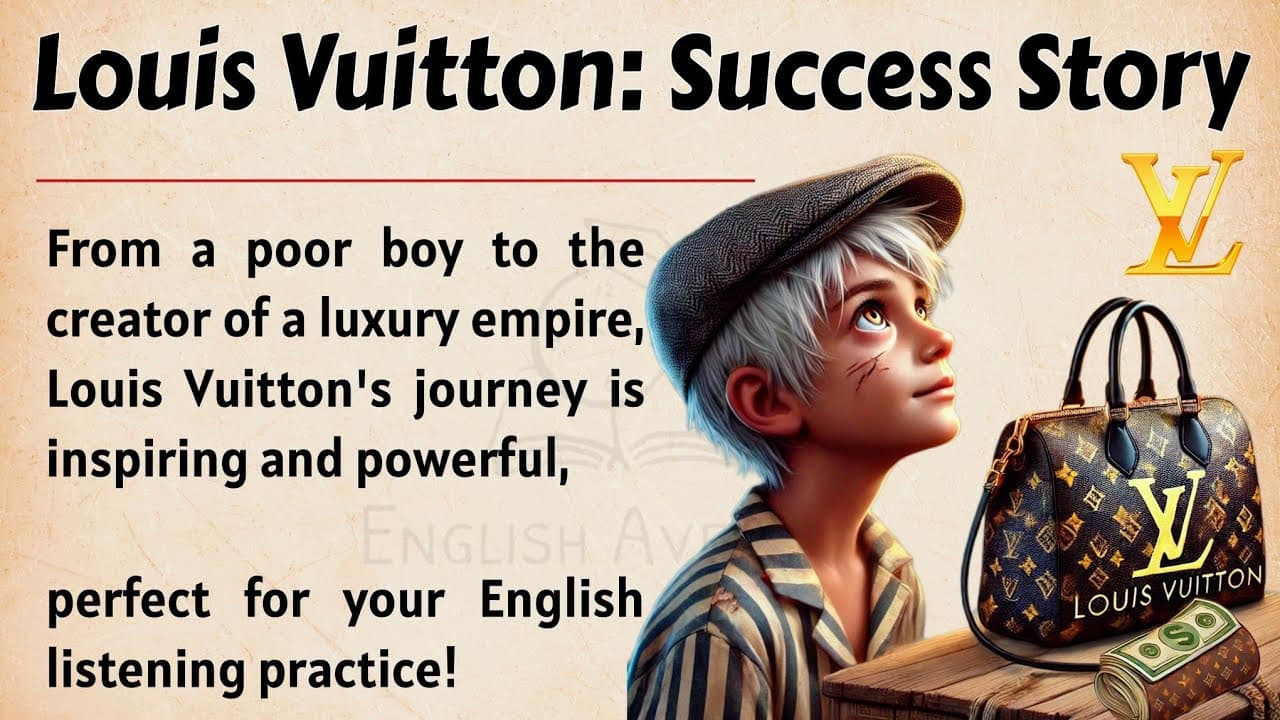
Louis Vuitton escaped poverty by walking 470 km to Paris, finding work in a trunk workshop, and mastering his craft through observation and extra practice. His persistence, precision, and creative designs earned the attention of wealthy customers, culminating in an opportunity to serve Empress Ujanei, the wife of Napoleon III.
Transcript
Welcome to our channel where we bring you the most inspiring and life-changing stories. Today you are about to hear a story that is not just about success. It is about struggle, pain, determination, and the power of never giving up. This is the story of a young boy who had nothing. Not a single penny, not a comfortable home, not even enough food to... Read More
Key Insights
- Louis Vuitton was born into poverty in Ane, France, in 1821, where his carpenter father and hatmaker mother struggled to provide food. He grew up in a small wooden house with a leaking roof, damp floors, no heating, and few basic comforts.
- Louis Vuitton developed practical woodworking experience by helping in his father's carpentry work instead of attending school like wealthier children. Carrying planks, hammering nails, and cleaning sawdust made his hands rough, but these early responsibilities introduced him to tools, materials, and disciplined physical labor.
- Louis Vuitton's interest in trunks began when wealthy travelers passed through his village carrying wooden luggage and suitcases. Their journeys and possessions awakened his curiosity about the wider world, giving him a dream that contrasted sharply with the poverty and limited opportunities surrounding him.
- Louis Vuitton left his village at 13 after his mother's death and his father's withdrawal left him feeling alone. With Paris 470 km away, he departed secretly before sunrise carrying a small bag, but without money, food, transportation, a map, or a guide.
- Louis Vuitton's journey to Paris lasted two years and required constant improvisation. He slept beneath trees, sometimes received food from strangers, and exchanged farm labor for meals in villages while crossing forests, mountains, and rivers through rain, hunger, winter winds, and exhaustion.
- Louis Vuitton initially experienced homelessness and rejection in Paris, sleeping inside an abandoned wooden cart near a bakery and eating discarded market food. Shops refused him because he lacked experience and connections, yet he continued searching for work despite hunger, dirty clothes, physical pain, and loneliness.
- Louis Vuitton entered the trunk trade by voluntarily helping a struggling man carry a heavy trunk into Marishal's workshop. When questioned about his abilities, he admitted that he could not make trunks but promised to learn and work harder than anyone else, securing an unpaid starting opportunity.
- Louis Vuitton became a skilled artisan through observation, private practice, and instruction after working hours. By age 20, his speed, precision, and creativity attracted nobles and wealthy customers who requested him by name, and his growing reputation eventually brought him before Empress Ujanei.
Install to Summarize YouTube Videos and Get Transcripts
Explore YouTube Video Summarizer or Get YouTube Transcript Extractor
Questions & Answers
Q: How did Louis Vuitton escape poverty?
Louis Vuitton escaped poverty through persistence, physical labor, and the gradual mastery of trunk making. He left his poor village at 13, traveled 470 km to Paris over two years, and survived through occasional assistance and farm work. In Paris, he continued seeking employment despite homelessness and repeated rejection. An opportunity at Marishal's workshop allowed him to learn a valuable craft and build a reputation among wealthy customers.
Q: Why did Louis Vuitton leave his village for Paris?
Louis Vuitton left because he refused to accept a permanent life of poverty and wanted to pursue opportunities beyond his village. His mother's death when he was 10 devastated him, while grief caused his father to become distant and unable to care for him properly. Inspired by the travelers he had watched since childhood, Louis decided that Paris offered a possible path toward knowledge, skilled work, and a better future.
Q: How did Louis Vuitton travel 470 km to Paris?
Louis Vuitton traveled to Paris primarily on foot after secretly leaving home at age 13 with a small bag. He had no money, food, horse, map, guide, or shelter. The journey took two years as he crossed forests, mountains, and rivers. He sometimes received food from kind strangers and worked as a farm helper in villages in exchange for meals, while often sleeping outdoors beneath trees.
Q: What happened when Louis Vuitton first arrived in Paris?
Louis Vuitton arrived exhausted, hungry, poorly clothed, and without money, family, or housing. He spent his first night inside an abandoned wooden cart near a bakery while noise, cold wind, horses, and rats surrounded him. Repeated requests for work were rejected because he lacked experience and connections. As the days passed, he survived by collecting scraps and leftover bread from the market, but he continued searching for an opportunity.
Q: How did Louis Vuitton get his first workshop opportunity?
Louis Vuitton noticed a man struggling to carry a large wooden trunk into a shop and immediately helped him lift it. The shop belonged to Marishal and contained trunks made from wood, leather, brass locks, and decorative initials. Impressed by the boy's strength and determination, Marishal questioned him. Louis admitted he lacked trunk-making experience but promised to learn and work extremely hard, so Marishal allowed him to begin working without immediate pay.
Q: How did Louis Vuitton learn to make trunks?
Louis Vuitton initially swept floors, fetched tools, and cleaned after the workshop's experienced workers. Wanting to create rather than only perform basic tasks, he stayed behind one evening and practiced on a wooden panel by imitating techniques he had observed. Marishal noticed the panel's clean edges and precise stitching, then offered to teach him after work. Louis subsequently studied wood shaping, leather selection, stitching, and the movements of master craftsmen.
Q: Why did wealthy customers request Louis Vuitton by name?
Wealthy customers requested Louis Vuitton because years of practice had made him faster, more precise, and more creative than the other workers described in the story. By age 20, he had developed from an apprentice into a skilled artisan whose hands could produce highly regarded trunks. His consistent craftsmanship created a strong reputation among nobles and affluent clients, who began asking specifically for trunks made by Vuitton rather than accepting any available craftsperson.
Q: What lessons does Louis Vuitton's story teach English learners?
Louis Vuitton's story presents determination, patience, initiative, and skill development through accessible narrative English. His progress shows that he repeatedly acted despite uncertainty: he left poverty, survived a difficult journey, continued after rejection, volunteered to help a stranger, and practiced after working hours. For learners, the graded story also provides vocabulary about travel, hardship, workshops, tools, craftsmanship, employment, luxury goods, and personal perseverance within a memorable sequence of events.
Summary & Key Takeaways
-
Born into a poor family in Ane, France, in 1821, Louis Vuitton endured hunger, cold winters, limited education, and the death of his mother. His childhood work in his father's carpentry shop developed practical skills, while watching wealthy travelers with elegant trunks inspired his curiosity about travel, craftsmanship, and life beyond his village.
-
At 13, Louis secretly left home and began the 470 km journey to Paris without money, food, a map, or shelter. The trip lasted two years because he survived by accepting food from strangers and working in villages. After arriving, he slept in a wooden cart, ate scraps, and repeatedly searched for employment.
-
Louis earned an opportunity at Marishal's trunk workshop after helping a man carry a heavy trunk. He began with cleaning and fetching tools, then practiced alone after working hours. His initiative secured personal instruction, and years of disciplined learning transformed him into a respected craftsman requested by nobles, wealthy customers, and eventually Empress Ujanei.
Read in Other Languages (beta)
Share This Summary 📚
Summarize YouTube Videos and Get Video Transcripts with 1-Click
Try YouTube Summary with ChatGPT & Claude or YouTube Transcript Generator
Explore More Summaries from English Avenue 📚




Summarize YouTube Videos and Get Video Transcripts with 1-Click
Try YouTube Summary with ChatGPT & Claude or YouTube Transcript Generator