How to Avoid 5 Cardio Mistakes for Fat Loss
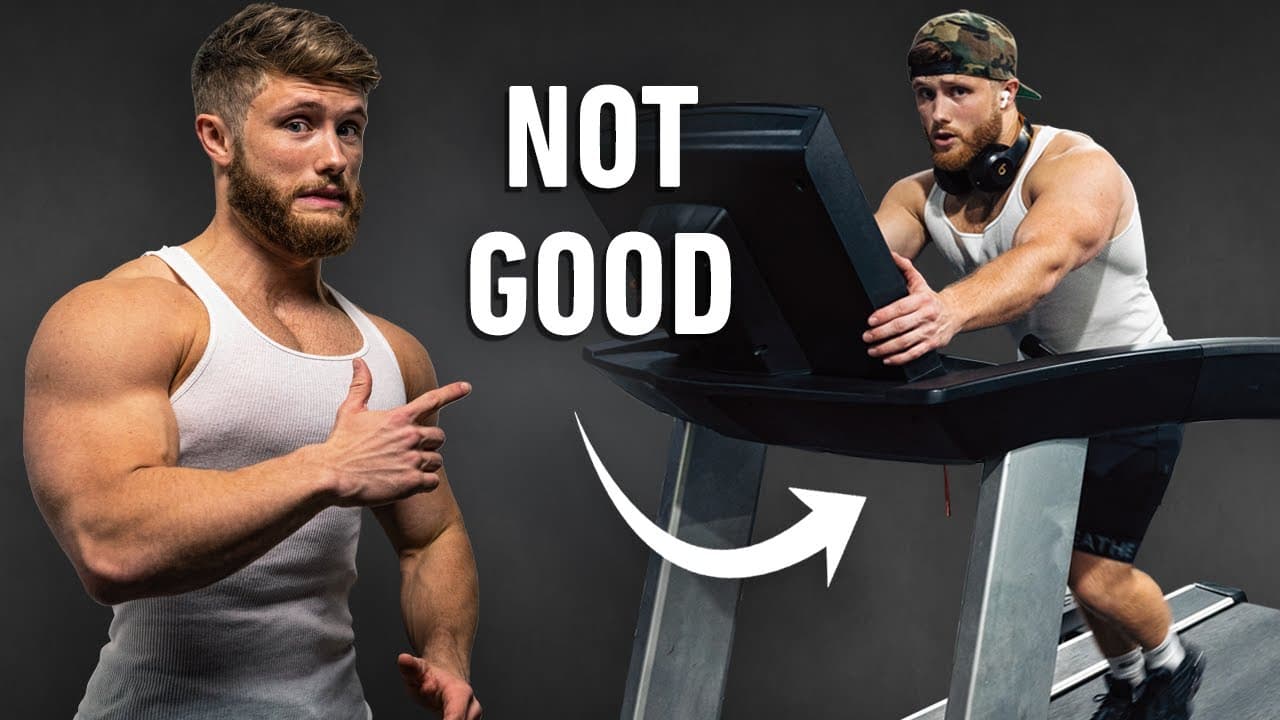
TL;DR
Cardio helps health and performance but is not the sole driver of fat loss. Diet is the main determinant, and cardio should supplement it. To preserve gains, time cardio around lifting, avoid overusing HIIT, and consider lower frequency or better separation between cardio and weights.
Transcript
so in this video I'm going to lay out the five most common cardio mistakes that people make when trying to lose fat now let me start by saying that while this video will focus on the biggest pitfalls of cardio I am still a big fan of cardio in the right context and when done the right way so contrary to what some Jim Bros might tell you cardio does... Read More
Key Insights
- Cardio is a supplemental tool for fat loss and not the engine; diet and total calories consumed drive fat loss more than cardio alone.
- Timing cardio around weight training matters; performing cardio before weights can impair strength gains, and a 24-hour separation is often useful for concurrent training.
- Interference between endurance and resistance training exists, especially in advanced trainees, so separating cardio and lifting or doing weights first can protect strength adaptations.
- The supposed afterburn from high-intensity cardio is real but often overestimated in practical fat loss, and HIIT may reduce time for workouts but can hinder recovery and gains if overused.
- High-intensity cardio has benefits such as time efficiency and enjoyment for some, but it increases recovery demands and can blunt weight training performance if overused.
- Doing too much cardio can reduce gains through interference and compensation, so frequency needs to be balanced with training goals and recovery capacity.
- Fasting or fasted cardio is mentioned but not elaborated on in depth in this content, with emphasis on overall energy balance and training context as key factors.
- Cardio should be used to support diet and training goals, not to replace calorie control or structured resistance training.
- More videos from this channel:
- More from this channel: Jeff Nippard
Install to Summarize YouTube Videos and Get Transcripts
Explore YouTube Video Summarizer or Get YouTube Transcript Extractor
Questions & Answers
Q: What is the main message about cardio's role in fat loss?
The main message is that cardio is a supplemental tool and not the engine of fat loss. Fat loss ultimately depends on the difference between calories consumed and calories expended, and cardio alone typically accounts for only a portion of the weight loss expected from the calories burned. Compensatory behaviors like overeating can further limit the impact of cardio on fat loss, making diet the critical factor to manage alongside cardio.
Q: How should cardio be scheduled relative to weight training to avoid performance declines?
To avoid impaired strength gains, cardio should be performed after weight training or on separate days. The evidence suggests that doing cardio immediately before lifting reduces strength improvements and may compromise gains for several hours after endurance work. For advanced trainees, separating cardio and lifting by 24 hours can help preserve strength adaptations while still allowing both modalities to be trained effectively.
Q: What does the video say about the interference effect and who is most affected?
The video describes the interference effect as a conflict between aerobic endurance pathways and muscle building pathways. It is more pronounced in advanced trainees, where concurrent cardio can significantly impair strength gains. Beginners may see little to no impairment, but as training age increases, the potential for interference grows, reinforcing the need to plan cardio and lifting to minimize overlap.
Q: Is HIIT always superior for fat loss, according to this video?
No, HIIT is not automatically superior for fat loss. While HIIT can be time efficient and enjoyable, it has a higher recovery demand and tends to interfere more with weight training than steady state cardio. The afterburn effect is real but modest, and the overall fat loss benefit from HIIT can be similar to or less than that achieved with well-planned lower intensity cardio when considering recovery and training quality.
Q: What happens if you do too much cardio, and why is this a problem?
Too much cardio can blunt fat loss and impair strength gains due to interference with resistance training and potential reductions in non-exercise activity thermogenesis. Excessive cardio volume increases recovery demands and can lead to suboptimal performance in lifting sessions, reducing overall training quality and potentially diminishing long-term fat loss results.
Q: Can cardio replace dietary control for fat loss?
No, cardio cannot replace dietary control for fat loss. The video emphasizes that fat loss is primarily driven by calories in versus calories out, and the energy expended through cardio is often not enough to offset even modest dietary intake. Relying on cardio alone without dietary adjustments tends to yield limited and slower fat loss, with compensatory eating further undermining results.
Q: What practical strategy does the video suggest for combining cardio with lifting?
A practical strategy is to perform cardio after weights or to separate cardio and resistance training by at least 24 hours if possible. This approach minimizes interference with strength gains, preserves training quality, and still allows the benefits of cardio for cardio health and work capacity. For some people, one can use low volume or less frequent HIIT if they prefer it, but moderation is key.
Q: What role does overall energy balance play in the relationship between cardio and fat loss?
Overall energy balance is the central factor determining fat loss. Cardio contributes to caloric expenditure, but the math shows that relying on cardio alone yields a smaller percentage of expected weight loss, due to compensatory behaviors and metabolic adjustments. The video emphasizes aligning cardio with a well-controlled diet and appropriate resistance training to maximize fat loss outcomes.
Summary & Key Takeaways
-
Cardio is a helpful tool for health and performance, but fat loss mainly depends on calories in versus calories out, with cardio providing only partial weight loss.
-
Separating cardio from weight training reduces interference with strength gains, especially for advanced lifters, and may require workouts on different days or times.
-
Moderation and smart selection of cardio type and timing can optimize fat loss while preserving muscle and training quality.
Read in Other Languages (beta)
Share This Summary 📚
Summarize YouTube Videos and Get Video Transcripts with 1-Click
Try YouTube Summary with ChatGPT & Claude or YouTube Transcript Generator
Explore More Summaries from Jeff Nippard 📚

Summarize YouTube Videos and Get Video Transcripts with 1-Click
Try YouTube Summary with ChatGPT & Claude or YouTube Transcript Generator