How Did Kim Jong Il Use Film as Propaganda in North Korea?
TL;DR
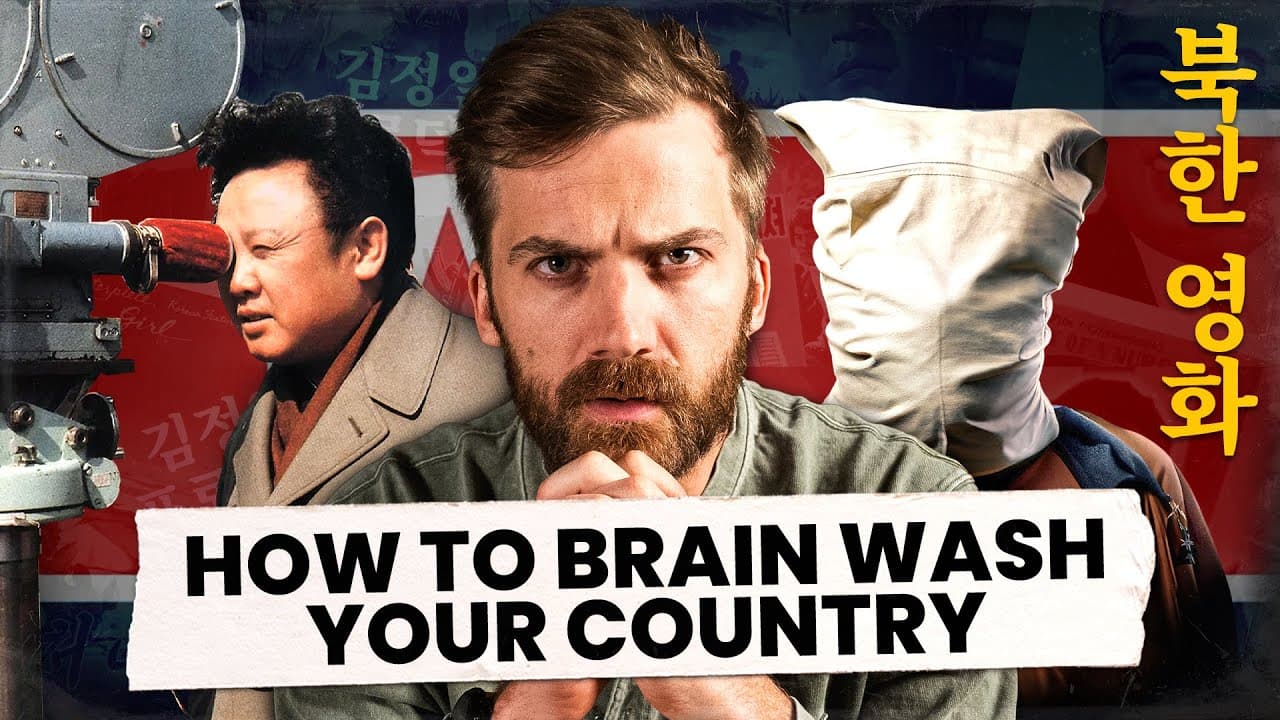
Kim Jong Il used film to spread propaganda, reinforce his family’s power, and shape how millions of North Koreans understood reality. He controlled cultural storytelling through the Propaganda and Agitation Department, directed filmmakers to serve socialism and communism, and even had South Korean actress Choi Eun-hee kidnapped. Read on to see how his obsession with cinema became a tool of political control.
Transcript
(pensive music) (film whirring) - It's late afternoon on a warm winter day in 1978 and South Korean actress Choi Eun-hee is walking along a secluded beach in Hong Kong. 40 feet away, a woman she knows stands on the shore, motioning her to come over. A few strong looking men stand by her side. Choi feels uneasy,, like something bad is about to happe... Read More
Key Insights
- Kim Jong Il used cinema as what he called a powerful ideological weapon, shaping stories that glorified North Korea and protected his family's authority. Film was therefore not merely entertainment within the system, but a means of reinforcing an official version of reality.
- Kim Jong Il's personal mythology was repeatedly rewritten to strengthen his political image. North Koreans were told that his birth near Mount Paektu coincided with extraordinary natural signs, while the account presented in the transcript places his likely birth at a Soviet military base in 1941.
- Kim Jong Il's fascination with movies reportedly produced a collection of 20,000 bootlegged VHS tapes and DVDs. The collection was kept in an air-conditioned library staffed by 250 full-time employees and included Hollywood films, Japanese monster movies, cartoons, and James Bond productions.
- The 1967 struggle over North Korea's succession showed that film could build a cult of personality around a political candidate. After a competing faction celebrated its preferred successor in a movie, Kim Il-sung demanded more effective cinema that would secure his own leadership.
- Kim Jong Il became head of the Propaganda and Agitation Department after volunteering to guide North Korea's film studio. The department controlled movies, plays, and publishing, giving him responsibility for cultural narratives that supported the government and the ruling family.
- North Korean filmmakers were expected to function as extensions of the government. Kim Jong Il's "On the Art of Cinema" instructed them to apply their artistic abilities to ideological revolution and the party's efforts to build socialism and communism.
- North Korean films repeatedly featured farmer revolutions, extreme nationalism, personal sacrifice, music, colorful operas, and spontaneous praise for the leader. These recurring themes connected entertainment with political instruction and presented loyalty to the state as admirable behavior.
- Kim Jong Il's cinematic ambitions extended to coercion and kidnapping. In 1978, South Korean actress Choi Eun-hee was lured to a secluded Hong Kong beach, forced into a speedboat, and taken to North Korea to appear in films for the leader.
Install to Summarize YouTube Videos and Get Transcripts
Explore YouTube Video Summarizer or Get YouTube Transcript Extractor
Questions & Answers
Q: How did Kim Jong Il use film as propaganda in North Korea?
Kim Jong Il used cinema to drill political messages into the minds of millions of North Koreans and preserve his family’s power. Films promoted North Korea, loyalty to its leaders, socialism, communism, nationalism, and personal sacrifice.
Q: Why was film politically important to Kim Jong Il?
Kim Jong Il saw cinema as both a way to pursue his creative ambitions and a powerful ideological weapon. He believed movies could shape an invented version of reality, glorify North Korea, and cement his family as the country’s leaders.
Q: What did the Propaganda and Agitation Department control?
The Propaganda and Agitation Department controlled North Korea’s movies, plays, publishing, propaganda, and ideological storytelling. Leading it gave Kim Jong Il authority over cultural narratives that supported the government and his family’s rule.
Q: What did On the Art of Cinema say about filmmakers?
Kim Jong Il’s book "On the Art of Cinema" treated filmmakers as extensions of the government. It instructed them to use their artistic abilities for ideological revolution and the ruling party’s efforts to build socialism and communism.
Q: What themes appeared in North Korean propaganda films?
The films featured farmer revolutions, extreme nationalism, women sacrificing their lives, music, colorful operas, and spontaneous praise for the great leader. These recurring themes connected entertainment with loyalty, collective struggle, and political instruction.
Q: How extensive was Kim Jong Il’s movie collection?
Kim Jong Il reportedly collected 20,000 bootlegged VHS tapes and DVDs. The collection was kept in an air-conditioned library staffed by 250 full-time employees and included Hollywood films, Japanese monster movies, cartoons, and James Bond productions.
Q: Why was South Korean actress Choi Eun-hee kidnapped?
Choi Eun-hee was kidnapped so she could be forced to star in movies for Kim Jong Il. In 1978, men seized her near a secluded beach in Hong Kong and forced her into a speedboat headed for North Korea.
Q: How did North Korea construct Kim Jong Il’s origin story?
North Koreans were told that Kim Jong Il was born near Mount Paektu as rain stopped, clouds parted, a double rainbow appeared, and a new star emerged. The transcript instead places his likely birth at a Soviet military base in Russia in 1941 and says he repeatedly rewrote his backstory over roughly 20 years.
Summary & Key Takeaways
-
Definition: Kim Jong Il treated cinema as an ideological weapon for shaping reality, promoting North Korea, and protecting his family’s power.
-
Who: The Propaganda and Agitation Department gave Kim Jong Il control over movies, plays, publishing, propaganda, and ideological storytelling.
-
Tool: "On the Art of Cinema" directed filmmakers to serve ideological revolution and the party’s pursuit of socialism and communism.
-
Number: Kim Jong Il reportedly owned 20,000 bootlegged VHS tapes and DVDs in an air-conditioned library.
-
Number: The movie library reportedly employed 250 full-time employees.
-
When: In 1967, a rival faction’s film promoting its preferred successor demonstrated cinema’s political power.
-
Who: South Korean actress Choi Eun-hee was abducted and forced to make movies for Kim Jong Il.
-
When: In 1978, Choi Eun-hee was seized near a secluded Hong Kong beach and taken toward North Korea.
-
Compare: State mythology placed Kim Jong Il’s birth near Mount Paektu, while the transcript places it at a Soviet military base in Russia.
-
Number: The transcript gives 1941 as Kim Jong Il’s likely birth year.
-
Definition: North Korean films combined farmer revolutions, nationalism, sacrifice, music, colorful operas, and praise for the leader with political instruction.
Read in Other Languages (beta)
Share This Summary 📚
Summarize YouTube Videos and Get Video Transcripts with 1-Click
Try YouTube Summary with ChatGPT & Claude or YouTube Transcript Generator
Explore More Summaries from Johnny Harris 📚


Summarize YouTube Videos and Get Video Transcripts with 1-Click
Try YouTube Summary with ChatGPT & Claude or YouTube Transcript Generator