Why Electric Car Batteries Depend on Congo
TL;DR
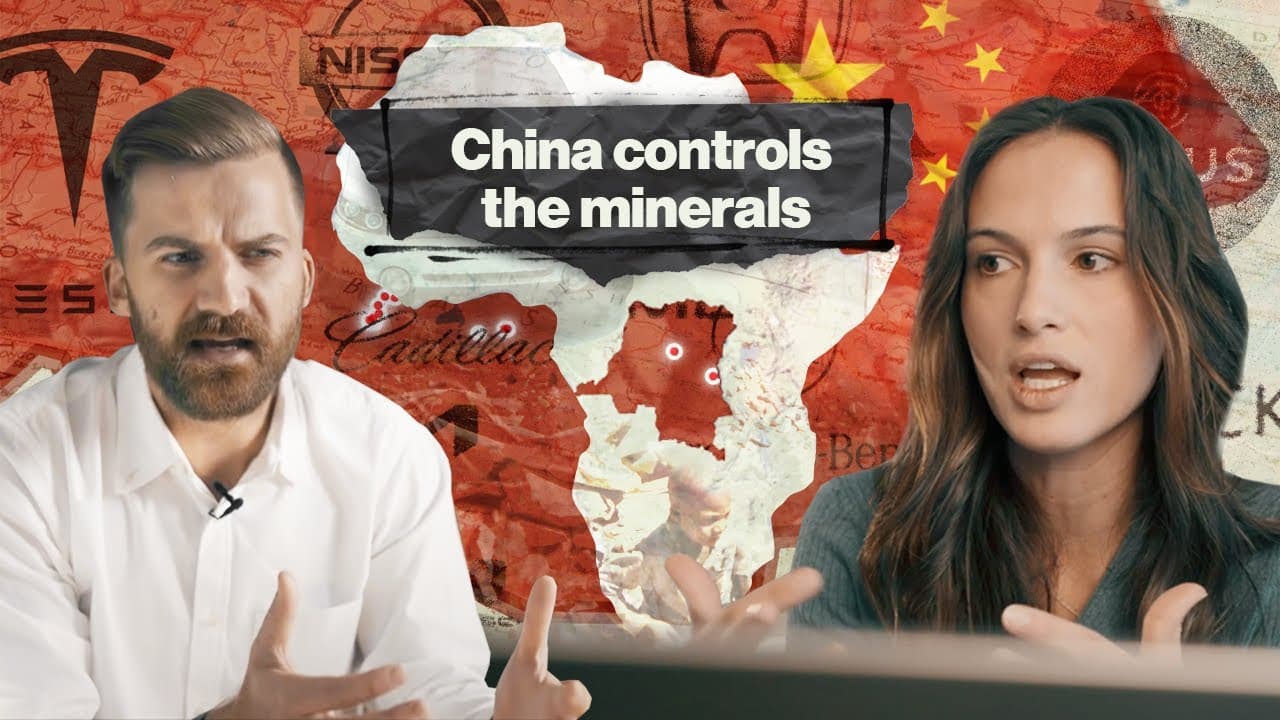
Electric car batteries depend heavily on cobalt because it helps regulate heat and volatility while supporting longer driving ranges. The Democratic Republic of the Congo holds 70% of the world’s cobalt, while China controls 15 of its 19 cobalt mines. This concentration creates geopolitical leverage and links the clean energy transition to child labor, unsafe working conditions, deforestation, polluted rivers, and resource exploitation.
Transcript
(Skype ringing) - Hey.
- Hey. - Is that one of those fancy coffee cups that stays warm? - It heats it from the bottom. - [Johnny] That's my friend Cleo who is a newly independent journalist making stuff on YouTube. - An I'm gonna call it "Huge, if true." - There aren't a lot of journalists/YouTubers out there, and now that there's another one, I'm ... Read More
Key Insights
- Cobalt is a battery material that helps regulate heat and volatility in electric vehicles. Its properties allow manufacturers to pursue longer driving ranges without increasing the danger of batteries exploding, making it particularly valuable during intense competition over small improvements in vehicle range.
- The Democratic Republic of the Congo contains 70% of the world’s cobalt. This extraordinary concentration makes the country central to expanding electric vehicle production and gives organizations controlling its mines significant influence over a mineral described as necessary for competitive battery performance.
- China controls 15 of the 19 cobalt mines in the Democratic Republic of the Congo. Its early investments established control over mining and processing capacity before the sharp growth in electric vehicle demand made cobalt an increasingly strategic and valuable commodity.
- China’s early cobalt strategy began during the early 2000s, when the mineral already had uses in products such as cellphone batteries. The transcript argues that China also anticipated its future value and could support investments that might not produce profits until many years later.
- China’s economic structure supports long-term strategic investments because the state and economy are intertwined. The transcript contrasts this system with Western corporations focused on short-term shareholder profits, arguing that China could pour money into cobalt and wait 20 years for potential returns.
- The Congo’s mineral wealth has repeatedly attracted exploitation by outsiders. The transcript connects present-day cobalt extraction with earlier forced labor, the brutal rule of a Belgian king, and the blood diamond rush, showing how valuable resources have often failed to enrich the Congolese population.
- Cobalt mining in the Congo is associated in the transcript with child labor, unsafe mines, back-breaking work, routine deaths, deforestation, and polluted rivers. These harms expose a contradiction between the environmental goals of electric vehicles and the damaging conditions involved in producing their battery materials.
- The clean energy transition can reproduce patterns associated with older extractive industries. Cobalt remains a finite resource, and concentrated control over its supply can provide geopolitical leverage while transferring many human and environmental costs to the resource-rich country where mining occurs.
Install to Summarize YouTube Videos and Get Transcripts
Explore YouTube Video Summarizer or Get YouTube Transcript Extractor
Questions & Answers
Q: Why is cobalt important for electric car batteries?
Cobalt is important because it helps regulate heat and volatility inside an electric vehicle battery. According to the transcript, this allows cars to travel longer distances without needing to recharge while reducing the risk of batteries exploding. As manufacturers compete over marginal range improvements, such as moving from 400 kilometers to 410 kilometers, cobalt becomes especially valuable for battery performance and safety.
Q: How much of the world’s cobalt is in the Congo?
The Democratic Republic of the Congo contains 70% of the world’s cobalt, according to the transcript. This concentration makes the country essential to the expanding electric vehicle market because cobalt supports longer-range and safer batteries. Although the DRC should be extremely wealthy because of its resources, the account emphasizes that outsiders have repeatedly captured much of their value through exploitative systems.
Q: How much of Congo’s cobalt mining does China control?
China controls 15 of the 19 cobalt mines in the Democratic Republic of the Congo, according to the transcript. Chinese investment began during the early 2000s and included both mining and processing operations. This position gives China substantial influence over a resource needed for electric vehicle batteries and supports its effort to compete in the growing market for electric cars.
Q: Why did China invest in cobalt before electric vehicles became widely demanded?
China invested early because cobalt already had useful applications in products such as cellphone batteries, creating some existing demand. The transcript also credits China’s economic structure, in which the state and economy are intertwined. That structure enabled large, long-term bets without requiring immediate quarterly profits, allowing investment based on the expectation that cobalt could become much more valuable 20 years later.
Q: How does China’s economic system support long-term mineral investments?
China’s state and economy are described as intertwined, which gives the country incentives different from independent Western corporations. Companies in the capitalist West are portrayed as focusing on short-term profits for shareholders, while China can fund projects expected to become valuable many years later. The transcript presents cobalt investment as a successful example of this capacity for patient, strategic economic planning.
Q: What labor problems are linked to cobalt mining in the Congo?
The transcript links Congolese cobalt mining to children performing back-breaking labor, dangerous mines, inadequate concern for worker safety, and people routinely dying on the job. These conditions challenge the idea that electric vehicles are an entirely clean solution. The environmental benefits sought through new energy technologies can still depend on extraction systems that impose severe human costs on mining communities.
Q: What environmental damage can cobalt production cause?
Cobalt mining and refining are associated in the transcript with deforestation, polluted rivers, and general exploitation. Cobalt is also described as a finite resource, despite its role in technologies promoted as sustainable. These points reveal a central contradiction: replacing fossil-fuel vehicles can reduce one set of problems while continuing destructive extraction practices involving scarce minerals and vulnerable communities.
Q: Why can cobalt become a source of geopolitical power?
Cobalt can create geopolitical power because electric vehicle manufacturers increasingly need it, while 70% of the world’s supply is located in the Democratic Republic of the Congo. China’s control of 15 of the country’s 19 cobalt mines therefore provides leverage over a growing industry. The transcript suggests China may use that position to manufacture competitive cars rather than simply supply other countries’ electric vehicle transitions.
Summary & Key Takeaways
-
Cobalt changed from a mineral mainly used to color ceramics blue into a crucial material for electric vehicle batteries. Although lithium remains a main battery ingredient, cobalt helps regulate heat and volatility. It therefore supports the longer driving ranges and improved safety that car companies seek while competing through marginal performance gains.
-
The Democratic Republic of the Congo possesses 70% of the world’s cobalt, yet its history shows that abundant resources do not automatically create broad prosperity. Outsiders have repeatedly extracted value from the country through forced labor, Belgian exploitation, blood diamonds, and now cobalt mining associated with dangerous work, child labor, pollution, and deforestation.
-
China began investing in Congolese cobalt mines during the early 2000s, before electric vehicle demand surged. The transcript attributes this foresight partly to demand from cellphone batteries and partly to China’s ability to make long-term, state-supported economic bets. China consequently controls 15 of the DRC’s 19 cobalt mines and substantial supply-chain leverage.
Read in Other Languages (beta)
Share This Summary 📚
Summarize YouTube Videos and Get Video Transcripts with 1-Click
Try YouTube Summary with ChatGPT & Claude or YouTube Transcript Generator
Explore More Summaries from Johnny Harris 📚






Summarize YouTube Videos and Get Video Transcripts with 1-Click
Try YouTube Summary with ChatGPT & Claude or YouTube Transcript Generator