How to Measure and Rebuild Cognitive Fitness
TL;DR
Measure cognitive fitness by timing how long you can read understandable conceptual nonfiction without checking a device, changing tasks, or losing concentration. A result of 5 minutes or less indicates severe distraction, 30 minutes represents the proposed pre-smartphone average, and 75 minutes is considered impressive. Use the score as a baseline for systematic training rather than relying only on vague commitments or occasional digital detoxes.
Transcript
I've been thinking recently about an article from the Chronicle of Higher Education that several of you sent me. It was titled My Students Can't Read. Let me uh start here with the intro from the article. Here's what the intro of the article says. Six weeks into the term, I assigned my rhetoric and writing students a 20page article. It was the same... Read More
Key Insights
- Cognitive fitness is the ability to sustain thinking and concentration despite the distractions created by phones, computers, and hyperactive communication. The central proposal is to treat this capacity seriously, measure it directly, and improve it through systematic training rather than vague concern.
- Cognitive key performance indicators are numerical measures that can reveal a person’s current level of attention and provide specific targets for improvement. They are modeled on physical fitness indicators such as mile time, body mass index, maximum squat, and rowing distance.
- Random efforts are not presented as sufficient for major cognitive improvement. General promises to use a phone less, read more books, take occasional digital detoxes, or observe an internet sabbath may be well intentioned, but they do not provide a clear baseline or measurable destination.
- Reading endurance is defined as the maximum number of minutes a person can comfortably focus on conceptual nonfiction without context switching. During the test, the reader should not check a phone or computer, stand up to do something else, or shift attention to another activity.
- Suitable test material is conceptual nonfiction that contains ideas, theories, or arguments and remains understandable to the reader. A text that depends on unfamiliar terminology or frameworks would test missing background knowledge rather than sustained attention, so difficulty must remain within the reader’s current comprehension.
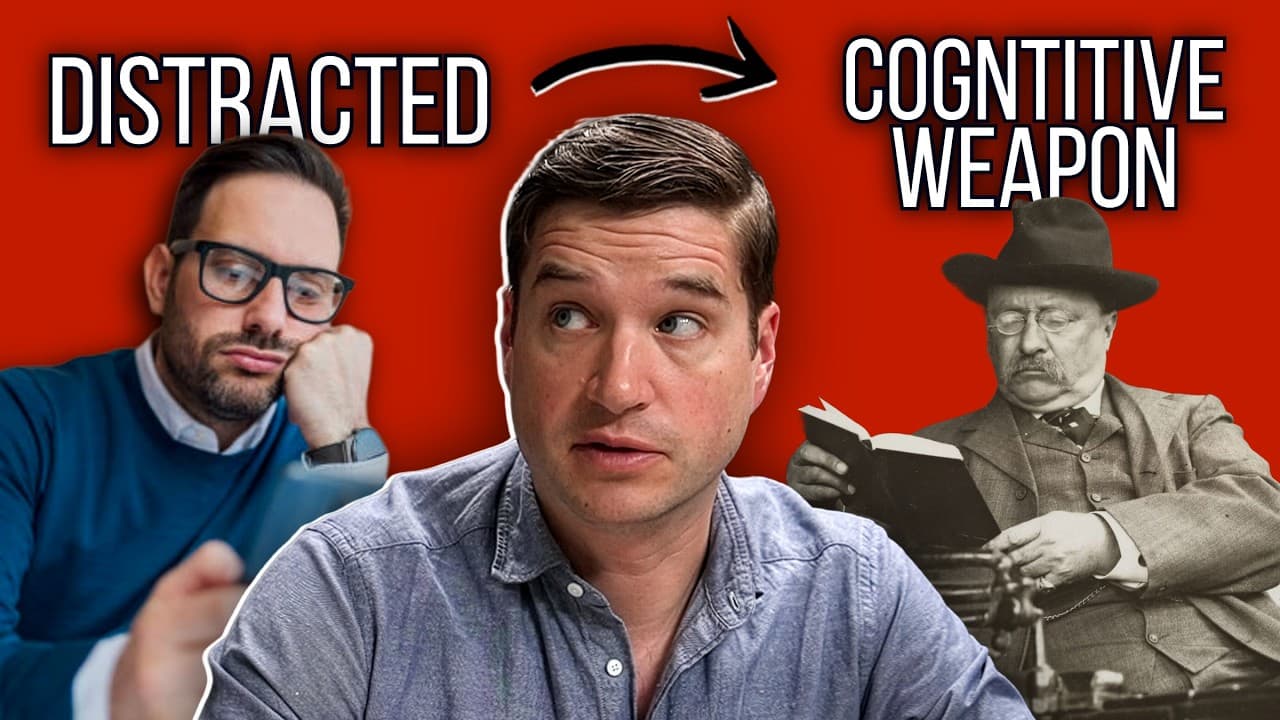
- A reading endurance score of 5 minutes or less is classified as brain rotted in the proposed scale. A score of 15 minutes is classified as distractable, while 30 minutes represents the level the presenter expects an average person could have sustained before the smartphone-driven distraction crisis.
- A reading endurance score of 75 minutes is classified as impressive because it exceeds the proposed pre-2012 average of 30 minutes. The test is designed to stop when genuine concentration can no longer be maintained, not merely when reading becomes mildly uncomfortable.
- Theodore Roosevelt represents the proposed cognitive weapon benchmark because he reportedly read one book per day. During one day of the 1900 campaign, his schedule recorded six reading sessions totaling four and a half hours, illustrating an extreme historical level of sustained reading capacity.
Install to Summarize YouTube Videos and Get Transcripts
Explore YouTube Video Summarizer or Get YouTube Transcript Extractor
Questions & Answers
Q: How do you test your reading endurance?
Choose a conceptual nonfiction text that presents ideas, theories, or arguments but does not require terminology or frameworks you lack. Start a timer and read without checking your phone or computer, getting up to do another task, or switching contexts. Stop the timer when you can no longer maintain meaningful concentration comfortably. The elapsed number of minutes is your reading endurance score.
Q: What type of book should you use for a cognitive fitness test?
Use conceptual nonfiction that requires you to understand ideas, theories, or arguments. The material may be difficult, but it must remain within your current level of understanding. Avoid a text whose terminology or intellectual framework is unfamiliar, because difficulty understanding the subject would interfere with the test. The goal is to measure sustained attention, not prior knowledge.
Q: What counts as context switching during the reading test?
Context switching includes looking at a phone, checking a computer, getting up to do something else, or otherwise shifting attention away from the selected reading. The test requires continuous engagement with one conceptual nonfiction text. When concentration can no longer be sustained, the timer should stop, producing a score that reflects uninterrupted reading endurance in minutes.
Q: What does a 5-minute reading endurance score mean?
A maximum reading endurance of 5 minutes or less falls into the proposed brain rotted category. On this scale, that result suggests a severe effect of technology and distraction on cognitive fitness. It serves as a baseline rather than merely a reason for concern, giving the reader a concrete number that can be tracked and targeted through systematic improvement.
Q: What does a 15-minute reading endurance score mean?
A reading endurance score of 15 minutes falls into the proposed distractable category. It is better than the brain rotted level of 5 minutes or less, but it remains below the proposed pre-2012 average of 30 minutes. The score indicates that uninterrupted concentration is possible, although it does not yet match the level expected before the smartphone-driven distraction crisis.
Q: What is a good reading endurance score?
A score of 30 minutes represents the proposed pre-2012 average, meaning the level an average person might have sustained before the modern distraction crisis. A score of 75 minutes is classified as impressive and reflects cognitive fitness beyond that earlier average. These benchmarks are intended to help people interpret their results and establish measurable training goals.
Q: Why use cognitive performance indicators instead of a digital detox?
Cognitive performance indicators provide numbers that show where your ability currently stands and where you want it to go. General commitments to use a phone less, read more books, try an occasional detox, or observe an internet sabbath may be helpful intentions, but they do not necessarily create major improvement. Numerical measures offer feedback and concrete targets for systematic training.
Q: What is the highest reading endurance benchmark presented?
The highest proposed level is called cognitive weapon, illustrated by Theodore Roosevelt’s reported ability to read one book per day. A record from one day during the 1900 campaign included six separate mentions of reading that totaled four and a half hours. This historical example is used to show an extreme limit of sustained reading capacity, not an ordinary target.
Summary & Key Takeaways
-
Digital distraction may be weakening the ability to sustain attention, but general anxiety about declining concentration does not reveal an individual’s actual condition. Cognitive key performance indicators can provide numerical feedback, establish a baseline, and create concrete improvement targets, much as measures such as mile time support systematic physical training.
-
The first proposed indicator is reading endurance: the maximum time a person can comfortably focus on understandable conceptual nonfiction without context switching. The material should contain ideas, theories, or arguments while remaining within the reader’s existing knowledge. The test ends when concentration can no longer be maintained effectively.
-
Reading endurance is calibrated across several proposed levels. Five minutes or less is labeled brain rotted, 15 minutes is distractable, 30 minutes represents a pre-2012 average, and 75 minutes is impressive. Theodore Roosevelt illustrates an extreme benchmark because he reportedly read one book daily and logged four and a half hours during one campaign day.
Read in Other Languages (beta)
Share This Summary 📚
Summarize YouTube Videos and Get Video Transcripts with 1-Click
Try YouTube Summary with ChatGPT & Claude or YouTube Transcript Generator
Explore More Summaries from Cal Newport 📚


Summarize YouTube Videos and Get Video Transcripts with 1-Click
Try YouTube Summary with ChatGPT & Claude or YouTube Transcript Generator