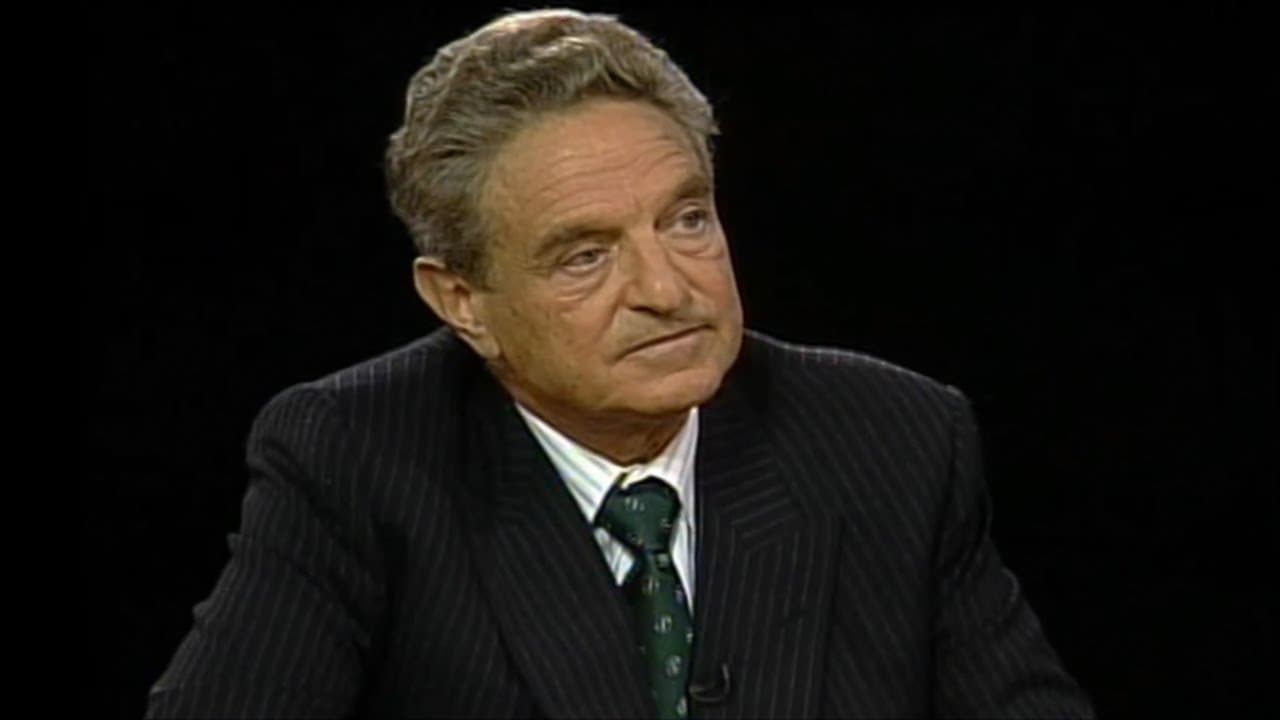
George Soros | Charlie Rose | 1995
TL;DR
George Soros says investors should reduce leverage when positions fail, then take larger risks after profits create a cushion. In this 1995 Charlie Rose interview, he also assesses political change in Eastern Europe and explains why philanthropy can foster dependence, flattery, and corruption even when open-society foundations produce worthwhile results. Read on for his views on Russia, the British pound trade, and responsible giving.
Transcript
george soros is the world's most famous investor and speculator it was his fund that earned in excess of one billion dollars when he bet against british pound in 1992 but he is more than just a money manager with one of the best track records in history he's also a noted philanthropist whose gifts include a fund to prevent russian nuclear scientist... Read More
Key Insights
- Eastern Europe's political transition is uneven, with some countries moving toward Europe while others show tendencies toward authoritarian government based on nationalism and alliances with newly emerging business interests.
- Russia's political direction remains contested, and disappointment with social and political changes can encourage xenophobic or anti-Western positions among candidates seeking electoral support.
- Chechnya matters more to the Russian public than Bosnia, according to Soros, while political objections concerning Bosnia largely serve domestic parliamentary positioning rather than widespread public concern.
- Open-society philanthropy can be worthwhile overall even when individual programs fail, operational problems arise, and foundations require repeated efforts to remove corruption or poor management.
- Charity is potentially corrupting because recipients may learn dependence instead of self-reliance, while donors may hear flattering proposals designed to match what their foundations want to support.
- Project merit is the proper basis for philanthropy, according to Soros, rather than pressure to distribute a predetermined amount of money regardless of whether sufficiently valuable opportunities exist.
- Investment performance is uneven, with weak periods and exceptional runs combining into a long-term record, so temporary underperformance does not necessarily describe the effectiveness of the broader approach.
- Capital preservation depends on retrenching and reducing leverage when positions are not working, then increasing risk only after profits create a cushion and confidence returns.
- "it's very mixed i think that a great opportunity to move that whole region towards what i call open societies has been missed" (1:13)
- "when you look at the entirety of what the foundations have done it's been very worthwhile and and very effective" (5:17)
- "you don't teach them self-reliance but you teach them to depend on you" (6:17)
- "when they go to a foundation they they tell the foundation what the foundation wants to hear" (6:40)
Install to Summarize YouTube Videos and Get Transcripts
Explore YouTube Video Summarizer or Get YouTube Transcript Extractor
Questions & Answers
Q: How does George Soros protect investment capital during losses?
Soros says his fund retrenches after recognizing that it is in a bad position. It reduces leverage, accepts a limited loss, and avoids putting the fund's principal in serious danger.
Q: Why does George Soros consider charity potentially corrupting?
He says giving money can teach recipients to depend on the donor instead of developing self-reliance. Charity can also corrupt donors because applicants flatter them and tell foundations what they want to hear, then may use the money differently after receiving it.
Q: What did George Soros think his foundations accomplished in Eastern Europe?
Soros considered the foundations worthwhile and effective when judged in their entirety. He acknowledged that many individual programs failed and that the Russian foundation required about three cleanups, describing the work as a long struggle with rewarding results.
Q: What political risks did George Soros see in Eastern Europe?
He saw a tendency in some places toward authoritarian regimes based on nationalist ideology and newly emerging business interests. He also stressed that the region was mixed, with Poland, Hungary, and the Czech Republic moving toward Europe.
Q: How did George Soros assess Russia's political direction?
Soros said Russia's direction was up for grabs and depended on a struggle over which political forces would prevail. He feared anti-reform elements might predominate as disappointed voters encouraged xenophobic and anti-Western positions.
Q: Why did profits make larger investment risks easier for Soros's fund?
Soros explains that accumulated profits provide a cushion for operating on a larger scale. When positions perform poorly, the fund instead retrenches and reduces leverage to protect its principal.
Q: How did George Soros describe the British pound trade?
Soros characterized the British pound position as offering substantial potential returns with comparatively limited downside. His fund earned in excess of one billion dollars after betting against the British pound in 1992.
Q: What principles guided George Soros's philanthropy?
Soros believed projects should be supported on their merits rather than to meet a predetermined spending target. He also remained alert to failed programs, dependence, corruption, donor flattery, and the contradictions inherent in charitable activity.
Summary
In this video, George Soros discusses various topics including his philanthropy work, his investment philosophy, and his thoughts on global politics and economics. He reflects on the success and failures of his foundations in Eastern Europe and the political and economic situation in countries like Poland, Hungary, and Russia. He also shares his thoughts on philanthropy, the challenges associated with it, and the corruption that can come with it. Soros provides insights into his investment strategies and the role of macro investing in his approach. He discusses the current state of world economies, including his concerns about the disintegration of the European Union and the economic situation in France and Germany. Soros also touches on his views on China's economic future, the potential of the internet in changing the world, and his reflections on his own life and philosophy.
Questions & Answers
Q: Give me your report card on what you think your own foundations have been able to accomplish in Eastern Europe and how the political and economic situation is there?
Soros believes that there was a missed opportunity to move Eastern Europe towards more open societies. While some countries like Poland, Hungary, and the Czech Republic are making progress towards Europe, there is a tendency for authoritarian regimes to emerge in other places, which Soros believes is a recipe for fascism. He mentions his engagements in Russia and Ukraine, where he sees both progress and challenges.
Q: How do you characterize the political situation in Russia and Ukraine currently?
Soros sees a struggle between democratic forces and emerging authoritarian regimes in both countries. He mentions the rise of nationalistic ideologies and suggests that whoever wants to win the elections in these countries would have to take a somewhat xenophobic and anti-Western point of view, reflecting the disappointment of the people towards the changes that have occurred. Soros emphasizes the significance of supporting democratic values in these nations.
Q: Have the investments made by your foundations been worth the effort?
Soros believes that the investments made by his foundations, such as creating the University of Central European Universities and supporting the notion of an open society, have been very worthwhile and effective, despite some failures and difficulties in certain programs. He explains that philanthropy is more rewarding for him than anything else, but admits to having reservations about it, as it can be a corrupting activity for both the givers and receivers.
Q: Did you change your investment philosophy during the rough patch you experienced in the mid-90s?
Soros states that he didn't change his investment philosophy during that time, but every position was re-examined. One change they made was to focus more on individual stocks rather than just the macro outlook. Soros believes that identifying and investing in companies with changing management can be very rewarding.
Q: What are your thoughts on the current economic situation in France and Germany?
Soros expresses concern about the trend towards European disintegration, particularly the confrontation between the independent central bank in France and the government. He believes that Germany has set stringent budget reductions and is insisting on France meeting the criteria of the Maastricht treaty to have a common currency. Soros anticipates a government crisis in France that may lead to instability.
Q: Is your investment strategy still primarily focused on macro investing?
Soros confirms that macro investing is still an important part of his investment approach. He explains that during times of macroeconomic change, such as those affected by the internet, macro instruments like bonds provide an opportunity to play the changes. However, he also emphasizes the significance of selecting individual stocks based on a company's management and industry thesis.
Q: What do you think is the future of the internet and its impact on society?
Soros believes that the internet is a revolutionary technology that will change the way we do many things, including research, shopping, communication, and even the way we receive information from media sources. He predicts that the internet will replace television and newspapers to a large extent, leading to significant changes in the way we live and interact.
Q: Do you believe that the United States has successfully managed a soft landing for its economy?
Soros expresses optimism about the US economy, citing factors such as controlled inflation, productivity growth, and the information revolution. He believes that the US has managed a soft landing and is not heading towards a recession. However, he also mentions concerns regarding the cost of living index and suggests that a reduced index could relieve the budget of cost-of-living adjustments.
Q: How do you think the world should deal with Russia in terms of fostering democracy?
Soros believes that the international community should focus on promoting open societies and supporting democratic forces. He suggests that the mission of NATO needs to be redefined in a way that protects open societies rather than turning Russia into an enemy. Soros emphasizes the need for an international security system and highlights the importance of learning from recent failures such as the situation in Bosnia.
Q: How do you think the internet will impact China and its regime?
Soros suggests that the Chinese communist regime could be swept out of power due to an old-fashioned capitalist bust. He believes that China's economic progress has been beneficial for the regime, but if the economic engine slows down, it could lead to political and economic collapse. Soros mentions that the army currently sustains their power, but it also puts a strain on the economy. He sees the potential for a significant shift after the death of Deng Xiaoping.
Takeaways
George Soros discusses a wide range of topics, including his philanthropy work, investment philosophy, and his thoughts on global politics and economics. He reflects on the successes and failures of his foundations in Eastern Europe and the challenges faced by countries like Russia and Ukraine in their transition towards democratic societies. Soros emphasizes the importance of promoting open societies and the need for an international security system. He expresses concerns about the disintegration of the European Union and the economic situation in France and Germany. Soros also highlights the potential of the internet in revolutionizing various aspects of society and shares insights into his investment strategies. Overall, he brings a nuanced perspective and encourages reflection on the state of the world and the role individuals can play to create positive change.
Summary & Key Takeaways
-
Soros describes Eastern Europe as politically mixed. Some countries are moving toward Europe, while others face authoritarian nationalism linked with emerging business interests. Russia remains contested between democratic and anti-reform forces, with public disappointment, Chechnya, and domestic political calculations shaping attitudes toward reform, the West, and national leadership.
-
His foundations seek to promote open societies through education and other projects. Soros considers their overall results worthwhile, although individual programs have failed and operations in Russia required repeated internal cleanups. He sees philanthropy as inherently paradoxical because financial assistance can undermine self-reliance and encourage recipients to satisfy donor expectations.
-
Soros explains that investment performance arrives in uneven runs rather than progressing steadily. When positions perform poorly, his fund retrenches and reduces leverage to protect its principal. Profitable periods create a cushion that makes larger risks easier. He characterizes the British pound trade as offering substantial potential returns with comparatively limited downside.
-
Key Insights Facet Title
-
Philanthropic Aid Insight
-
Charitable giving can unintentionally create dependence in recipients and vanity in donors.
-
Protecting Investment Capital Insight
-
Reducing leverage during losses helps preserve principal until stronger opportunities emerge.
-
Open Society Development Insight
-
Democratic transitions require institutions that resist nationalism, corruption, and authoritarian interests.
Read in Other Languages (beta)
Share This Summary 📚
Summarize YouTube Videos and Get Video Transcripts with 1-Click
Try YouTube Summary with ChatGPT & Claude or YouTube Transcript Generator
Explore More Summaries from Investor Archive 📚
Summarize YouTube Videos and Get Video Transcripts with 1-Click
Try YouTube Summary with ChatGPT & Claude or YouTube Transcript Generator