Warren Buffett: I Was Wrong On IBM | August 30, 2017
TL;DR
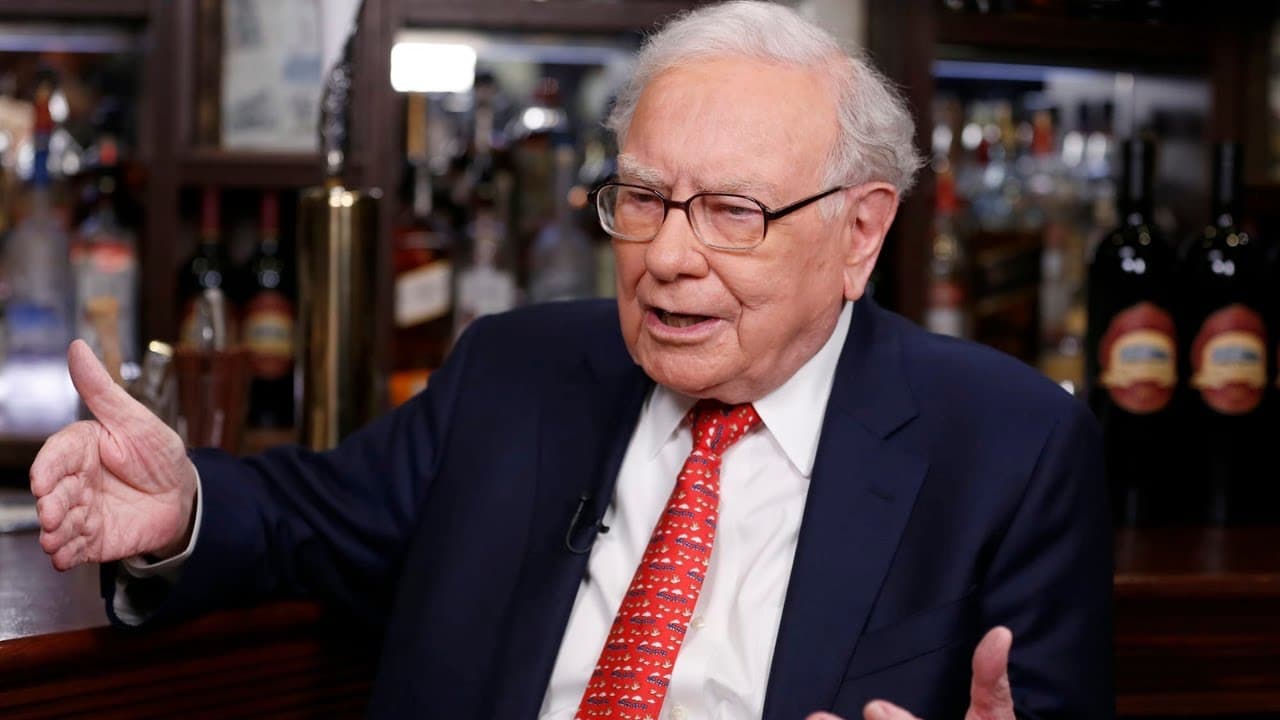
Warren Buffett says how an insurer performs during a disaster like Hurricane Harvey defines whether it is doing the right job, so Geico is rushing cars with full tanks to flooded Texas customers. He calls flood insurance hard to run privately because only high-risk people buy it, and pegs the economy at steady, unspectacular growth.
Transcript
met smith wielinski in midtown manhattan and we are here with a tourist today warren buffett the chairman and ceo of berkshire hathaway is here to pay off on a lunch that was auctioned away for glide and warren thank you very much for being here today thanks for having me i i know that this lunch is very important to you this time around uh the auc... Read More
Key Insights
- Glide matters to Buffett because it is run by Cecil Williams, a minister who rebuilt a failing San Francisco church into a social organization that feeds people who have hit bottom and never gives up on anyone the world has given up on.
- How an insurer performs during a catastrophe defines whether it is doing the right job, which is why Geico is moving large numbers of replacement cars into flooded Texas and sending tankers of gasoline so customers get a full tank.
- Comprehensive auto coverage, which most auto buyers purchase, is what covers flood damage to a car, and most flooded vehicles will be total losses rather than repairable claims.
- Flood insurance fails as a normal private product because only people in flood plains buy it, so there is no spread of risk; unlike random fire or accident losses, floods hit a predictable population, creating adverse selection.
- The national flood program was already deeply in debt to the Treasury before Harvey and will fall much further into the hole afterward, since it insures exactly the people most certain to file claims.
- Berkshire exited the super-cat reinsurance business almost entirely because a long stretch without a US hurricane pushed rates steadily down, and the wind does not care what rate was charged, so mispriced coverage loses money over time.
- The US economy has grown at roughly a couple percent a year since the fall of 2009, and Buffett warns quarterly GDP figures are annualized and seasonally adjusted, so no single quarter should be taken too seriously.
- Persistently low long-term interest rates have surprised Buffett and nearly everyone at Berkshire; he compares shorting low-yielding government bonds to the 'widow maker' trade against Japanese debt that punished traders for decades.
Install to Summarize YouTube Videos and Get Transcripts
Explore YouTube Video Summarizer or Get YouTube Transcript Extractor
Questions & Answers
Q: Why does Warren Buffett support the Glide charity?
Buffett supports Glide because of Cecil Williams, a minister assigned in the early 1960s to a declining church in San Francisco's Tenderloin district. Williams, who is Black, started essentially from scratch after most of the small white congregation left, and built the church into a remarkable social organization. It serves a very large number of meals and takes in people who have hit bottom, bringing them back. Buffett, suspicious by nature, was won over after visiting and meeting Williams in person.
Q: How is Geico responding to Hurricane Harvey flooding in Texas?
Geico is rushing large numbers of replacement cars into the flooded Texas area because affected people already have enough trouble with their homes and still need transportation. Buffett says the company is bringing in tankers of gasoline so that each replacement car has a full tank. He frames this as a matter of principle: how an insurance company performs at a time like this is what really defines whether it is doing the right job for its customers.
Q: Does comprehensive auto insurance cover flood damage?
Yes. Buffett explains that comprehensive auto insurance covers flood damage, and most people who buy auto insurance choose to carry comprehensive coverage. As a result, drivers whose vehicles were submerged by Harvey may well have a total loss that is covered. He expects most of the flooded cars to be total losses rather than repairable, meaning the claims will involve replacing vehicles entirely rather than fixing water damage.
Q: Why is flood insurance so difficult to provide privately?
Flood insurance suffers from adverse selection. Buffett notes that only people who expect to need it buy it: someone on high ground, like in Omaha, will never purchase flood coverage, while those living in flood plains do. Unlike fire or auto accidents, which strike more randomly across many policyholders, floods hit a predictable population. Without a broad spread of risk, the normal insurance industry cannot make the product work, which is why the government had to step in.
Q: Why did Berkshire Hathaway exit the super-cat reinsurance business?
Berkshire was once among the biggest writers of super-catastrophe reinsurance, but exited almost entirely as pricing deteriorated. Buffett explains that a long stretch passed without a hurricane hitting the US mainland, an unusually long gap by historical records, so rates kept falling. Since the wind does not know what rate was charged, underpricing means losing money over time. With more valuable coastal homes and outside money arriving through catastrophe bonds, the business stopped looking attractive to him.
Q: What is Warren Buffett's view of the US economic growth rate?
Buffett believes the US is in a growth economy of about a couple percent a year, a pace it has held closely since the fall of 2009. He cautions that quarterly GDP reports are annualized by multiplying the quarter's change and are seasonally adjusted, so small differences get magnified and no single quarter should be taken too seriously. He notes that even steady low growth, sustained over a generation, would produce a substantial gain in output per person.
Q: Why is Buffett surprised by low interest rates?
Buffett says persistently low long-term interest rates are something almost nobody expected, including himself and others at Berkshire, and he calls the level of long-term yields hard to believe. He compares betting against low rates to his time at Salomon around 1991, when traders considered shorting the low-yielding Japanese ten-year bond a sure thing. That trade became known as the 'widow maker,' and decades later those traders were still licking their wounds.
Q: What are Buffett's concerns about North Korea and nuclear weapons?
Buffett says he has been concerned since 1945, when the first atomic bomb was used. Over the decades since, humanity has developed the ability to nearly destroy civilization, and other actors will gain similar capability. He calls this the only real cloud on the horizon and the ultimate problem, because most national problems eventually get solved while this one carries existential stakes. He references the Cold War, noting how differently things could have gone if leaders had not behaved well during that era.
Summary
In this video, Warren Buffett, the chairman and CEO of Berkshire Hathaway, discusses various topics such as his involvement with Glide charity, the impact of Hurricane Harvey on insurance companies, the GDP growth rate, interest rates, and his thoughts on North Korea. He also talks about his stock holdings, including Apple, IBM, Bank of America, and Wells Fargo. Lastly, he addresses the pressure on grocery sellers due to Amazon's acquisition of Whole Foods and talks about his political views.
Questions & Answers
Q: Why is the Glide charity important to Warren Buffett?
The Glide charity is important to Warren Buffett because it is run by a special man, Cecil Williams, who helps people that society has given up on. Warren Buffett has personally witnessed the impact of Glide and the kind of people they help, which has motivated him to support the charity.
Q: What is Warren Buffett's assessment of the damage caused by Hurricane Harvey?
Warren Buffett says that the amount of water dropped from the skies during Hurricane Harvey is staggering and the insured loss will be large. He also mentions that Berkshire Hathaway's insurance company, Geico, writes about 10 percent of the auto insurance in Texas and estimates that they may have 50,000 losses from the storm. He emphasizes the importance of providing support to affected individuals by ensuring they have full tanks of gasoline and working towards rebuilding their lives.
Q: What do the estimates of insured and uninsured losses from Hurricane Harvey suggest?
The estimates of insured losses from Hurricane Harvey may be around 10 to 20 billion dollars, according to JP Morgan, while the CEO of Farmers suggested that uninsured losses could be around 150 billion dollars. Warren Buffett agrees that these estimates do not sound unrealistic and expects a high proportion of uninsured losses due to the nature of flood insurance.
Q: Is the National Flood Insurance Program facing a significant amount of debt?
Yes, the National Flood Insurance Program is facing a significant amount of debt, currently around 25 to 26 billion dollars owed to the U.S. Treasury. The problem with flood insurance is that only people living in flood-prone areas are likely to purchase it, leading to adverse selection. This limits the ability for private insurance companies to handle the risk, resulting in the government stepping in to provide coverage.
Q: Does Warren Buffett plan to resume insuring against catastrophes like hurricanes in the future?
Warren Buffett explains that Berkshire Hathaway used to write a lot of catastrophe insurance, but due to a long period without hurricanes hitting land in the United States, the rates kept going down and it became less profitable. As a result, they got out of the super cat (catastrophe) business and currently have limited exposure in reinsurance.
Q: What is Warren Buffett's opinion on the long-term impact of Hurricane Harvey on GDP?
Warren Buffett agrees that the impact on GDP may not be massive, but acknowledges that it will have a real effect on wealth destruction. He cites the large amount of uninsured losses as a significant factor in this.
Q: What is the current growth rate of the U.S. GDP?
Warren Buffett estimates the current growth rate of the U.S. GDP to be around 2 percent per year, which has been consistent since the fall of 2009. He mentions that the reported quarterly numbers can be influenced by various factors, and although there are fluctuations, a growth rate of 2 percent is not bad.
Q: How does Warren Buffett explain the low yield on the 10-year Treasury note?
Warren Buffett finds it unbelievable that the rates have stayed down for so long. He compares it to the 1991 scenario when people thought it was a sure trade to short the Japanese 10-year bond due to its low yields. However, rates continued to stay low, contrary to expectations.
Q: What are Warren Buffett's concerns about North Korea?
Warren Buffett has been concerned about nuclear weapons and their devastating impact on civilization since the first atomic bomb was used in 1945. He believes that the more countries and individuals possess these weapons, the greater the risk of something catastrophic happening. He sees North Korea as a dangerous example, as they are actively developing an intercontinental ballistic missile that could potentially hit the United States.
Q: Why has Warren Buffett chosen to remain silent about his political views recently?
Warren Buffett explains that although he supported Hillary Clinton in the 2016 presidential election and was disappointed when she lost, he recognizes that the country has a president and believes in working towards progress and maximizing the country's potential. He also mentions that he has lived under 15 presidents and has invested in stocks under 14 of them, emphasizing his focus on supporting the growth and success of the country rather than attacking any particular president.
Q: What is Warren Buffett's current stance on his stock holdings, particularly Apple, IBM, Bank of America, and Wells Fargo?
Warren Buffett has been positive about Apple and has increased his holdings in the company. However, he sold some of his shares in IBM after realizing that his original analysis was wrong. He remains positive about Bank of America and Wells Fargo, saying that he is very happy with his holdings in Bank of America and that Wells Fargo is a terrific bank despite recent controversies.
Q: Did Warren Buffett have any plans to acquire Mondelez or engage in a hostile takeover?
Warren Buffett clarifies that there were no plans to acquire Mondelez and that the idea of a hostile takeover was a misunderstanding. He reiterates that Berkshire Hathaway does not make hostile takeovers and promptly called off the situation once he realized the misunderstanding.
Q: How does Warren Buffett view the pressure on grocery sellers due to Amazon's acquisition of Whole Foods?
Warren Buffett acknowledges the ongoing struggle between brands and retailers, where retailers try to get the upper hand in negotiations. He believes that the struggle is currently tilting towards retailers, especially with the growth of powerful retailers like Walmart, Costco, and Amazon. However, he believes that having a group of big brands does not necessarily translate to more bargaining power with retailers.
Takeaways
Warren Buffett emphasizes the importance of charity work and highlights the significant impact of organizations like Glide in helping disadvantaged individuals. He also discusses the potential economic impact of Hurricane Harvey and expresses his concerns about the nuclear threat posed by North Korea. Regarding his stock holdings, he remains positive about Apple, Bank of America, and Wells Fargo but admits his mistake in his analysis of IBM. Lastly, he explains his decision to remain neutral and focus on the overall progress of the country rather than attacking any particular president.
Summary & Key Takeaways
-
Buffett appears to pay off a charity lunch auctioned for Glide, explaining the organization matters because founder Cecil Williams rebuilt a declining San Francisco church into a social operation that serves enormous numbers of meals and restores people who have hit bottom, work Williams has sustained for decades.
-
On Hurricane Harvey, Buffett calls the water dropped staggering and expects heavy insured and uninsured losses. Geico, which writes a meaningful share of Texas auto coverage, anticipates many total-loss flooded cars and is moving in replacement vehicles with full gas tanks, since crisis performance defines an insurer.
-
Buffett explains why private flood insurance fails due to adverse selection, why Berkshire quit super-cat reinsurance as rates fell, and why he sees the economy at steady low growth. He voices surprise at stubbornly low interest rates and long-standing concern about nuclear weapons and North Korea.
Read in Other Languages (beta)
Share This Summary 📚
Summarize YouTube Videos and Get Video Transcripts with 1-Click
Try YouTube Summary with ChatGPT & Claude or YouTube Transcript Generator
Explore More Summaries from Investor Archive 📚

Summarize YouTube Videos and Get Video Transcripts with 1-Click
Try YouTube Summary with ChatGPT & Claude or YouTube Transcript Generator