Warren Buffett | Heinz-Deal | March 4, 2013
TL;DR
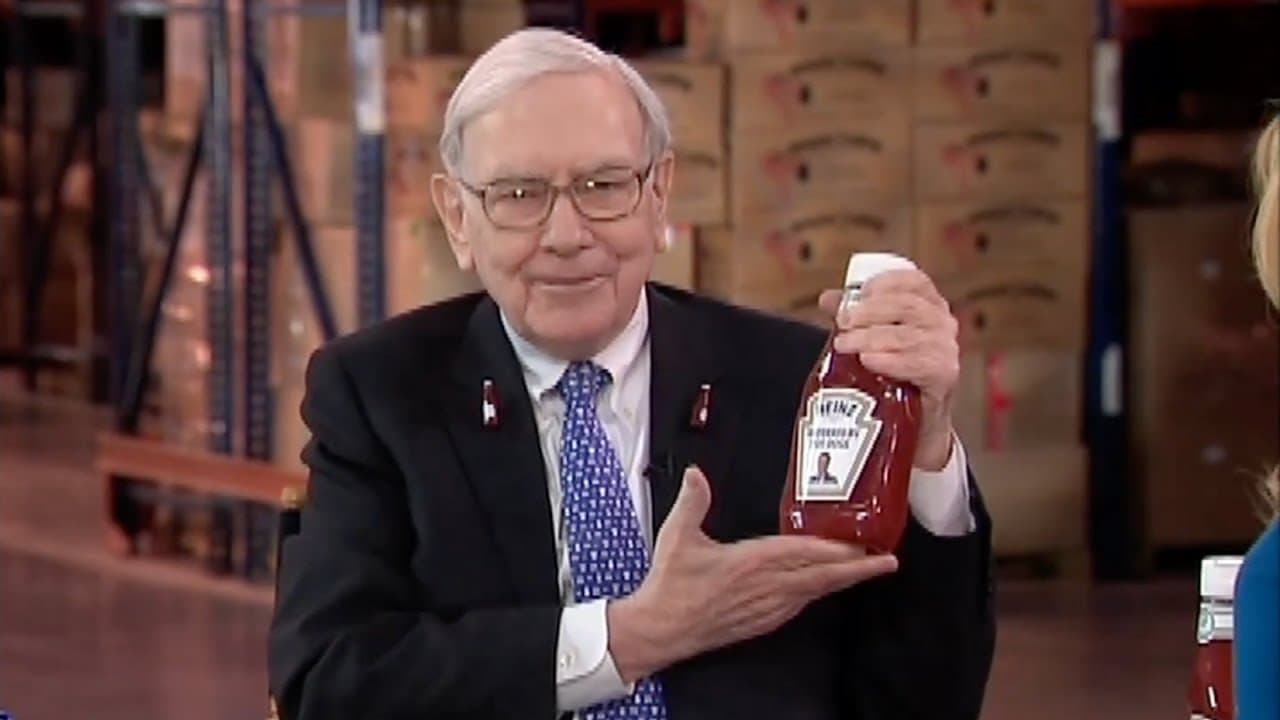
Heinz appealed to Warren Buffett because it combined a great business, durable brands, capable operating partners, and a price he could accept, although he said he barely liked it. Berkshire Hathaway would serve as a financing partner while Jorge Paolo Lehman’s 3G Capital handled the operational work, with the intention of owning Heinz for the long term.
Transcript
good morning everyone and welcome to a special edition of squawk box here on cnbc i'm becky quick and this morning i am in a suburb of omaha nebraska called la vista joe hernandez back at cnbc headquarters on the east coast our special guest this morning is berkshire hathaway chairman and ceo warren buffett we are coming to you this morning from th... Read More
Key Insights
- Heinz was attractive because Buffett regarded it as a great business with valuable brands and capable partners. He emphasized that the quality of the underlying company mattered most, even though he said the agreed price was one he only barely liked.
- Berkshire Hathaway’s role in the Heinz transaction was primarily financial. Buffett said Jorge Paolo Lehman’s 3G Capital would perform the operating work, allowing Berkshire to provide capital while relying on business partners whom Buffett had known for about a dozen years.
- Long-term brand ownership can create valuable assets when the brands are properly maintained. Buffett expressed the hope that the partners would still own Heinz 100 years later, showing that the transaction was based on durable business quality rather than a short holding period.
- Berkshire’s annual performance was measured through the change in book value compared with the S&P 500 including dividends. Buffett used this benchmark because investors could obtain the index’s results through a very low-cost index fund, so Berkshire needed to add value over time.
- Berkshire was expected to underperform during strongly rising stock markets because roughly one-third of its assets were in stocks, while the S&P 500 was entirely composed of stocks. Berkshire also reduced recorded gains by 35 percent to reflect taxes as those gains occurred.
- Share repurchases were attractive at or below 120 percent of Berkshire’s book value because Buffett believed the company’s intrinsic value was well above that level. He said exact valuation precision was unnecessary when the available price was clearly below a conservative estimate of value.
- Acquisitions and share repurchases were not mutually exclusive uses of Berkshire’s capital. Buffett said the company could buy another business like Heinz while also purchasing Berkshire shares near the stated threshold, provided suitable opportunities and available quantities appeared.
- Sequestration reduced economic stimulus by cutting government spending, but Buffett argued that the federal deficit still equaled about 6 percent of GDP. He expected spending to decline and revenues to rise, although he described the sequestration approach as a blunt, meat-axe method.
Install to Summarize YouTube Videos and Get Transcripts
Explore YouTube Video Summarizer or Get YouTube Transcript Extractor
Questions & Answers
Q: Why did Warren Buffett agree to invest in Heinz?
Warren Buffett agreed to invest because he considered Heinz a great business with valuable brands and strong operating partners. He said business quality was the most important factor, followed by his confidence in Jorge Paolo Lehman’s 3G Capital. Buffett acknowledged that he only barely liked the price, but the company’s durability and the partnership made the transaction acceptable.
Q: What role did Berkshire Hathaway have in the Heinz deal?
Berkshire Hathaway was primarily a financing partner in the Heinz transaction. Buffett said the partners from 3G Capital would do the operational work because he regarded them as exceptional business people. This arrangement paired Berkshire’s financial resources with an operating team Buffett trusted, creating a clear division between providing capital and actively managing the acquired company.
Q: Why did Warren Buffett trust the Heinz operating partners?
Buffett trusted the Heinz operating partners because he had known Jorge Paolo Lehman for about a dozen years and believed the team represented exceptionally capable business people. His confidence was important because 3G Capital would handle the work of operating Heinz, while Berkshire Hathaway would mainly participate as a provider of financing for the acquisition.
Q: How long did Warren Buffett intend to own Heinz?
Buffett framed Heinz as an extremely long-term holding and said he hoped the partners would still own the company 100 years later. His reasoning centered on the durability of strong brands. He argued that great brands can remain terrific assets when their owners take proper care of them, making extended ownership more attractive than a short-term transaction.
Q: How did Warren Buffett measure Berkshire Hathaway’s performance?
Buffett regularly measured Berkshire Hathaway by comparing its change in book value with the performance of the S&P 500 including dividends. He viewed the index as a meaningful benchmark because investors could buy a very low-cost index fund and receive those results. Berkshire therefore needed to outperform that accessible alternative over time to demonstrate that it was adding value.
Q: Why could Berkshire underperform in a strong stock market?
Berkshire could trail the S&P 500 during a strongly rising market because the index was fully invested in stocks, while Buffett said only about one-third of Berkshire was in stocks. Berkshire also tax-affected its investment gains by taking 35 percent off as gains occurred. Buffett instead expected Berkshire to fare relatively better in average or declining markets.
Q: When would Berkshire Hathaway repurchase its own shares?
Buffett said Berkshire would buy its shares when they were available at 120 percent of book value or less. He believed the company’s true value was well above that level, although he did not claim to know the precise percentage. His principle was that investors do not need exact valuation when the discount is sufficiently clear and significant.
Q: How did Warren Buffett assess sequestration and the federal deficit?
Buffett said sequestration reduced stimulus by cutting government spending, just as tax increases reduced stimulus by raising revenue. However, he noted that the government was still running a deficit of roughly $1 trillion, equal to about 6 percent of GDP. He expected the deficit to decline, although he characterized sequestration as a blunt, meat-axe approach to adjustment.
Summary
In this special edition of Squawk Box, Warren Buffett, Chairman and CEO of Berkshire Hathaway, is interviewed by Becky Quick. They discuss various topics including Buffett's annual letter to shareholders, Berkshire's performance compared to the S&P 500, the Heinz acquisition, the sequester, the Fed's actions, and insider trading. Buffett provides insights into his investment strategies, the importance of price in buying stocks, and the role of management in Berkshire's businesses.
Questions & Answers
Q: How does Buffett measure the performance of Berkshire Hathaway?
Buffett regularly measures the performance of Berkshire by comparing the change in book value with the S&P 500 index with dividends added back. If Berkshire is not delivering better results than the index over time, they aren't doing anything. While the real value of Berkshire is greater than book value, year to year book value is a good tracking measure of intrinsic business value. Some years they may fall short of the S&P due to the difference in the number of stocks and tax effects on gains, but their goal is to beat the S&P over time.
Q: Why did Berkshire not make a major acquisition in 2012?
Buffett explains that they were disappointed in not making a major acquisition in 2012, but they followed up quickly with the Heinz acquisition. Heinz makes sense as a business Berkshire likes, with partners they trust, and at a price that Buffett finds acceptable. Buffett emphasizes the importance of having great partners and that they hope to own Heinz for a long time.
Q: Would it have been better for Berkshire to buy back its own stock instead of acquiring Heinz?
Buffett highlights that if they had the chance to buy Berkshire's stock at a lower price, they would definitely do so. He believes the surest way to make money is to buy your own dollar bills for less than their worth. While the exact value of Berkshire's stock is uncertain, Buffett is confident that it is worth more than 120% of its book value. If they had the opportunity to buy their stock at or below 120% of book value, they would do so, but it does not preclude them from making other acquisitions.
Q: What is Buffett's outlook on the sequester and its impact on the economy?
Buffett explains that the sequester reduces the amount of stimulus to the economy, but he believes that a 6% deficit of GDP in the fourth year of a recovery is still a fair amount of stimulus. While there may be short-term pain caused by the sequester, he believes that bringing down spending and increasing revenues is necessary to address the deficit. He acknowledges that it may be done in a "meat-axe" way, but the deficit needs to come down, and it may take a combination of approaches to achieve that.
Q: How does Buffett view the potential risks of unwinding the Fed's balance sheet?
Buffett explains that it is much easier to buy assets than to sell them, and he believes that getting to the unwinding stage of the Fed's balance sheet will be interesting. He highlights that the Fed is buying roughly a trillion dollars' worth of government-issued paper and creating bank reserves. When they start selling, it will be a different action, and the market's reaction will be noticeable. Buffett expresses his respect for Chairman Bernanke but emphasizes the challenges that may arise when unwinding the balance sheet.
Q: Has Berkshire taken any precautions to prepare for the unwinding stage of the Fed's balance sheets?
Buffett states that Berkshire has not done anything differently to prepare for the unwinding stage. He and Charlie Munger, Vice Chairman of Berkshire, have never considered macroeconomic factors in their investment decisions, and their focus is on finding the right businesses at the right price. Buffett acknowledges that having a substantial amount of cash on hand is important, but their investment decisions are not driven by macroeconomic considerations.
Q: Is Buffett worried about Berkshire becoming too diversified and having to sell off companies in the future?
Buffett explains that Berkshire is designed to have a group of businesses run by people who love and know how to run them. Each business has its own management, and their goal is to run their respective businesses, not Berkshire. Buffett believes that managers who love and know their businesses deliver the best results. Berkshire's businesses are not straying too far from their core operations, and they focus on providing good value to their customers.
Q: How does Berkshire prevent premature leaks of insider information during acquisitions?
Buffett acknowledges that it is important to minimize the number of people who know about potential acquisitions, but it is challenging to keep it completely confidential. During an acquisition, few people, including lawyers, auditors, CFOs, and assistants, are involved. Buffett prefers to push the deals through quickly to minimize potential leaks. He also mentions that any insider trading, such as the unusual options activity before the Heinz acquisition, should be penalized.
Q: What was the total legal bill to close the Sokol affair?
Buffett estimates that the total legal bill for the Sokol affair, where David Sokol was accused of insider trading, is around $4 million. Buffett mentions that the legal bills for Berkshire and Sokol have not been completely settled yet.
Q: Have Buffett and Sokol spoken since the Sokol affair?
Buffett states that he has not spoken to David Sokol for a couple of years.
Q: Is Buffett concerned about the increasing concentration of Berkshire's investments?
Buffett agrees that Berkshire has been investing a substantial amount of money, but he believes that they are still finding good value for their investments. He reiterates that buying great businesses for fair prices is more important than buying fair businesses at great prices. Berkshire's partnerships, like the one with 3G for Heinz, provide opportunities to leverage their investments globally. Buffett emphasizes the importance of having good management partners to run the businesses effectively.
Summary & Key Takeaways
-
Warren Buffett described Heinz as a great business supported by valuable brands and strong operating partners. Berkshire Hathaway partnered with Jorge Paolo Lehman’s 3G Capital because Buffett trusted its business capabilities. Berkshire would primarily supply financing, while its partners would undertake the operational work required to manage and strengthen the company.
-
Buffett evaluated Berkshire Hathaway by comparing its annual change in book value with the S&P 500 including dividends. Berkshire tended to trail during strongly rising markets because only about one-third of its assets were in stocks and its gains were reduced for taxes, but Buffett expected superior performance across longer periods.
-
Buffett said Berkshire could pursue acquisitions and repurchase its own shares at the same time. He considered repurchases at or below 120 percent of book value financially attractive because he believed Berkshire’s intrinsic value exceeded that threshold. He also viewed the federal deficit as continuing to provide substantial economic stimulus despite sequestration.
Read in Other Languages (beta)
Share This Summary 📚
Summarize YouTube Videos and Get Video Transcripts with 1-Click
Try YouTube Summary with ChatGPT & Claude or YouTube Transcript Generator
Explore More Summaries from Investor Archive 📚
Summarize YouTube Videos and Get Video Transcripts with 1-Click
Try YouTube Summary with ChatGPT & Claude or YouTube Transcript Generator