How to Build a DTC Brand by Changing Form Factor
TL;DR
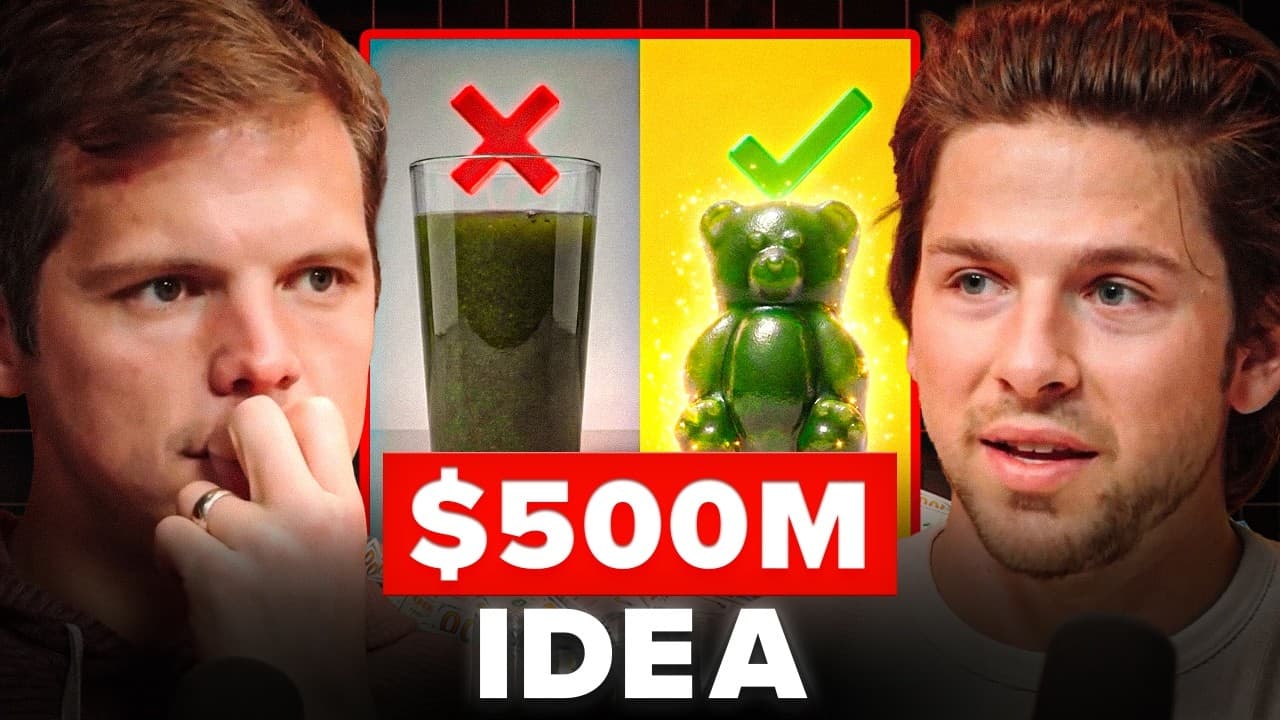
Take a product that is already proven and popular, change its form factor, and sell it again with strong direct response marketing. This is how Grüns turned AG1 into a gummy and reached roughly 500 million in sales in three years, and how Starface turned acne treatment into stylish pimple stickers.
Transcript
It is AG1 in a gummy. All it is. Sometimes you hear ideas and you're like, it's too easy. Of course, that works. They launched 3 years ago. I'm fairly confident it's 500 million in sales. Oh my gosh, dude. That's a whole industry. 500 million in 3 years tells me way more demand than supply. Take something that's already really popular and just chan... Read More
Key Insights
- The core strategy is taking something already really popular and changing only the form factor, creating a large addressable market with a novel version, then selling it through direct response marketing.
- OxiClean is Billy Mays' number one product and has done five billion plus in sales, functioning as a simple stain remover sold first as a powder tub and later as a spray.
- Grüns is essentially AG1 (athletic greens) in a gummy form, launched three years ago, and is estimated at around 500 million in sales, showing how a form-factor change unlocks a whole industry.
- Starface reframed acne treatment by not fixing the root cause but giving people a stylish star-shaped sticker to hide blemishes, turning a big skincare category into a trendy public accessory.
- The best DTC brands consistently winning today combine very small tweaks on form factor with very good direct response marketing, echoing 1990s and early 2000s infomercial tactics on Meta and TikTok.
- Billy Mays' products were all home consumables with a unique form factor: OxiClean, bathroom cleaners, fabric sealant glue for jean seams and couch cushions, and hardwood floor cleaners meant for repeat use.
- A stain remover sticker for kids' clothes could sell a cheap product at high markup because it solves embarrassment, not deep cleaning, and works as a consumable people rebuy in packs.
- Modern e-commerce operators run 45-minute VSLs with heavy hooks, essentially repackaging proven direct response techniques from decades ago and placing them on social media platforms instead of TV.
Install to Summarize YouTube Videos and Get Transcripts
Explore YouTube Video Summarizer or Get YouTube Transcript Extractor
Questions & Answers
Q: How do you build a successful product without inventing something new?
Take a product that is already really popular and just change the form factor. This creates a massive novel version with a large addressable market, and then you sell it with good direct response marketing. The speakers argue this simple move consistently crushes because you are riding existing demand while offering a fresh, differentiated version, exactly what brands like Grüns and Starface did.
Q: What was Billy Mays' top-selling product?
Billy Mays' number one product was OxiClean, a stain remover that has done five billion plus in sales at this point. It originally came as a powder in a little tub that you scooped out, rubbed into a stained shirt, and tossed in the wash. It is now also sold as a spray and in to-go stick form, reflecting improved form factors over time.
Q: What is Grüns and why is it successful?
Grüns is essentially AG1, or athletic greens, put into a gummy form. That is all it is. The company launched three years ago and is estimated at around 500 million in sales. Its success illustrates the whole thesis: taking a hugely popular product and simply changing the form factor, then going direct response, can unlock what feels like an entire industry in a very short time.
Q: What is Starface and how does it approach acne?
Starface makes pimple patches shaped like stars that you put on your face in public. Rather than trying to fix acne at its root cause like Proactiv or Neutrogena, Starface gives people a stylish way to hide blemishes. It has scaled up fast in a couple of years, is sold in retailers like Ulta and Target, and is worn by both girls and guys, even people in their 20s and 30s.
Q: Why does the stain remover sticker idea for kids work?
The stain remover sticker works because it solves embarrassment, not deep cleaning. A parent whose kid gets a big stain before going somewhere nice would buy a solution. You peel a colorful or licensed sticker, like a dinosaur, and stick it on the stain. It does not have to clean perfectly, it is a consumable people rebuy in packs, and it sells cheaply at a high markup.
Q: How does modern DTC marketing relate to old infomercials?
Modern e-commerce operators are essentially taking the direct response techniques that worked in the 1990s and early 2000s and putting them on Meta and TikTok instead of television. They run 45-minute VSLs and use heavy hooks, the same classic direct response approach Billy Mays perfected. The core difference is the channel: TV and CTV audiences have shrunk, so distribution moved to social media and search.
Q: What kinds of products did Billy Mays sell?
Beyond OxiClean and Flex Seal, Billy Mays sold home products that were all consumables with a unique form factor. These included bathroom cleaners, a glue reworked to fix jean seams and split couch cushions as a fabric sealant, and hardwood floor cleaners. The common thread was items used time and time again once you build a habit, giving repeat purchases and durable demand.
Q: What makes a form-factor product profitable at high markup?
These products are profitable because you sell a very cheap thing for a pretty high markup by solving an emotional problem like embarrassment rather than a technical one. Because the item is consumable, customers buy more and more, often in packs, driving repeat revenue. Add trendy design, licensing like Pokemon or Disney, and strong direct response marketing, and a low-cost item becomes a high-margin, habit-forming business.
Summary & Key Takeaways
-
Billy Mays was the king of late-night infomercials and made billions using classic direct response marketing. His number one product was OxiClean, which has done over five billion in sales, alongside other home consumables like bathroom cleaners, fabric sealants, and hardwood floor cleaners.
-
The repeatable playbook is to take a proven, popular product and change its form factor to create a novel version with a huge addressable market, then push it with strong direct response marketing on Meta and TikTok instead of television.
-
Examples include Grüns (AG1 in a gummy, roughly 500 million in three years), Starface pimple stickers that hide acne stylishly, and a proposed stain remover sticker for kids' clothes that solves embarrassment as a cheap, high-markup, licensable consumable.
Read in Other Languages (beta)
Share This Summary 📚
Summarize YouTube Videos and Get Video Transcripts with 1-Click
Try YouTube Summary with ChatGPT & Claude or YouTube Transcript Generator
Explore More Summaries from Chris Koerner on The Koerner Office Podcast 📚



Summarize YouTube Videos and Get Video Transcripts with 1-Click
Try YouTube Summary with ChatGPT & Claude or YouTube Transcript Generator