How to Build a Paid Growth Engine for AI SaaS
TL;DR
Start paid acquisition early, but establish reliable conversion tracking and revenue attribution before spending the first cent. A focused engine built around Meta, Google, and lifecycle messaging can rapidly test product demand, positioning, creative, and funnels, while strong product quality and a self-serve experience provide the foundation for sustainable product-led growth.
Transcript
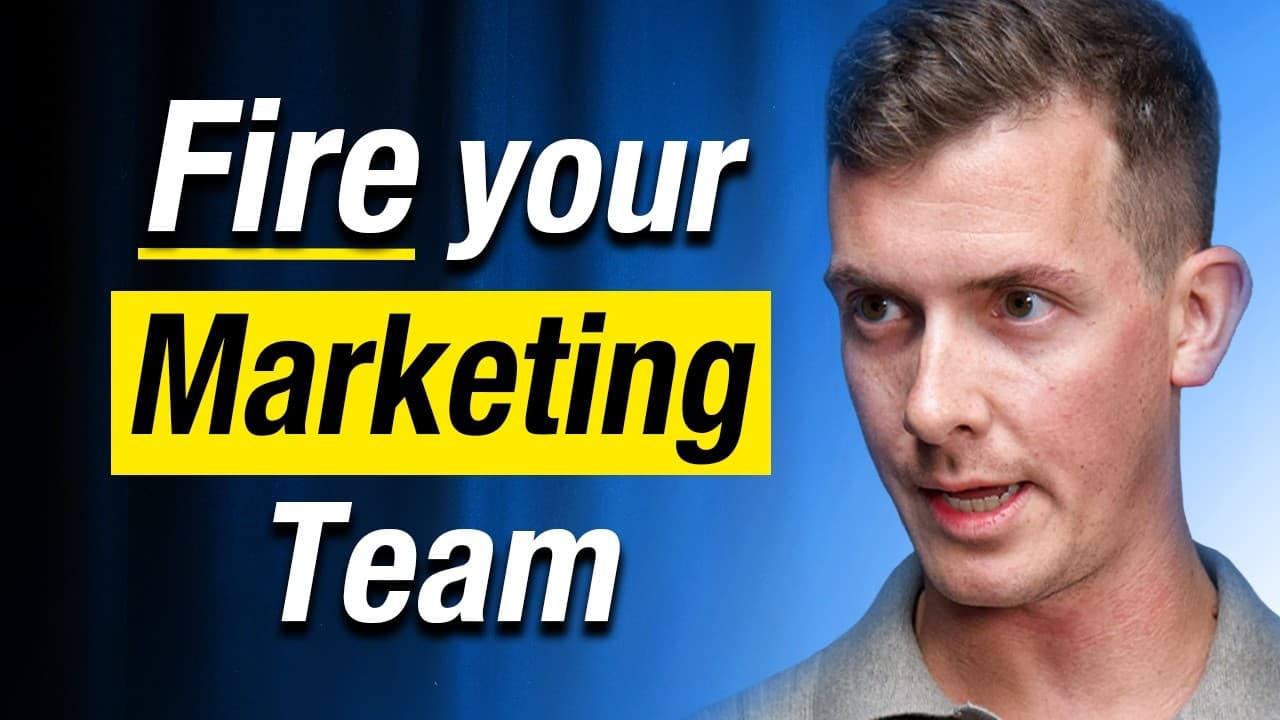
probably fire most of your marketing team. My philosophy is that the ecom playbook is the right playbook for SAS. Every single scent needs to equal a purchase or an add to cart. Matt Winsky, he's worked at Superhum. He's worked at Whisperflow and now he's just joined Excelbacked Victor.com and he's looking to make it third time. I wouldn't say luck... Read More
Key Insights
- Product-led growth is still a relevant foundation because it requires a strong self-serve funnel, and that same discipline can be applied to agents researching and selecting tools or APIs without a human directly participating in each decision.
- Superhuman demonstrated that product quality depends on refining small details that encourage continued use, but founder-led referrals and word of mouth eventually reached a ceiling that required a different growth playbook to support further scale.
- The ecommerce playbook can be applied to SaaS by connecting spending to measurable customer actions, producing varied creative at high volume, working with many creators, and balancing several channels that collectively communicate the full brand.
- Paid acquisition is a rapid validation mechanism because it can test messaging, positioning, creative, and conversion funnels within a week, while organic content, podcast appearances, interviews, and brand development generally require more time to produce clear signals.
- The core acquisition engine consists of Meta, Google, and lifecycle messaging: Meta and YouTube provide video-oriented intent, Google captures search intent, and email, SMS, or app notifications create a follow-up net for prospective customers.
- Channel focus is more valuable than premature expansion because an early company can execute Meta and Google effectively before adding platforms such as TikTok or Reddit, which may dilute attention if every channel is operated poorly.
- Measurement infrastructure must precede advertising spend because overlapping Meta, Google, and lifecycle reporting can double-count or triple-count conversions, leaving a company unable to determine which source actually produced revenue from a new customer.
- Advertising algorithms depend on the conversion signals they receive, so companies must connect website and product activity to each marketing platform and improve Meta match rates and Google enrichment scores to avoid losing visibility into potential customers.
Install to Summarize YouTube Videos and Get Transcripts
Explore YouTube Video Summarizer or Get YouTube Transcript Extractor
Questions & Answers
Q: How should an early-stage AI SaaS company begin paid growth?
An early-stage AI SaaS company should begin with Meta and Google while also establishing lifecycle messaging through email, SMS, or app notifications. The company should avoid launching many channels at once because weak execution across Meta, Google, TikTok, and Reddit will not create an effective acquisition system. Before spending, it should implement analytics, attribution, and conversion tracking across its website, product, and advertising platforms.
Q: Why should SaaS companies start paid acquisition early?
Paid acquisition should start early because it offers a fast way to determine whether a product-led business can scale. Within a week, a company can test messaging, creative concepts, positioning, and conversion funnels using paid distribution. Organic writing, podcast appearances, user interviews, and brand building remain useful, but paid amplification creates a faster feedback engine that can operate alongside those slower activities.
Q: What are the three core parts of a SaaS acquisition engine?
The three core parts are Meta, Google, and lifecycle messaging. Meta and video platforms such as YouTube help reach audiences through video-oriented intent, while Google reaches people searching for a solution even when they do not know the product exists. Lifecycle channels, including email, SMS, and app notifications, provide repeated opportunities to reach, remind, and convert people who have already entered the funnel.
Q: What should a SaaS company track before spending on ads?
A SaaS company should track customer actions across its website and product, connect those actions to its advertising platforms, and establish attribution that identifies revenue from new customers. It must account for overlapping claims from Meta, Google, and lifecycle channels, which can double-count or triple-count conversions. Meta match rates and Google enrichment scores also need attention because incomplete signals can make customers effectively invisible to the platforms.
Q: How can paid advertising validate product-led growth?
Paid advertising validates product-led growth by testing whether putting money into acquisition produces users who actually want the product and move through its self-serve funnel. It also exposes weaknesses in messages, creative, positioning, and conversion steps. Because these variables can be tested quickly, paid acquisition provides evidence about scalable demand while the company continues founder-led content, interviews, organic marketing, and broader brand development.
Q: Why can word of mouth stop being enough for SaaS growth?
Word of mouth and founder referrals can create strong early growth, as they did for Superhuman, but that approach eventually reaches a ceiling. Continued scale then requires a broader distribution system. The proposed alternative adapts ecommerce practices to SaaS by using paid advertising, many creative variations, creator programs, measurable customer actions, and multiple coordinated channels while preserving the refined product experience that supports retention.
Q: How should SaaS companies decide their initial advertising budget?
The initial budget should reflect average revenue per user, unit economics, and the length of the conversion funnel, because those factors determine what a given amount of spending can reveal. For a company that raised $3 million to $5 million, the discussion identifies $100,000 as a reasonable starting amount for validation. The purpose is to test whether spending can reliably produce customers who want the product.
Q: How will software agents affect product-led growth?
Software agents do not eliminate the need for product-led growth because products still need a strong self-serve experience. Companies should extend their existing funnel discipline by studying how agents research products, evaluate options, and choose tools or APIs for specific tasks. Businesses that already optimize carefully for human decision-making should therefore be better positioned to support decisions made without a human directly in the loop.
Summary & Key Takeaways
-
Product-led growth remains relevant as software agents begin selecting tools and APIs without direct human involvement. Companies already skilled at creating refined self-serve funnels for people should apply the same discipline to understanding how agents research options and make decisions, positioning their products for both human-led and agent-led discovery.
-
The proposed SaaS growth model borrows heavily from ecommerce, where every dollar spent is measured against purchases or cart activity, creative production operates at high volume, and multiple channels represent the brand. For SaaS, paid acquisition provides a fast way to validate messaging, positioning, funnels, and scalable product demand.
-
An initial acquisition engine should concentrate on Meta, Google, and lifecycle messaging instead of spreading resources across many channels. Before spending, the company needs analytics, attribution, conversion tracking, and consistent signals across advertising platforms, its website, and its product so it can identify which activities actually generate new-customer revenue.
Read in Other Languages (beta)
Share This Summary 📚
Summarize YouTube Videos and Get Video Transcripts with 1-Click
Try YouTube Summary with ChatGPT & Claude or YouTube Transcript Generator
Explore More Summaries from 20VC with Harry Stebbings 📚






Summarize YouTube Videos and Get Video Transcripts with 1-Click
Try YouTube Summary with ChatGPT & Claude or YouTube Transcript Generator