How to Write Copy That Converts More Customers
TL;DR
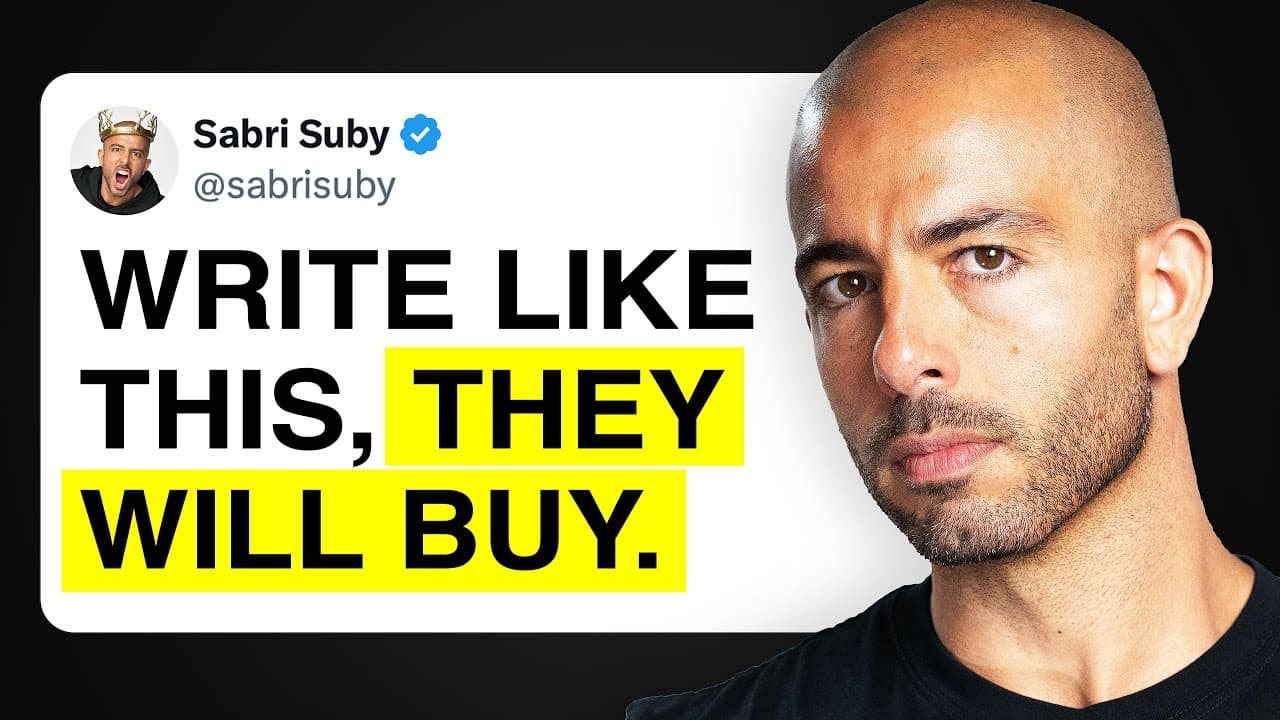
Direct response copywriting turns words into measurable actions, such as generating a lead or completing a purchase. Strong copy begins with understanding how to sell to one person, then scales that message through ads and videos. Human psychology remains stable as platforms change, while skilled judgment is still needed to evaluate and improve AI-generated copy.
Transcript
If there is one thing that I'm good at, it is copywriting. I have generated my clients over $7.8 billion in a thousand different niches. I use this one skill to become one of the youngest sharks on Shark Tank. And it's pretty much what I have obsessed over since the start of my career. And I promise that if you watch this entire video to the very e... Read More
Key Insights
- Direct response copywriting is the practice of writing words that ask someone to take a specific action, such as becoming a lead or making a purchase. Its purpose is measurable persuasion, rather than merely entertaining an audience with a clever phrase or jingle.
- Effective copy is rooted in one-to-one selling because direct conversations reveal which words, sequences, and objections influence a buyer. The speaker learned this through 600 daily cold calls, then applied the same principles to advertising that could address many people simultaneously.
- Copy functions like a scalable sales force because one advertisement or video can communicate the same persuasive message to a large audience. This removes the daily time constraint faced by a salesperson who can speak with only a limited number of prospects individually.
- Human psychology is the durable foundation of copywriting because advertising platforms and algorithms change while businesses continue selling to people. Once persuasive principles are understood, the writer can apply them to new channels after learning the mechanics of each platform.
- AI-generated copy still requires skilled evaluation because acceptable-looking output may contain weaknesses that an untrained reader cannot identify. The speaker argues that copywriting knowledge helps a person distinguish strong messaging from mediocre output and use AI to produce more useful work.
- Better copy can reduce customer acquisition costs by persuading a larger percentage of the same audience to act. The speaker states that even a 10% improvement in ad clicks, with every other funnel element unchanged, can translate into a corresponding improvement in profit margins.
- Messaging and creative choices become more important as automated media buying gives advertisers access to similar optimization capabilities. The differentiating factors are the words, the market angle, the way a niche is approached, and how the offer is communicated to the prospect.
- Copywriting applies beyond customer acquisition because persuasive messaging can help recruit talent, write internal memos, motivate a team, and secure managerial support for a business vision. The broader skill is creating a clear, compelling message that encourages a desired action.
Install to Summarize YouTube Videos and Get Transcripts
Explore YouTube Video Summarizer or Get YouTube Transcript Extractor
Questions & Answers
Q: What is direct response copywriting?
Direct response copywriting is writing designed to produce a specific, observable action from the reader or viewer. That action might be becoming a lead, expressing interest, applying for a job, or purchasing a product. The speaker distinguishes it from branded copy that mainly entertains, such as clever jingles, because direct response copy is judged by whether it persuades the prospect to act.
Q: How can someone learn to write copy that sells?
Learning to sell to one person is the foundation for writing copy that sells to many people. The speaker developed this skill by making 600 cold calls a day, observing how wording and sequence affected results, and modifying the script when the original approach performed poorly. Those direct sales lessons were later transferred into written advertisements and videos aimed at much larger audiences.
Q: Why does sales experience improve copywriting?
Sales experience improves copywriting because direct conversations expose the relationship between language and buyer behavior. A salesperson can hear reactions, identify resistance, and discover which sequence of ideas moves a stranger toward a purchase. The speaker describes one-to-one sales as one-to-one copywriting, arguing that the same persuasive principles can later be amplified through ads, funnels, and videos.
Q: How does copywriting help scale a business?
Copywriting helps scale a business by allowing one persuasive message to reach far more people than an individual salesperson can contact. The speaker moved from calling 600 people in a day to creating ads capable of addressing 600,000 people in a day. The words act like many small salespeople, repeatedly presenting the message without being limited by the number of working hours available.
Q: Why is copywriting still important when AI can generate text?
Copywriting remains important because AI output must still be judged, corrected, and improved by someone who understands effective persuasion. The speaker says text produced by ChatGPT may look acceptable to an untrained reader while still leaving substantial room for improvement. Copywriting expertise also helps a person use AI for greater output while maintaining control over the angle, message, and quality.
Q: How can better copy lower advertising costs?
Better copy can lower the effective cost of advertising by increasing the percentage of viewers who click, become leads, or purchase. The speaker explains that stronger ads can improve results without changing the rest of the funnel. As advertising prices rise, improved conversion becomes a way to protect profit margins and reduce the cost required to acquire each customer.
Q: What parts of copywriting remain useful across platforms?
The principles based on human psychology remain useful even when platforms, algorithms, and media formats change. The speaker argues that Google ads, TikTok ads, and future channels may require different mechanics, but they still communicate with human prospects. A copywriter can therefore carry persuasive skills from one platform to another and separately learn how each new platform operates.
Q: Where can businesses use copywriting besides advertisements?
Businesses can use copywriting anywhere they need words to encourage action or agreement. The transcript identifies recruiting talent, writing memos, motivating a team, persuading managers to support a vision, generating leads, and selling products as relevant applications. In this broader sense, spoken words, videos, advertisements, and internal communications all depend on clear and compelling messaging.
Summary & Key Takeaways
-
Copywriting in marketing includes branded copy, which may entertain or build recognition, and direct response copy, which asks a prospect to take a specific action. The speaker focuses on direct response: arranging words and messages to move people emotionally toward becoming leads, buying products, applying for jobs, or supporting a business vision.
-
The speaker developed his approach by making 600 cold calls a day and modifying an ineffective sales script. He later transferred those one-to-one sales principles into ads and videos that could reach far more people. His central lesson is that effective mass communication begins with learning how to persuade one individual.
-
Advertising platforms, algorithms, and media formats continually change, but the speaker argues that human psychology remains comparatively stable. Copywriting therefore has a long useful life across platforms. As advertising costs rise and automated media buying becomes widely available, messaging, angles, creative choices, and conversion improvements become important sources of competitive advantage.
Read in Other Languages (beta)
Share This Summary 📚
Summarize YouTube Videos and Get Video Transcripts with 1-Click
Try YouTube Summary with ChatGPT & Claude or YouTube Transcript Generator
Explore More Summaries from Sabri Suby 📚
Summarize YouTube Videos and Get Video Transcripts with 1-Click
Try YouTube Summary with ChatGPT & Claude or YouTube Transcript Generator