How Does a Plant-Based Diet Support Health?
TL;DR
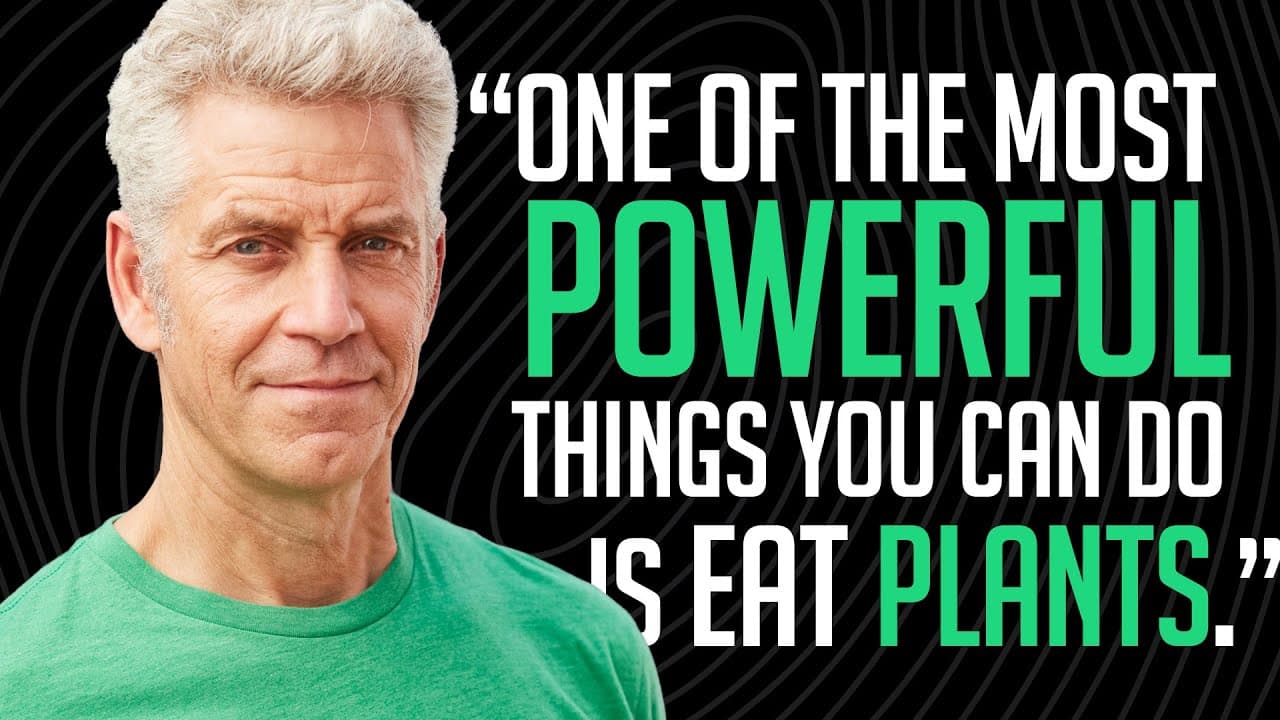
Eating whole plant foods as close to their grown form as possible is presented as a practical way to support health, athletic performance, immunity, and longevity. Rip Esselstyn argues that plant-derived protein and a healthier microbiome can reduce burdens associated with animal-based foods, while broader adoption could also help address chronic Western diseases and the climate crisis.
Transcript
So I tell people, if you wanna eat strong food, you wanna eat a whole food plant-based diet. Eating foods as close to grown as possible, where you're getting the most kick ass form of protein. All proteins originate from plants, most people don't know that. And it's like the Goldilocks form of protein. It's not too high in sulphur-containing amino ... Read More
Key Insights
- A whole food plant-based diet emphasizes foods eaten as close to their naturally grown form as possible. Esselstyn presents this approach as a way to obtain plant-derived protein while supporting health, athletic performance, immune function, and longevity.
- All protein originates from plants, according to Esselstyn. He characterizes plant protein as a balanced option because it is not excessively high in the sulfur-containing amino acids that he associates with inflammation, calcium loss, increased cholesterol, and strain on the kidneys and liver.
- A healthy microbiome can strengthen the body's defenses, according to Esselstyn. He argues that eating whole plant foods supports beneficial intestinal bacteria, which can help protect against inflammation and the range of chronic Western diseases discussed in the conversation.
- Rip Esselstyn's athletic history supports his advocacy through personal example. He was an NCAA All-American swimmer, competed as a professional triathlete, and, at age 56, broke the masters world record in the 200-meter backstroke, as stated in Rich Roll's introduction.
- Mentorship can make a major dietary transition more achievable. Rich Roll says Esselstyn became a lighthouse and practical model when Roll was searching for a way of eating and living that would let him thrive, particularly because they shared competitive swimming backgrounds.
- Plant-based eating has moved substantially closer to the mainstream. Roll points to the availability of plant-based restaurant options and meat and dairy alternatives in grocery stores, while Esselstyn notes the expanding supply of books, documentaries, information, and food choices.
- The growth of plant-based eating is connected to health and environmental concerns. Esselstyn argues that adoption cannot happen quickly enough because the country faces serious health problems alongside a climate crisis discussed in relation to the COP26 conference in Glasgow.
- The PLANTSTRONG business extends dietary advocacy into accessible food products. Esselstyn uses his former family home in Austin as an office for podcasts and work connected to the company, creating separation between professional responsibilities and his current family home.
Install to Summarize YouTube Videos and Get Transcripts
Explore YouTube Video Summarizer or Get YouTube Transcript Extractor
Questions & Answers
Q: What foods are included in a whole food plant-based diet?
A whole food plant-based diet is described as eating foods as close to their naturally grown form as possible. The central idea is to prioritize plant foods rather than red meat, chicken, fish, or other meats. The conversation does not provide a detailed food list, but it repeatedly distinguishes minimally altered whole plant foods from animal-based foods and manufactured meat or dairy alternatives.
Q: Why does Rip Esselstyn recommend plant-derived protein?
Rip Esselstyn recommends plant-derived protein because he considers it a balanced, or Goldilocks, form of protein. He says it is not excessively high in sulfur-containing amino acids, which he associates with inflammation, calcium being leached from bones, elevated cholesterol, and added burdens on the kidneys and liver. He contrasts this protein with protein obtained from red meat, chicken, fish, and other meats.
Q: How can a plant-based diet support the immune system?
Esselstyn argues that one of the most powerful dietary steps for creating a strong immune system is adopting a whole food plant-based diet. He connects this benefit to the microbiome, saying that plant-based eating helps create a healthy community of bacteria. According to his explanation, that healthier microbiome improves the body's ability to defend itself against inflammation and chronic Western diseases.
Q: How did Rip Esselstyn influence Rich Roll's plant-based journey?
Rip Esselstyn became a mentor when Rich Roll was searching for a way of eating and living that would help him thrive. Roll contacted him after seeing his plant-based posts and learning about the book he was developing. Esselstyn's background as a swimmer, professional triathlete, and firefighter gave Roll a credible model, and Roll says that guidance played a major role in his transformation.
Q: What athletic achievements support Rip Esselstyn's message?
Esselstyn was an NCAA All-American swimmer at the University of Texas and later competed as an elite professional triathlete. Rich Roll also introduces him as an athlete who, at age 56, had recently broken the masters world record in the 200-meter backstroke. Roll presents these accomplishments as living evidence that Esselstyn's plant-strong lifestyle can accompany high performance and athletic longevity.
Q: Why is plant-based eating becoming more mainstream?
The conversation attributes mainstream growth to expanding access to information and food. Esselstyn notes that far more books, documentaries, and other resources are available than when he wrote his first book. Roll adds that restaurants increasingly offer plant-based choices and grocery stores carry growing ranges of meat and dairy alternatives. Together, these changes make the lifestyle more visible, understandable, and accessible.
Q: Why does Esselstyn believe plant-based adoption should accelerate?
Esselstyn believes the movement cannot advance quickly enough because it relates to two urgent concerns discussed in the conversation: the country's poor health and the climate crisis. He hopes animal agriculture can be greatly reduced over the next 10 years. He compares his desired outcome to smoking reduction, envisioning animal-food consumption falling below 20 percent of the population rather than disappearing completely.
Q: What is the purpose of Esselstyn's PLANTSTRONG company?
The PLANTSTRONG company expands Esselstyn's work from books, speaking, and podcasting into food entrepreneurship. The shelves and cupboards in his Austin office contain products from the new food line, and the episode discusses selling PLANTSTRONG directly to consumers. The available transcript does not detail every product, but the company clearly supports his broader effort to help people eat and live better.
Summary & Key Takeaways
-
Rip Esselstyn advocates eating a whole food plant-based diet built around foods kept close to their naturally grown form. He argues that plants provide a favorable form of protein and help create a healthy microbiome, which can support immune defenses and reduce risks associated with inflammation and chronic Western diseases.
-
Rich Roll describes Esselstyn as an accomplished swimmer, former professional triathlete, firefighter, author, podcaster, entrepreneur, and longtime plant-based advocate. Esselstyn became an important mentor during Roll's dietary transition because his athletic history and sustained performance offered a practical example of how the lifestyle could support demanding physical activity.
-
The conversation examines the movement's transition from a relatively obscure idea into a mainstream lifestyle with wider access to books, documentaries, restaurant choices, and grocery products. Esselstyn believes adoption must accelerate because of poor public health and the climate crisis, while Roll observes that plant-based eating has demonstrated staying power rather than disappearing as a fad.
Read in Other Languages (beta)
Share This Summary 📚
Summarize YouTube Videos and Get Video Transcripts with 1-Click
Try YouTube Summary with ChatGPT & Claude or YouTube Transcript Generator
Explore More Summaries from Rich Roll 📚


Summarize YouTube Videos and Get Video Transcripts with 1-Click
Try YouTube Summary with ChatGPT & Claude or YouTube Transcript Generator