How to Improve IELTS Speaking Pronunciation
TL;DR
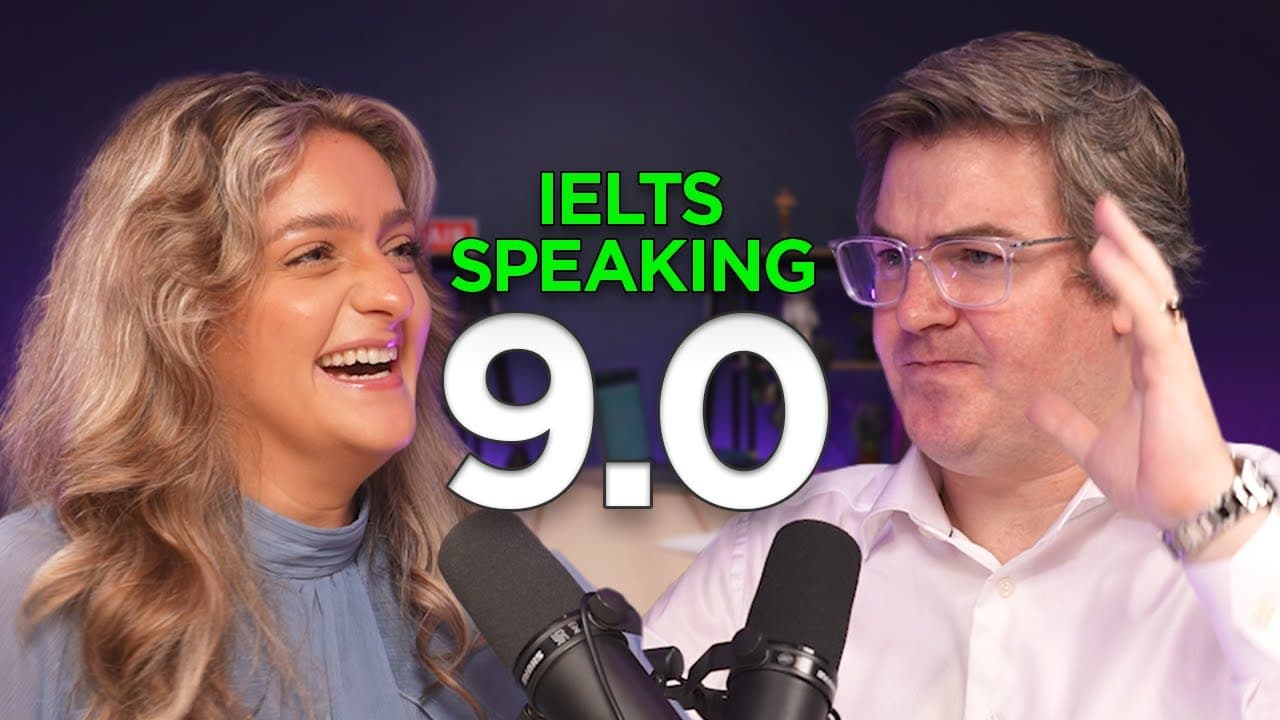
Strong IELTS speaking performance comes from answering naturally, developing ideas with personal examples, and continuing calmly after imperfect responses. The candidate becomes more fluent as her initial nervousness fades, while the evaluator emphasizes that scoring reflects the totality of the performance, not one short answer or isolated mistake in grammar or fluency.
Transcript
Let's start off by talking about belongings in your daily life. Do you prefer having fewer or more belongings in your daily life? I think, personally, for me, I'd prefer having fewer belongings just because I feel like it would be more easier to deal with on a daily basis, especially when it comes to technology, trying to decide if I had a laptop a... Read More
Key Insights
- IELTS Speaking scores are based on the totality of a candidate’s answers, so one weak, short, or hesitant response does not automatically produce a low score. The examiner considers how the candidate performs throughout the test and can recognize temporary nervousness.
- Initial nervousness can reduce fluency during Part 1, even for a strong speaker. The candidate gives several short or list-like answers at first, but she relaxes as the interview continues and begins producing smoother, more developed responses.
- Part 1 begins with accessible personal questions because candidates may need time to settle into the test. Topics such as belongings, technology, reading, and outdoor activities allow the candidate to discuss familiar experiences before moving into more demanding sections.
- Technology is presented as both a connection tool and a possible source of excessive dependence. The candidate values it for long-distance friendships, professional networking, and creative promotion, but worries that too much technology and AI can reduce the role of human beings.
- Personal examples help transform simple answers into developed responses. The candidate supports her preferences by discussing her phone, cats, color-organized books, outdoor exercise, solo travel in England, and the difficulty of moving abroad for university.
- Cultural adaptation is easier when a person feels freedom, belonging, or compatibility with the surrounding culture. The candidate suggests that some people discover aspects of themselves abroad and become more open to experiences that were unavailable in their home environment.
- Adapting abroad can involve cultural differences, unfamiliar expectations, limited prior experience, and emotional distress. The candidate describes feeling behind other art students, crying in class, and experiencing breakdowns before gradually becoming accustomed to her new environment.
- Challenges can support personal growth by encouraging people to listen to themselves and trust their instincts. The candidate views pain as a teacher and believes that persistence through difficult experiences can help someone become a better version of themselves.
Install to Summarize YouTube Videos and Get Transcripts
Explore YouTube Video Summarizer or Get YouTube Transcript Extractor
Questions & Answers
Q: How can nervousness affect IELTS Speaking fluency?
Nervousness can make early answers shorter, less fluent, or more list-like, as demonstrated by the candidate during Part 1. Her performance improves as she becomes comfortable and continues speaking. The evaluator says this reaction is normal and explains that a good examiner considers later answers when interpreting early hesitation rather than treating one nervous response as decisive.
Q: Does one bad answer determine an IELTS Speaking score?
One bad answer does not immediately determine the final speaking score. The evaluator explicitly says that the examiner bases the score on the totality of the candidate’s answers. Short responses or hesitation near the beginning may reflect nerves, especially when later responses become more fluent, detailed, and confident as the candidate settles into the conversation.
Q: How should candidates approach easy IELTS Part 1 questions?
Candidates should choose aspects of the question that feel easy to discuss and answer naturally, even if they are initially nervous. The evaluator explains that Part 1 starts with getting-to-know-you questions rather than the most difficult material. Familiar topics give candidates time to relax, demonstrate their speaking ability, and gradually produce more fluent responses.
Q: How can personal examples improve IELTS Speaking answers?
Personal examples give an answer substance and make it easier to continue speaking. The candidate expands her responses by mentioning her phone and cats, color-organized books, long-distance friends, outdoor yoga, swimming, solo travel, and university experience. These details connect general opinions to specific experiences, helping her produce answers that are more developed and personally meaningful.
Q: How does technology help people connect and network?
Technology helps people maintain long-distance friendships, communicate despite physical separation, and preserve a sense of connection. The candidate also says work-related technology creates opportunities to meet and network with different kinds of people. Social media can provide a larger platform for people who run businesses or want to share creative work such as music and art.
Q: Why might someone want less technology in daily life?
Someone may want less technology because excessive dependence can feel as though it reduces the human element of life. The candidate says she would prefer to rely on technology less and expresses concern that AI and other modern tools are beginning to replace human beings in some sense. She still recognizes technology’s advantages for communication, networking, and creative promotion.
Q: What challenges can people face when adapting abroad?
People adapting abroad may encounter unfamiliar cultures, different outlooks, conflicting values, and feelings of not belonging. The candidate also faced an experience gap when beginning an art degree without the prior exposure that other students had. She sometimes cried and experienced breakdowns, but persistence helped her acclimate to the academic environment over time.
Q: How can facing challenges support personal growth?
Facing challenges can make people pay closer attention to their own needs, judgment, and instincts. The candidate believes that pain is an important life teacher and that growth requires difficult experiences. Her move abroad illustrates this view: although she initially felt inexperienced and out of place, continuing through the difficulty helped her adapt and develop.
Summary & Key Takeaways
-
The candidate answers Part 1 questions about belongings, technology, reading, and outdoor activities. She prefers fewer possessions and less dependence on technology, although she values digital tools for maintaining long-distance friendships, networking, and sharing creative work. Her answers become longer and more fluent as her initial nervousness decreases.
-
For Part 2, the candidate describes moving abroad for university after high school and adapting to an unfamiliar academic and cultural environment. She initially felt inexperienced, out of place, and emotionally overwhelmed. By continuing through those difficulties, she gradually acclimated and treated the experience as an opportunity for personal and educational growth.
-
Part 3 explores resistance to change, cultural adaptation, and personal development. The candidate argues that familiar childhood patterns can make change uncomfortable, while belonging and freedom can ease adaptation abroad. She also says cultural values may not always resonate personally, and that challenges can strengthen self-awareness, intuition, and growth.
Read in Other Languages (beta)
Share This Summary 📚
Summarize YouTube Videos and Get Video Transcripts with 1-Click
Try YouTube Summary with ChatGPT & Claude or YouTube Transcript Generator
Explore More Summaries from IELTS Advantage 📚




Summarize YouTube Videos and Get Video Transcripts with 1-Click
Try YouTube Summary with ChatGPT & Claude or YouTube Transcript Generator