What Can Founders Learn From Zynga’s Growth?
TL;DR
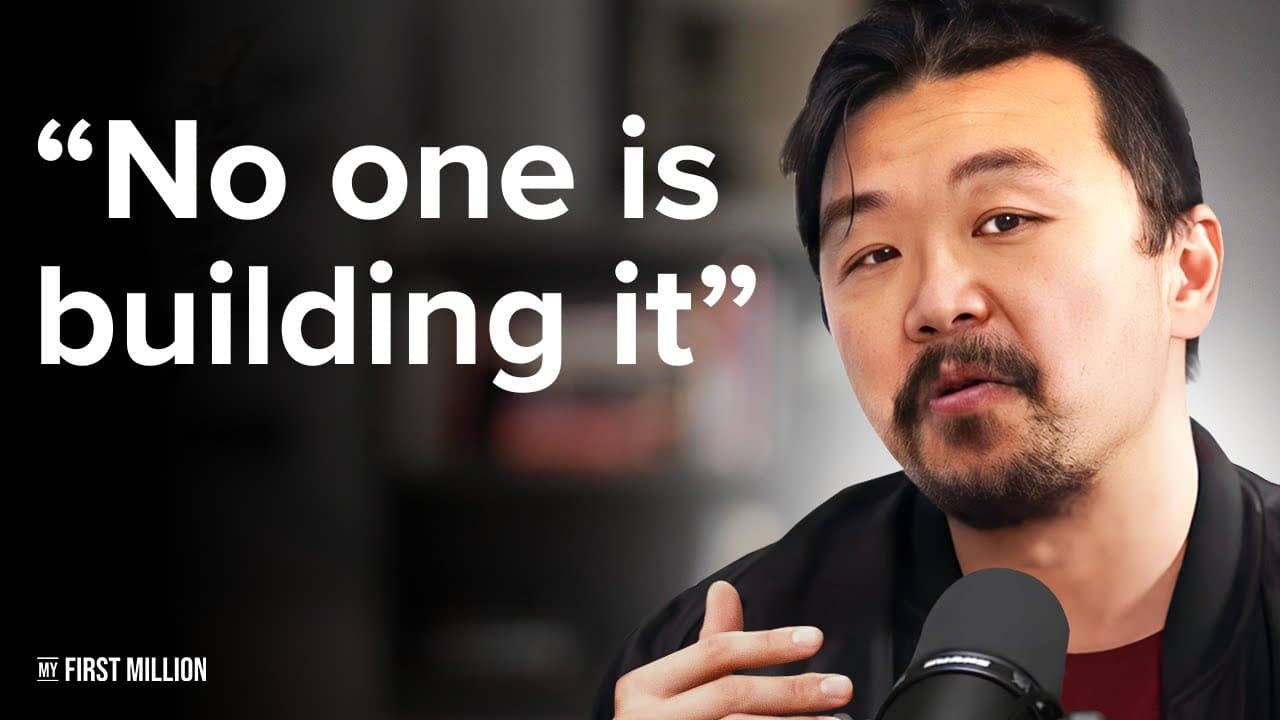
Strong execution can turn competitors into sources of free research, while revenue provides a practical counterweight to abstract claims of success. The discussion also warns founders to choose their work carefully because almost any product metric can be optimized endlessly, even when the underlying product feels trivial or lacks lasting importance.
Transcript
and they said well you should couldn't confuse revenue for Success so I said well you guys shouldn't confuse a lack of revenue for Success either and then they got like kind of upset dud this meeting it goes in like the Silicon Valley autistic Hall of Fame what's up we got our friend siki here founder of Runway back in the day built a company sold ... Read More
Key Insights
- Zynga’s product culture was highly analytical, with former investment bankers serving as product managers because the company focused heavily on making measurable numbers rise. Chen says the organization possessed substantial knowledge about growth, which became one of his strongest impressions after joining.
- Mark Pincus viewed new market entrants as free research and development because their experiments could reveal promising ideas. His confidence rested on Zynga’s ability to follow successful concepts quickly and grow them effectively, rather than depending entirely on being the original creator.
- Competitive advantage can come from execution even when product ideas are easy to copy. Chen recalls that FarmVille was not the first farm game and Zynga Poker was not the first poker game, yet Zynga’s growth capabilities worked particularly well during the Facebook era.
- Choosing what to optimize is a consequential career decision because nearly any activity can be improved indefinitely. The discussion uses Slide’s focus on increasing daily virtual chicken slaps to show how talented teams can become absorbed in refining metrics attached to products of questionable importance.
- Revenue is evidence that deserves consideration when evaluating a company’s progress. After Slide’s leaders warned Chen not to confuse revenue with success, he replied that they should not confuse a lack of revenue with success, exposing the tension between financial performance and less concrete startup narratives.
- Chen’s proposed acquisition price was based on dividing the proceeds with his co-founder. He asked for $2 million, reasoning that each founder would receive $1 million, while acknowledging that Slide’s team considered the amount excessive relative to their view of the app.
- Zynga’s working culture demanded unusually long hours, according to Chen, who recalls schedules of 80, 90, or 100 hours per week as normal. The anecdote portrays an intensely execution-focused company led by a founder whom the hosts characterize as possessing a forceful competitive drive.
- Career opportunities can emerge from attempted departures. Chen intended to resign from Zynga and move to China after his girlfriend, later his wife, relocated there, but the company offered him a broader product role reporting initially to co-founder Eric Shiermeyer.
Install to Summarize YouTube Videos and Get Transcripts
Explore YouTube Video Summarizer or Get YouTube Transcript Extractor
Questions & Answers
Q: How did Siqi Chen become Zynga’s head of product?
Siqi Chen joined Zynga after selling his first company to it and initially worked as a director of product for his own studio. About three months later, he planned to resign and move to China, where his girlfriend, later his wife, had relocated for work. Zynga instead offered him a company-wide product leadership role reporting to co-founder Eric Shiermeyer.
Q: Why did Mark Pincus welcome new competitors in social gaming?
Mark Pincus regarded new entrants as sources of free research and development. Competitors could test fresh concepts and reveal which ideas attracted users, while Zynga could quickly follow the strongest examples and apply its growth expertise. Chen says this perspective depended on Pincus’s confidence in Zynga’s ability to execute more effectively than the companies introducing those ideas.
Q: How did Zynga use analytics to grow its games?
Zynga built a strongly analytical product culture centered on making measurable numbers increase. The company hired several former investment bankers as product managers, reflecting its quantitative approach. Chen was particularly impressed by how much the organization understood about growth. Its advantage came from applying that knowledge to existing game concepts, including farm and poker games, during the Facebook era.
Q: What does the Slide story teach founders about revenue?
The Slide meeting demonstrates that revenue and success should not be treated as identical, but revenue should not be dismissed either. When Slide’s leaders told Chen not to confuse revenue with success, he answered that they should not confuse a lack of revenue with success. His response defended the relevance of a profitable product against status-based or purely narrative definitions of progress.
Q: Why should founders choose carefully what they optimize?
Founders should choose carefully because almost every product or business activity can be optimized without a natural endpoint. The discussion cites Max Levchin’s reflection on Slide, where the team could keep increasing metrics such as virtual chicken slaps per day. Continuous improvement can consume a career even when the optimized behavior does not feel meaningful, useful, or worthy of the team’s talent.
Q: What happened during Siqi Chen’s acquisition meeting with Slide?
Chen met Slide after its team expressed interest in his growing Facebook app. He proposed selling it for $2 million because he had a co-founder and envisioned $1 million for each of them. Slide’s leaders laughed at the figure, emphasized another acquired founder’s limited organizational importance, and questioned whether Chen’s revenue represented success. The tense discussion ended without a sale.
Q: What was Zynga’s work culture like during Siqi Chen’s tenure?
Chen describes Zynga as an intense, execution-oriented workplace where people commonly worked 80, 90, or 100 hours per week. The company concentrated heavily on analytics and growth, and Mark Pincus projected confidence that Zynga could outperform competitors through superior execution. This environment helped the company rapidly follow promising concepts and expand games effectively during the Facebook platform era.
Q: What broader startup lesson comes from Zynga copying existing game concepts?
Zynga’s experience suggests that originality is not the only path to a strong market position. Chen notes that FarmVille was not the first farm game and Zynga Poker was not the first poker game. Zynga’s strength was identifying concepts that worked, following them quickly, and using its analytical growth knowledge to execute effectively, particularly within the Facebook ecosystem.
Summary & Key Takeaways
-
Siqi Chen recounts joining Zynga after selling his first company to it. He planned to resign and move to China, but accepted a new product leadership role instead. When co-founder Eric Shiermeyer stopped appearing at work, Chen began reporting to Mark Pincus and later learned that Shiermeyer wanted to pursue ninja training.
-
Zynga applied extensive analytical knowledge to growth and employed former investment bankers as product managers. Mark Pincus viewed new competitors as sources of free research because he trusted Zynga to identify promising ideas, follow them quickly, and execute their growth more effectively. FarmVille and Zynga Poker illustrate the company’s approach during the Facebook era.
-
The conversation argues that founders should distinguish measurable revenue from broader definitions of success without dismissing either. Chen recalls rejecting an acquisition discussion after Slide minimized his profitable app and his proposed price. The hosts connect that encounter to a broader warning: any metric can consume attention through endless optimization, regardless of its importance.
Read in Other Languages (beta)
Share This Summary 📚
Summarize YouTube Videos and Get Video Transcripts with 1-Click
Try YouTube Summary with ChatGPT & Claude or YouTube Transcript Generator
Explore More Summaries from My First Million 📚

Summarize YouTube Videos and Get Video Transcripts with 1-Click
Try YouTube Summary with ChatGPT & Claude or YouTube Transcript Generator