How to Build an AI Adviser From Your Content
TL;DR
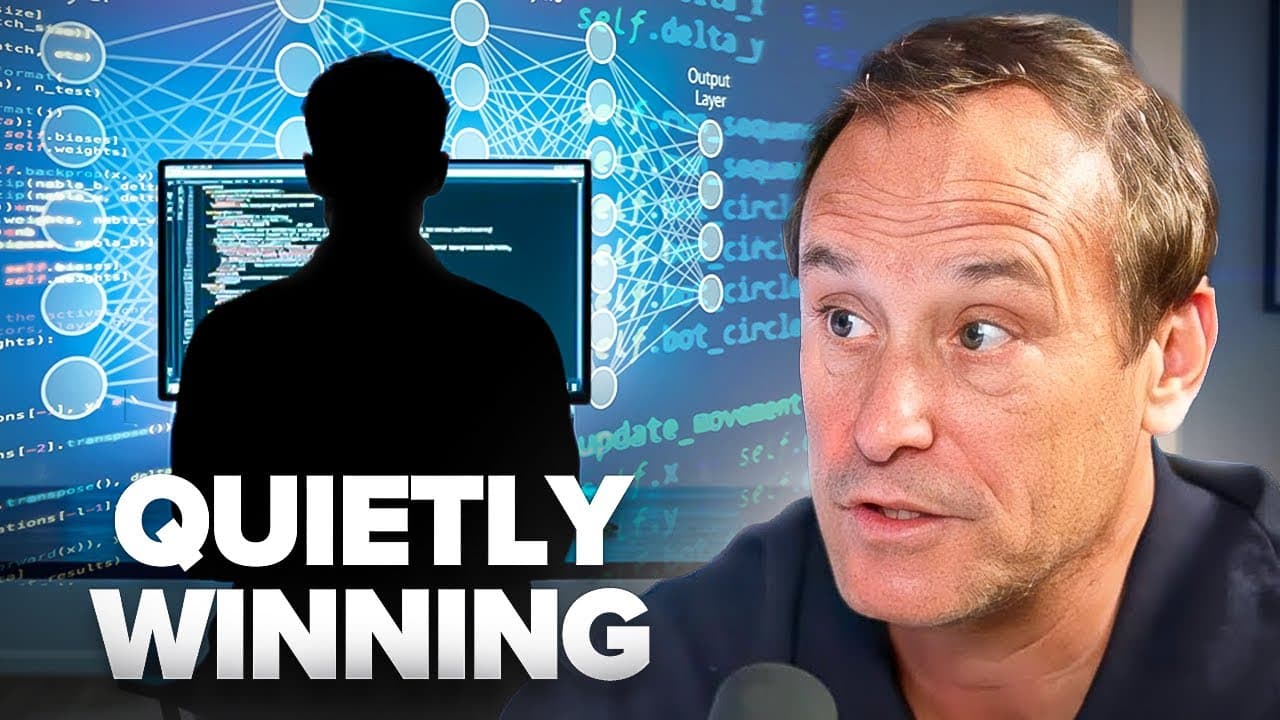
Build a specialized AI adviser by ingesting a deep archive of relevant writing, social posts, videos, and interviews, then maintaining it with regular training. Jason Lemkin loaded roughly 20 million words of SaaStr material and spent about 10 minutes a day training the system, which went on to handle nearly 50,000 conversations. Read on to see what founders asked it and why its extensive memory mattered.
Transcript
now 0 to one is very likely an AI You build an incredible tool that no one else can do You can do a million in a week or two you know Okay So for this episode what I'm thinking this is about is this is sort of um and guys this is going to be generous to us but what is the smart money doing with AI and you know in betting and sports betting in Vegas... Read More
Key Insights
- A specialized AI adviser is built by combining a large, relevant content archive with continued training. Lemkin ingested approximately 20 million words from articles, social posts, videos, and interviews, then spent about 10 minutes each day maintaining and training the system.
- The AI adviser's strongest advantage is comprehensive memory across years of material. It can retrieve and connect ideas from past interviews and discussions that Lemkin no longer remembers, allowing it to synthesize information across his extensive SaaS content archive.
- The system produced very few mistakes and hallucinations according to Lemkin. He attributes that performance to the depth and specificity of the ingested material, which includes about 10,000 written pieces plus several thousand interviews collected over 12 years.
- Users apply specialized AI more broadly than its creator may predict. Founders used Lemkin's adviser for board-deck feedback, venture capital pitch-deck reviews, sales-script evaluation, company-growth discussions, and emotionally sensitive conversations about their businesses.
- AI users disclose concerns they may hesitate to share with another person. Lemkin found that founders treated the adviser like a company therapist, discussing slowed growth, partnership doubts, and deeper fears within a private conversational setting.
- An AI body double can operate at a scale its human source cannot match. Lemkin contrasted his capacity for roughly one or two conversations per day with the nearly 50,000 conversations completed by the digital adviser.
- A useful AI persona does not need to be an exact replica of its source. Lemkin preferred a distinct, prime version of himself that could perform better most of the time without creating confusion about whether users were interacting with the real person.
- Public content can enable others to recreate a creator's thinking without hiring or compensating that creator. The discussion highlights both the technical possibility of cloning a public knowledge archive and the restrictions that website terms of use may impose on such ingestion.
Install to Summarize YouTube Videos and Get Transcripts
Explore YouTube Video Summarizer or Get YouTube Transcript Extractor
Questions & Answers
Q: How can founders build an AI adviser from their content?
Founders can ingest their articles, social posts, YouTube videos, interviews, and other relevant material into a specialized AI knowledge base. Lemkin used web scraping, APIs, RSS feeds, and URLs for his SaaStr archive, then spent about 10 minutes each day training the system.
Q: What content did Jason Lemkin use to create his AI body double?
Lemkin used 12 years of SaaStr material, including about 10,000 written pieces, every tweet and LinkedIn post he had made, and several thousand interviews and event videos. He described the complete archive as roughly 20 million words.
Q: Why did Lemkin say his AI adviser was better than him?
Lemkin said the adviser could remember and connect information across years of material that he had forgotten. It could relate older interviews, stage conversations, and articles to current questions, and he reported that it produced very few mistakes and hallucinations.
Q: What unexpected tasks did founders give the AI adviser?
Founders uploaded board decks for feedback before meetings, asked it to review venture capital pitch decks, and tested sales and sales-development scripts. Hundreds also discussed slowing growth and used it as a therapist for concerns about their companies.
Q: Why did founders discuss private business concerns with the AI adviser?
The conversations show that founders were willing to share deep business fears with the adviser, including slowing growth and doubts about a partner’s commitment. Lemkin described hundreds of founders using it as a therapist for their companies, although the transcript does not establish one specific reason for that behavior.
Q: Does an AI body double need to copy a person exactly?
Lemkin argued that an AI adviser does not need to reproduce its source perfectly to be useful. He preferred a distinct version that could provide better answers without creating the confusion associated with an exact imitation.
Q: How much can an AI adviser expand a founder’s conversational capacity?
Lemkin said he could personally handle only one or two conversations per day before becoming tired. His AI adviser completed nearly 50,000 conversations, allowing his accumulated knowledge to reach far more founders than individual calls could.
Q: Can someone build an AI adviser from another creator’s public content?
Lemkin said public videos and other online material could technically be ingested to recreate an adviser based on another creator’s archive. He also warned that doing so may be prohibited by the source website’s terms of use.
Summary & Key Takeaways
-
Jason Lemkin created a digital adviser by feeding years of SaaStr material into an AI system, including articles, tweets, LinkedIn posts, YouTube videos, and interviews. The resulting knowledge base contained about 20 million words. He found that it could recall old discussions, connect distant ideas, and answer many questions better than he could personally.
-
The AI adviser attracted nearly 50,000 conversations and revealed uses Lemkin had not anticipated. Founders uploaded board decks for pre-meeting feedback, reviewed venture capital pitch decks and sales scripts, discussed slowing growth, and shared private business fears. Its scale also far exceeded Lemkin's personal capacity to hold one or two conversations each day.
-
The broader founder lesson is that specialized AI products can create value by combining a strong model with distinctive data, focused training, and a useful interface. Lemkin argues that the digital adviser does not need to imitate him perfectly. A distinct, improved version can be more useful and less confusing than an exact personal replica.
Read in Other Languages (beta)
Share This Summary 📚
Summarize YouTube Videos and Get Video Transcripts with 1-Click
Try YouTube Summary with ChatGPT & Claude or YouTube Transcript Generator
Explore More Summaries from My First Million 📚

Summarize YouTube Videos and Get Video Transcripts with 1-Click
Try YouTube Summary with ChatGPT & Claude or YouTube Transcript Generator