How Does Glucagon Regulate Blood Sugar Levels?
TL;DR
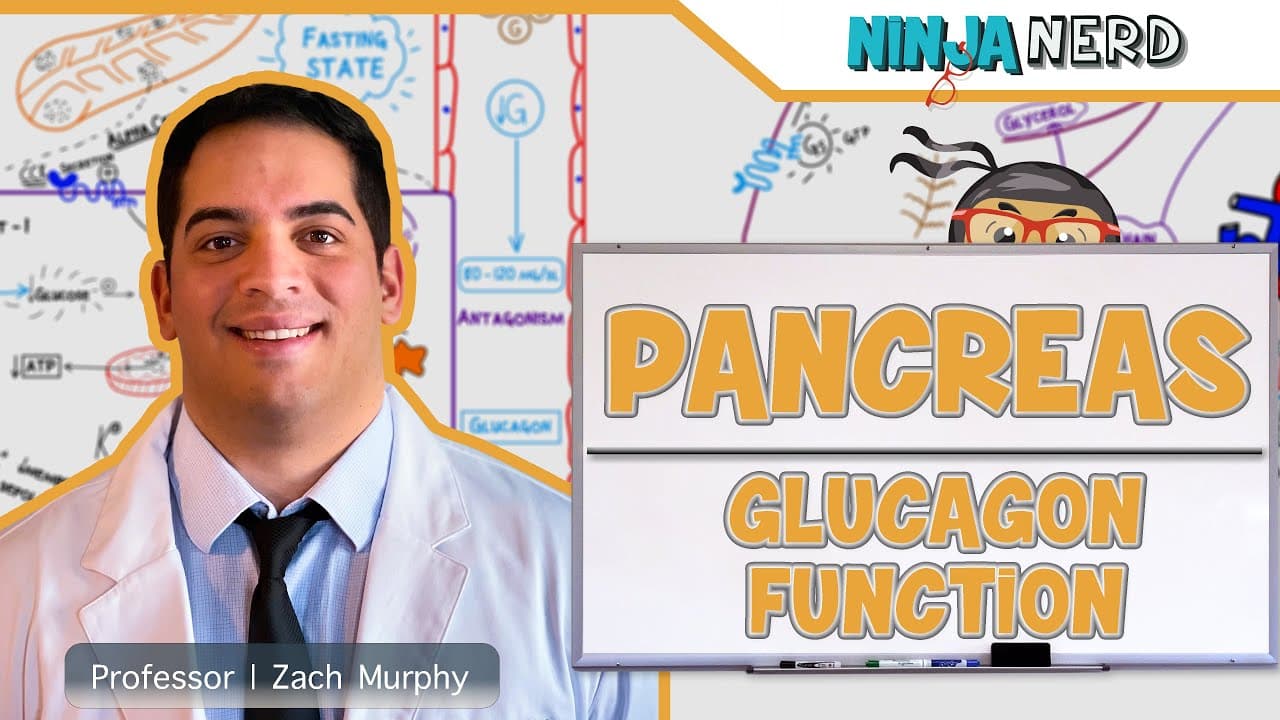
Glucagon, a hormone produced by the alpha cells of the pancreas, is released in response to low blood glucose levels. It promotes glycogenolysis and gluconeogenesis in the liver to increase blood glucose. During fasting, glucagon acts as a counter-regulatory hormone to insulin, ensuring glucose homeostasis and energy supply.
Transcript
all right Niners in this video we're going to talk about the pancreas but specifically we're going to focus on the activity of glucagon okay so if you remember if you guys watched our video on insulin you know go back if you guys haven't watch that video on insulin get caught up on what was happening with the pancreas because we're just going to go... Read More
Key Insights
- Glucagon is produced by alpha cells in the pancreas and is released when blood glucose levels are low.
- The primary stimulus for glucagon release is hypoglycemia, but sympathetic stimulation and high amino acid levels also play a role.
- Glucagon promotes glycogenolysis in the liver, breaking down glycogen into glucose to raise blood sugar levels.
- Gluconeogenesis is another key function of glucagon, converting non-carbohydrate substrates like glycerol and amino acids into glucose.
- Glucagon signaling involves G protein-coupled receptors and cAMP pathways, leading to rapid metabolic changes.
- Besides its main effects on glucose metabolism, glucagon also influences lipolysis and protein metabolism.
- During fasting, glucagon acts to maintain energy supply by increasing blood glucose and supporting ketogenesis.
- Glucagon and insulin have antagonistic effects, with glucagon raising and insulin lowering blood glucose levels.
Install to Summarize YouTube Videos and Get Transcripts
Explore YouTube Video Summarizer or Get YouTube Transcript Extractor
Questions & Answers
Q: How does glucagon affect blood glucose levels?
Glucagon increases blood glucose levels by promoting glycogenolysis, the breakdown of glycogen into glucose, and gluconeogenesis, the synthesis of glucose from non-carbohydrate sources in the liver. These processes are crucial during fasting states when blood glucose levels are low, ensuring a steady supply of glucose for energy.
Q: What triggers the release of glucagon?
The primary trigger for glucagon release is hypoglycemia, or low blood glucose levels. Other factors include sympathetic nervous system activation and elevated amino acid levels, which can also stimulate glucagon secretion to ensure glucose is available for energy needs.
Q: What role does glucagon play during fasting?
During fasting, glucagon is vital for maintaining blood glucose levels by stimulating glycogenolysis and gluconeogenesis in the liver. This ensures a continuous supply of glucose to tissues, particularly the brain, which relies heavily on glucose for energy, thereby preventing hypoglycemia.
Q: How does glucagon signaling work?
Glucagon signaling involves binding to G protein-coupled receptors on liver cells, activating adenylate cyclase, which converts ATP to cyclic AMP (cAMP). cAMP acts as a second messenger, activating protein kinase A, leading to enzymatic activities that promote glycogenolysis and gluconeogenesis, increasing blood glucose levels.
Q: What are the metabolic effects of glucagon besides glucose regulation?
Apart from regulating glucose, glucagon influences lipolysis, the breakdown of triglycerides into free fatty acids and glycerol, providing substrates for gluconeogenesis. It also affects protein metabolism by promoting amino acid conversion into glucose, thus playing a role in overall energy balance and metabolism.
Q: How does glucagon interact with insulin?
Glucagon and insulin have antagonistic roles in blood glucose regulation. While glucagon raises blood glucose levels by promoting glycogenolysis and gluconeogenesis, insulin lowers glucose levels by facilitating glucose uptake and storage. This balance ensures stable blood glucose levels under varying physiological conditions.
Q: What is the role of glucagon in the liver?
In the liver, glucagon promotes glycogenolysis and gluconeogenesis, processes that convert glycogen and non-carbohydrate substrates into glucose. This increases blood glucose levels, especially important during fasting when glucose intake is low, ensuring continuous energy supply to vital organs like the brain.
Q: Can glucagon influence cardiac function?
Yes, glucagon can influence cardiac function by increasing calcium influx into heart muscle cells, enhancing contractility. This positive inotropic effect can increase stroke volume and cardiac output, demonstrating glucagon's role beyond glucose metabolism, although its primary function remains glucose regulation.
Summary & Key Takeaways
-
Glucagon is a hormone produced by the pancreas in response to low blood glucose levels. Its primary actions include promoting glycogenolysis and gluconeogenesis in the liver, which help to increase blood sugar levels, especially during fasting states. Glucagon also plays a minor role in lipolysis and protein metabolism.
-
The release of glucagon is primarily triggered by hypoglycemia but can also be stimulated by sympathetic nervous system activity and high levels of amino acids. Glucagon operates through G protein-coupled receptors and cAMP pathways, facilitating rapid enzymatic activation and metabolic adaptation to maintain glucose homeostasis.
-
Glucagon’s role as a counter-regulatory hormone to insulin is crucial in maintaining energy balance. While glucagon raises blood glucose levels, insulin works to lower them, showcasing their antagonistic relationship. Understanding glucagon's functions helps to comprehend its importance in metabolic regulation during different nutritional states.
Read in Other Languages (beta)
Share This Summary 📚
Summarize YouTube Videos and Get Video Transcripts with 1-Click
Try YouTube Summary with ChatGPT & Claude or YouTube Transcript Generator
Explore More Summaries from Ninja Nerd 📚






Summarize YouTube Videos and Get Video Transcripts with 1-Click
Try YouTube Summary with ChatGPT & Claude or YouTube Transcript Generator