What Factors Affect Chemical Toxicity in the Body?
TL;DR
Chemical toxicity can be systemic, affecting the whole body, or target-specific, impacting certain organs. Key factors influencing toxicity include the chemical's form, dosage, route of exposure, and its ability to be absorbed and metabolized. The presence of other chemicals and the physical characteristics of substances, particularly for nanoparticles, also play crucial roles.
Transcript
okay so when we look at system toxicants versus other toxicants a systematic toxicant is one that's going to affect the entirety of your body okay so when you start thinking about something like a potassium cyanide that is going to affect a cell's ability to to absorb a utilize oxygen and that's going to be something that's not unique to any partic... Read More
Key Insights
- 🎯 Systemic toxicants affect the entire body, whereas target-specific toxicants focus on particular organs or tissues.
- 😃 Various substances can harm specific parts of the body, such as the respiratory tract, liver, eyes, kidneys, and reproductive system.
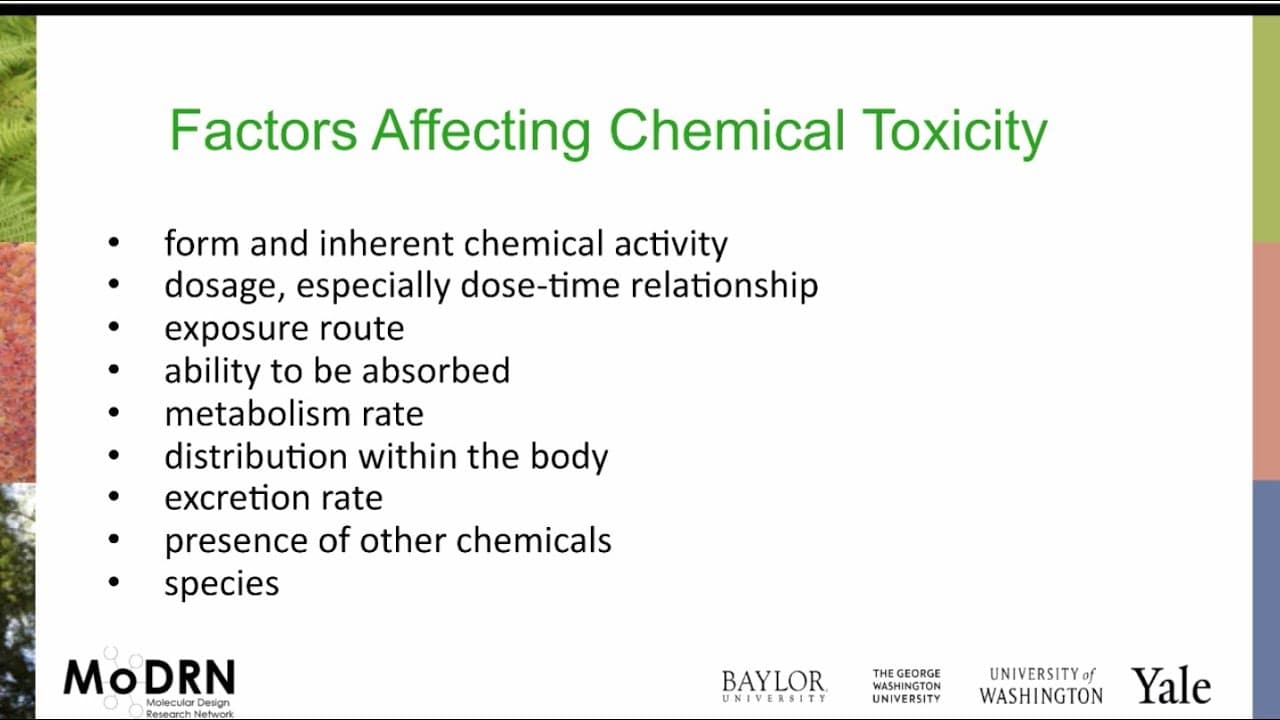
- 💁 Factors influencing chemical toxicity include the form, chemical activity, solubility, size (for nano substances), dosage, route of exposure, absorption, metabolism, distribution, presence of other chemicals, and chaperoning across biological membranes.
- 🥳 The combination of length and width (aspect ratio) is crucial for nanoparticles' toxicity, similar to asbestos.
Install to Summarize YouTube Videos and Get Transcripts
Explore YouTube Video Summarizer or Get YouTube Transcript Extractor
Questions & Answers
Q: What is the difference between systemic and target-specific toxicants?
Systemic toxicants, like potassium cyanide, cause effects throughout the entire body by disrupting cellular oxygen utilization. Target-specific toxicants, such as mercury for the central nervous system, focus on particular organs or tissues, affecting their development or function.
Q: Which organs or tissues can be affected by specific toxicants?
Specific toxicants can impact various organs or tissues. For example, ethanol and acetaminophen can be toxic to the liver, tobacco smoke and asbestos can affect the respiratory tract, UV light can harm the eyes, and certain metals can impact the kidneys. Laurel propane is an example of a toxicant affecting the reproductive system.
Q: What are the factors that influence chemical toxicity?
Several factors influence chemical toxicity. These include the form of the substance (gas, liquid, solid), its chemical activity and reactivity, solubility, electronic properties, size and aspect ratio for nano substances, dosage, route of exposure (swallowed, inhaled, skin contact), its ability to be absorbed, metabolism, distribution within the body, presence of other chemicals, and the ability to cross biological membranes.
Q: How does the presence of other chemicals relate to chemical toxicity?
The presence of other chemicals plays a role in chemical toxicity. Humans are constantly exposed to multiple chemicals through various sources like food and air, which can interact with the toxicant and either enhance or mitigate its toxic effects.
Summary & Key Takeaways
-
Systemic toxicants, like potassium cyanide, affect the entire body by interfering with cellular oxygen absorption, while target-specific toxicants, such as mercury for the central nervous system, focus on specific organs or tissues.
-
Various substances like ethanol, acetaminophen, tobacco smoke, asbestos, ozone, UV light, and metals can impact different parts of the body, such as the respiratory tract, liver, eyes, kidneys, and reproductive system.
-
Factors influencing chemical toxicity include the form and chemical activity of the substance, electronic properties, solubility, size and aspect ratio for nanoparticles, dosage, route of exposure, absorption, metabolism, distribution within the body, presence of other chemicals, and chaperoning across biological membranes.
Read in Other Languages (beta)
Share This Summary 📚
Summarize YouTube Videos and Get Video Transcripts with 1-Click
Try YouTube Summary with ChatGPT & Claude or YouTube Transcript Generator
Explore More Summaries from YaleCourses 📚
Summarize YouTube Videos and Get Video Transcripts with 1-Click
Try YouTube Summary with ChatGPT & Claude or YouTube Transcript Generator