How to use OpenAI o1 reasoning for coding and tasks
TL;DR
o1 introduces reliable chain of thought and step by step reasoning, with two variants for different use cases: o1-preview for deep reasoning and o1-mini for fast, cheaper coding tasks. The talk includes live demos with Cognition and Casetext, and shows how developers can design AI agents and workflows that plan, code, and debug more effectively.
Transcript
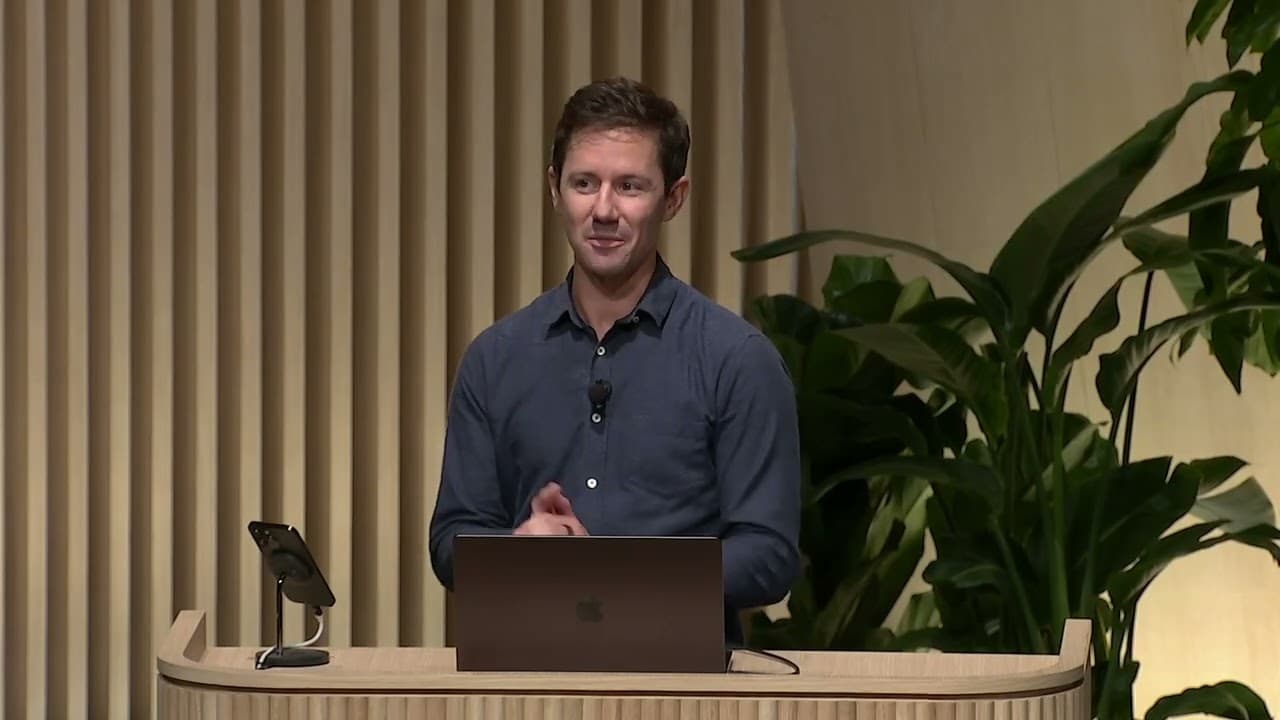
-Hello. Hi. [ Applause ] Hi everyone. Welcome to our second DevDay ever. Yes. [ Cheers and applause ] First, you might notice that things look a little different compared to last year. I'm not Sam. I'm not going to announce GPT-5, but we've got some super exciting things in store for you today. I'm Olivier. I lead the API product team at OpenAI. An... Read More
Key Insights
- o1 is a new series of models focused on reliable step by step reasoning, enabling complex problem solving by thinking through each line before answering.
- The o1 family includes o1-preview for powerful reasoning and o1-mini for faster, cheaper coding which is well suited for debugging and agentic apps.
- Reasoning in o1 is defined as a reliable chain of thought where the model reflects on different meanings and verifies its answer before responding.
- Cognition and Casetext are cited as customers testing o1 to improve planning, writing, and verification in software agents and legal workflows.
- Live demos show o1 can architect an app from a detailed prompt, generate workable code, and run it on a phone with zero-shot execution.
- The demos also illustrate o1 guiding projects from planning to API selection and architecture, demonstrating end-to-end workflow support for developers.
- The talk differentiates between traditional code generation and autonomous task solving where the model can create, debug, and adapt tasks autonomously.
- OpenAI highlights that the developer community and broad deployment are central to advancing useful AI and gathering feedback from real-world usage.
- More videos from this channel:
- More from this channel: OpenAI
Install to Summarize YouTube Videos and Get Transcripts
Explore YouTube Video Summarizer or Get YouTube Transcript Extractor
Questions & Answers
Q: How is o1 different from previous model generations in terms of reasoning abilities?
o1 represents a shift toward explicit reasoning in AI models, offering a structured chain of thought that allows the model to think step by step, reflect on multiple meanings, and verify answers before responding. This enables solving complex problems that require planning, multi-step deduction, and careful attention to detail, reducing errors in critical contexts.
Q: What are the two main o1 variants and when would a developer choose each?
The two main variants are o1-preview and o1-mini. o1-preview is designed for deep, long thought processes and complex problem solving, making it ideal for projects needing robust reasoning. o1-mini is faster and cheaper, better suited for debugging code or building agentic applications where speed and cost matter.
Q: Which real world applications were showcased to illustrate o1’s capabilities?
Cognition demonstrated Devin, an autonomous software agent that uses o1 to plan, write, and debug code, showing how reasoning improves decision making and task execution. Casetext and Thomson Reuters used o1 to power an AI legal assistant that evaluates precision and nuance in statements, highlighting near term production potential.
Q: How did the live iPhone app demo illustrate o1’s practical use?
The presenter used o1 to architect an ISS tracking app directly from a prompt, then transferred the plan into a single file and ran it on a phone in real time. The demo illustrated how o1 can translate high level ideas into executable architecture and code with minimal human input.
Q: What does chain of thought mean in the context of o1 and why is it important?
Chain of thought refers to the model’s ability to reason through problems step by step and to check each part of the solution before giving an answer. This reduces errors and enables more reliable handling of complex tasks, especially where precise wording and logic are critical.
Q: What role does developer community play in OpenAI’s DevDay according to Olivier?
OpenAI frames DevDay as an opportunity for developers to engage directly with the team and with each other, share feedback, and accelerate real world deployment. The goal is to empower a broad community to push the frontier of model capabilities while building practical, production-ready AI applications.
Q: How has OpenAI’s model and feature set evolved over the past year according to the speaker?
Over the past year OpenAI launched more than 100 new API features, including structured outputs, batch API, fine-tuning, new playground and embeddings, plus new models like GPT-4o and GPT-4 mini, reflecting a rapid expansion of capabilities, tooling, and cost efficiency for developers.
Q: What assurances does OpenAI give about scaling OpenAI deployments for developers?
OpenAI emphasizes scaling support for developers through easier onboarding, broader model options, and expanding tooling, aiming to enable teams to scale more products with reliable performance, governance, and cost control, while continuing to improve model capabilities and developer experience.
Summary & Key Takeaways
-
The talk explains how o1 brings advanced reasoning to OpenAI models and introduces two variants tailored for different workloads, emphasizing structured thinking and planning.
-
Live demonstrations show practical uses in software automation, legal text verification, and real-time app building, illustrating how reasoning models can plan and execute tasks.
-
OpenAI emphasizes developer focus, community, and scaling with new features, models, and tooling to help teams build production AI applications.
Read in Other Languages (beta)
Share This Summary 📚
Summarize YouTube Videos and Get Video Transcripts with 1-Click
Try YouTube Summary with ChatGPT & Claude or YouTube Transcript Generator
Explore More Summaries from OpenAI 📚


Summarize YouTube Videos and Get Video Transcripts with 1-Click
Try YouTube Summary with ChatGPT & Claude or YouTube Transcript Generator