What New Features Did OpenAI Launch for Developers?

TL;DR
OpenAI launched several features for developers, including function calling, structured outputs, developer messages, and image inputs, enhancing API usability for various applications like coding and customer support. The new O1 model, now available, improves performance while real-time voice experiences and reduced costs for audio tokens make it more accessible for developers.
Transcript
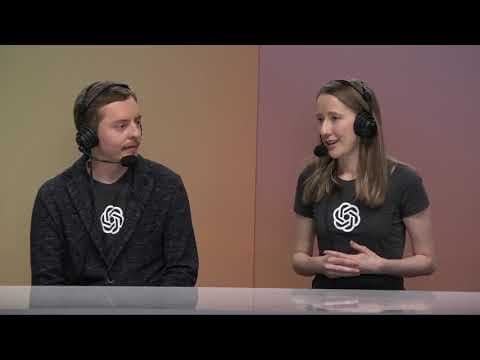
day nine day nine of 12 Days welcome everyone I'm Olivia gar I lead the platform product at open AI today I think is the best day like I'm very biased today is all about developers and startups building on top of the open AI API zooming out we've had an API for what four years the scale is Incredible 2 million developers building from more than 200... Read More
Key Insights
- 👻 OpenAI’s API now features function calling, allowing models to interact effectively with backend systems for enhanced application functionality.
- 🏑 Image inputs have been added, offering developers the ability to process visuals, which is beneficial in technical fields like manufacturing and science.
- 💁 Structured outputs ensure that model responses can be formatted as per JSON schemas, increasing output reliability in applications.
- 👻 The introduction of real-time API with WebRTC allows developers to create low-latency applications more easily, streamlining previous procedures.
- 👶 The new preference fine-tuning method offers developers increased freedom to tailor models, improving output consistency and relevancy in user-centric applications.
- 🧘 Cost reductions for audio tokens position OpenAI’s services as more accessible, which could encourage wider adoption among developers.
- 👶 Internal evaluations indicate that the new model performs better across various coding and function calling tasks, optimizing development costs and time.
Install to Summarize YouTube Videos and Get Transcripts
Explore YouTube Video Summarizer or Get YouTube Transcript Extractor
Questions & Answers
Q: What are the key new features introduced in the OpenAI API?
OpenAI announced several new features including function calling, structured outputs, developer messages, and image inputs. These features enhance the API's capabilities, allowing users to create more complex applications, optimize for performance, and manage outputs more precisely.
Q: How does the new 01 model improve function calling and structured output?
The 01 model shows significantly better performance in function calling and structured outputs compared to previous models. It effectively interacts with backend APIs and adheres strictly to JSON schemas, which helps in format consistency and output reliability for developers.
Q: What role does the developer message play in steering the model’s behavior?
Developer messages serve as a new type of instruction that gives developers control over how the model behaves. This feature allows developers to specify detailed instructions that help align the model's responses more closely with their specific application requirements.
Q: How has the real-time API evolved with the new updates?
The real-time API now includes WebRTC support, enabling efficient, low-latency voice applications. This update simplifies code requirements significantly compared to the previous WebSocket integration, making it easier for developers to build applications leveraging real-time voice experiences.
Q: What are the benefits of the new preference fine-tuning method?
Preference fine-tuning allows developers to optimize models based on user preferences by using pairs of responses to guide the training process. This can lead to improved performance in areas like customer support and content moderation, making models more aligned with user needs.
Q: What are the cost implications regarding the new updates?
OpenAI announced a reduction in costs for their API services, specifically a 60% decrease in GPT-40 audio tokens. Additionally, GPT-4 mini audio tokens will be tenfold cheaper, making it more affordable for developers to utilize the OpenAI API for voice applications.
Q: Can you explain the live demonstration during the event?
The live demo showcased the new capabilities of the API to identify errors in filled forms using images. It illustrated how the model could recognize and correct mistakes in real-time while highlighting the interaction between function calling and structured outputs.
Q: What future updates can we expect from OpenAI?
OpenAI plans to continue enhancing their API features, with an emphasis on ease of integration and customization for developers. Upcoming features include additional SDKs for various programming languages and improved user onboarding processes.
Summary & Key Takeaways
-
OpenAI introduced new features in their API, including function calling, developer messages, structured outputs, and image inputs, enhancing usability for developers and startups.
-
The new 01 model, now out of preview, allows for improved performance in various applications like coding, customer support, and financial analysis with advanced reasoning capabilities.
-
Additionally, updates such as reduced costs for audio tokens, the introduction of real-time voice experiences, and new methods for fine-tuning also aim to empower developers.
Read in Other Languages (beta)
Share This Summary 📚
Summarize YouTube Videos and Get Video Transcripts with 1-Click
Try YouTube Summary with ChatGPT & Claude or YouTube Transcript Generator
Explore More Summaries from OpenAI 📚





Summarize YouTube Videos and Get Video Transcripts with 1-Click
Try YouTube Summary with ChatGPT & Claude or YouTube Transcript Generator