How did the Wright brothers achieve powered flight?
TL;DR
The Wright brothers solved powered flight through curiosity, experimentation, and wing design. They applied observations from nature, notably bird wing twists, to create wing warping that produced lift. Their approach combined practical bicycle shop work, money management, and iterative testing to prove sustained, controlled flight was possible.
Transcript
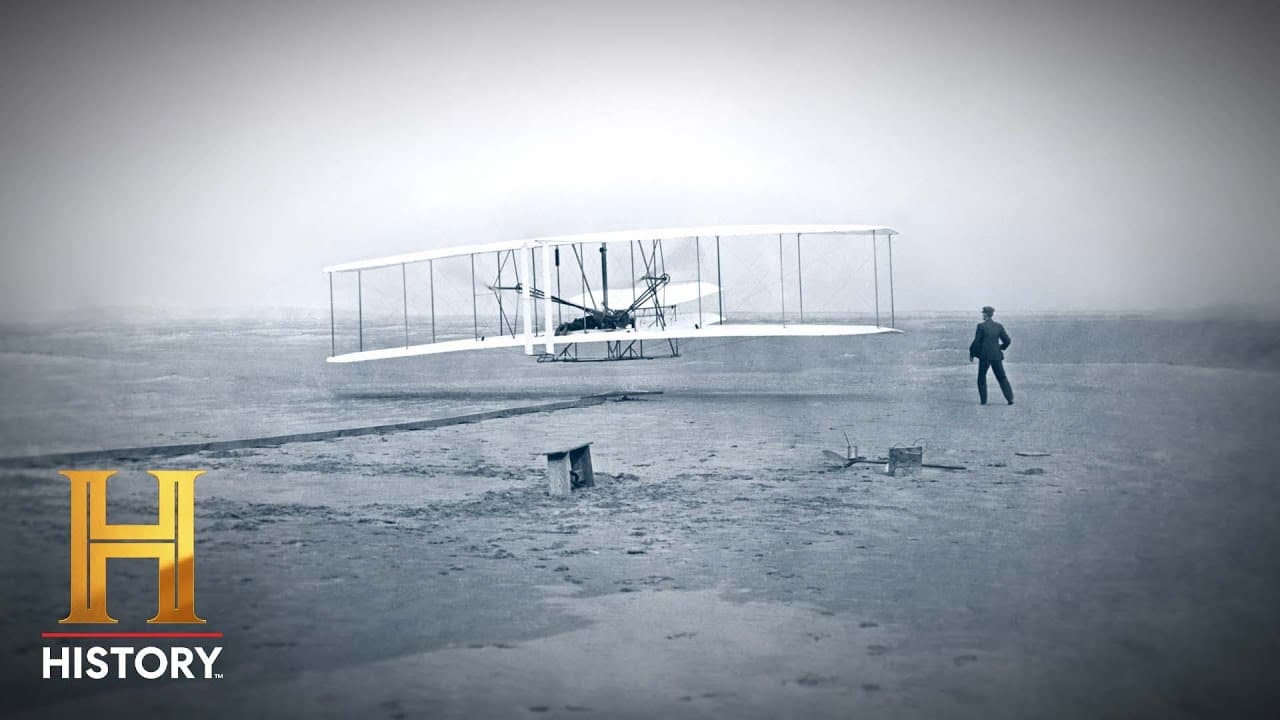
december 17 1903 kitty hawk north carolina witnesses gathered to watch the final test of a revolutionary new flying machine invented by brothers wilbur and orville wright orville took his position in the cradle wilbur was on the right wing they started the engine and behold 40 feet down the rail the aircraft lifts up they flew 120 feet in 12 second... Read More
Key Insights
- The Wrights were two ordinary people from a middle class family who pursued flight out of curiosity.
- The major breakthrough was that wing curvature dramatically affects lift.
- Wing warping was inspired by observing how birds twist their wings.
- They funded experiments by running a bicycle shop and reinvesting profits.
- They studied animal locomotion to imitate natural flight mechanisms.
- Their approach combined practical engineering with theoretical questions about lift and control.
- The 1903 flight demonstrated sustained, powered, and controlled flight for the first time.
- Their innovations laid groundwork for modern aviation and space exploration.
- More videos from this channel:
- More from this channel: HISTORY
Install to Summarize YouTube Videos and Get Transcripts
Explore YouTube Video Summarizer or Get YouTube Transcript Extractor
Questions & Answers
Q: How did the Wright brothers fund their early flight experiments?
The Wright brothers funded their flight experiments by running a bicycle shop in Dayton, Ohio, and by repairing bicycles to earn money that could be invested in testing flights. They treated flight as a practical problem requiring capital, and they redirected profits toward testing equipment and materials. This approach allowed them to iterate on designs while maintaining financial stability.
Q: What inspired the Wright brothers to study birds for flight ideas?
They looked to nature for clues on how to solve powered flight, studying birds for understanding of lift and wing motion. They noticed two methods of flight among birds and focused on how wings twist during flight. This observation informed their wing warping concept, a key element in achieving controlled flight.
Q: What is wing warping and why is it important?
Wing warping is the technique of twisting the ends of the wings to control roll and lift. The Wright brothers discovered that altering wing shape could affect lift dramatically. This insight allowed them to stabilize and steer the aircraft during flight, making a powered, controlled flight possible rather than a simple gliding attempt.
Q: What were the Wright brothers’ two primary traits that helped them succeed?
Their perseverance and mechanical curiosity were crucial. They combined a hands on, practical approach with a willingness to test and revise ideas. They also maintained a long term view, understanding that solving flight required addressing many small problems, not a single breakthrough, which enabled sustained progress toward powered flight.
Q: What is the significance of the 1903 flight according to the video?
The 1903 flight demonstrated sustained powered flight over a distance and duration that proved controlled flight was possible. This milestone marked a watershed moment in history and signaled the practical viability of aviation, influencing later developments in commercial and space travel and shifting the narrative of human capability.
Q: How did the Wright brothers view the challenge of flight?
They viewed flight as a series of solvable problems, starting with funding and moving through technical challenges like lift and control. They pursued flight for fun, but also out of frustration with others insisting flight should work. Their approach was to understand why it did not work and fix it through experimentation.
Q: What role did their family background play in their work?
Their father was a bishop and their mother was mechanically inclined, creating an environment with access to books and practical fixing skills. This background nurtured curiosity and a range of ideas, enabling them to combine theoretical reading with hands on problem solving in a bicycle shop and in flight experiments.
Q: How did the Wrights connect their invention to later aviation advances?
The Wrights used learnings from their wing design and flight experiments, notably lift and control through wing warping, to influence later aviation developments. Their innovations provided foundational principles that informed faster, more capable aircraft and eventually broader commercial and exploratory flight, shaping the trajectory of modern air travel.
Summary & Key Takeaways
-
The Wright brothers were ordinary bicycle shop owners who pursued flight through hands on testing and a mix of curiosity and mechanical skill. Their work integrated insights from nature with practical engineering to solve fundamental problems in lift and control.
-
They used wing warping to twist wing tips, a breakthrough that enabled the first sustained powered flight. Their process required funding, persistence, and a willingness to learn from failures.
-
Their 1903 achievement changed how people view transportation and technology, laying the groundwork for modern aviation and inspiring future engineers to challenge established limits.
Read in Other Languages (beta)
Share This Summary 📚
Summarize YouTube Videos and Get Video Transcripts with 1-Click
Try YouTube Summary with ChatGPT & Claude or YouTube Transcript Generator
Explore More Summaries from HISTORY 📚





Summarize YouTube Videos and Get Video Transcripts with 1-Click
Try YouTube Summary with ChatGPT & Claude or YouTube Transcript Generator