What Evidence Supports Parallel Universes?
TL;DR
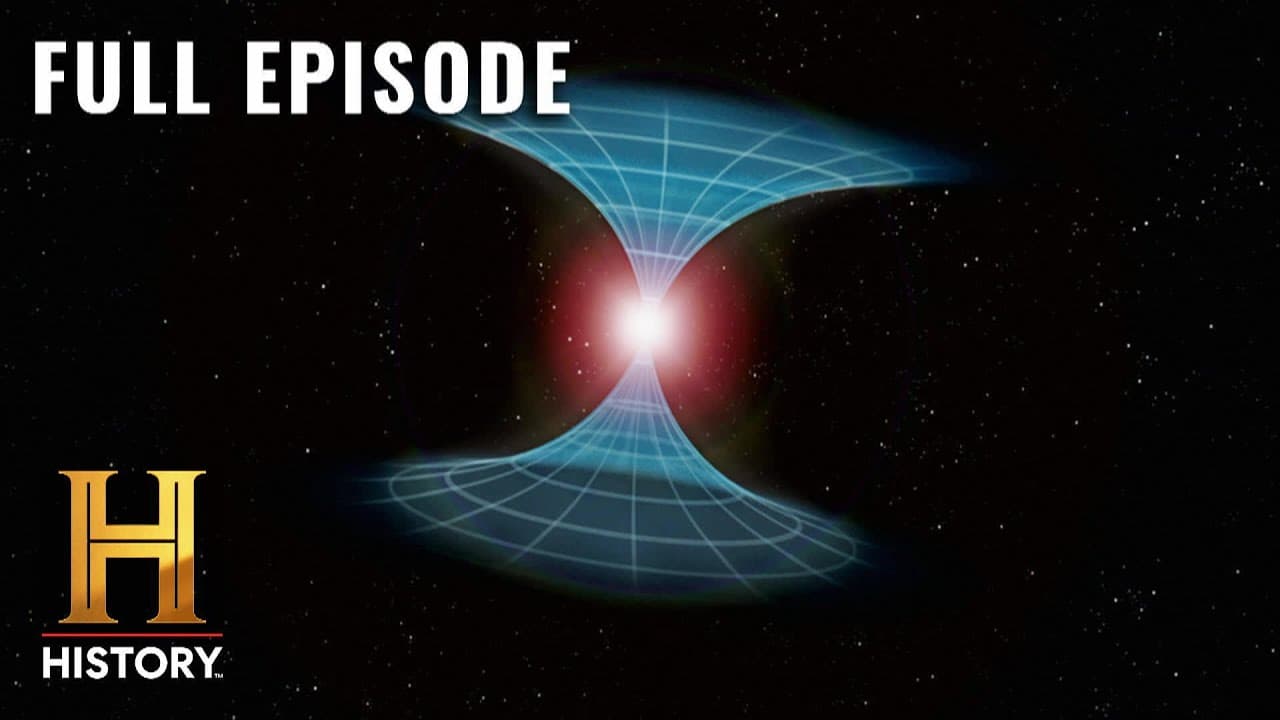
Parallel universes remain theoretical, but cosmic inflation, the apparent flatness of space, string theories, and quantum physics provide frameworks in which they could exist. The episode organizes these possibilities into four levels, ranging from unreachable regions of our own universe to worlds with different physical laws, while describing WMAP observations and searches for extra dimensions as possible tests.
Transcript
[music playing] NARRATOR: There may be other worlds out there. Universes budding off other universes. NARRATOR: Where there could be an exact copy of our solar system, our Earth, and each one of us. Where everything's, pretty much, the same. Or maybe only slightly different. NARRATOR: But where are these other universes? Why can't we see them? Beca... Read More
Key Insights
- A level one parallel universe is an unreachable region of the same vast space we inhabit. If space is infinite, repeated arrangements of matter could produce remote copies of our solar system, Earth, and individual people, although such regions would lie beyond observable light.
- Cosmic inflation is a theory that space expanded suddenly and enormously after the universe began in a very small state. The episode presents inflation as the main reason space might extend forever and contain infinitely many regions comparable in size to our observable universe.
- The apparent flatness of the universe supports, but does not conclusively prove, an infinite cosmos. Measurements described through a gigantic light triangle produce angles totaling exactly 180 degrees, while some experts argue that space might instead be curved too slightly for observers to detect.
- WMAP observes radiation left over from the Big Bang and provides an image of the universe when it was about 400,000 years old. Scientists use patterns in this early radiation to investigate cosmic geometry, including whether space appears flat or curved.
- A level two multiverse consists of enormous cosmic bubbles, with each bubble containing an entire universe. These bubbles are described as forming, expanding, splitting, colliding, and sometimes producing new universes within a larger medium called hyperspace or the bulk.
- The four-level classification separates distinct multiverse proposals rather than treating every parallel world as the same idea. The episode identifies distant repeated regions, cosmic bubble universes, quantum many-worlds, and universes governed by alternate physical laws as separate conceptual levels.
- Higher-dimensional theories provide a possible explanation for universes that occupy the same space and time yet remain invisible to one another. The episode connects string theories and M-theory with worlds containing extra dimensions and describes experiments intended to search for dimensions of particular sizes and shapes.
- Parallel-universe evidence is indirect because the proposed worlds cannot presently be seen, touched, or reached. The episode therefore focuses on measurable implications within our universe, including its geometry, early radiation, quantum behavior, and possible extra dimensions, rather than direct observation of another universe.
- More videos from this channel:
- More from this channel: HISTORY
Install to Summarize YouTube Videos and Get Transcripts
Explore YouTube Video Summarizer or Get YouTube Transcript Extractor
Questions & Answers
Q: What evidence supports the idea of parallel universes?
The episode points to several indirect lines of support: cosmic inflation, measurements indicating that the universe appears flat, satellite observations of radiation left from the Big Bang, quantum physics, and theories involving extra dimensions. None amounts to a direct sighting of another universe. Instead, each supplies a framework or measurable prediction under which multiple universes could exist.
Q: What is a level one parallel universe?
A level one parallel universe is described as a region within the same continuous space as our observable universe, but so distant that its light has not reached us. If space is truly infinite, the episode argues that arrangements of matter would eventually repeat, potentially producing remote copies of the solar system, Earth, and people living identical or slightly different lives.
Q: How does cosmic inflation lead to a multiverse?
Cosmic inflation proposes that the universe began in a very small state and then expanded suddenly by a tremendous amount. The episode says this process may have made space not merely huge but infinite. An infinite expanse would contain infinitely many regions as large as the observable universe, forming the basis for level one worlds and, in the bubble model, additional universes created through continuing inflation.
Q: How does WMAP help test the shape of the universe?
WMAP measures radiation left over from the Big Bang and shows conditions when the universe was about 400,000 years old, before galaxies formed. The episode describes using observations of distant space to construct a gigantic light triangle. Angles totaling exactly 180 degrees indicate flat geometry, although a universe curved on an undetectably large scale remains possible.
Q: Why does a flat universe matter for parallel worlds?
Flatness matters because the episode links a truly flat geometry with the possibility that space is infinite. Infinite space could contain endlessly many regions and repeated configurations of matter. However, apparent flatness is not decisive: a tremendously large curved universe could look flat locally, just as a small area on a gigantic balloon appears flat to a tiny observer.
Q: What are level two bubble universes?
Level two universes are independent cosmic bubbles floating in a larger environment called the bulk or hyperspace. Each bubble contains an entire universe, and the collection forms a broader multiverse. The episode describes bubbles as continually forming, inflating to enormous sizes, splitting, colliding, and spawning additional universes. Each may also contain infinitely many level one regions.
Q: How are the four levels of parallel universes different?
The episode separates parallel universes into four categories. Level one consists of extremely distant regions of our own space. Level two contains distinct cosmic bubble universes. Level three concerns quantum many-worlds occupying the same space and time, while level four allows alternate physical laws. The classification distinguishes spatial distance, cosmic formation, quantum branching, and fundamentally different physics.
Q: Can scientists directly observe another parallel universe?
The episode does not present a direct observation of another universe. Proposed parallel worlds may be beyond the distance light has traveled, enclosed in separate cosmic bubbles, or hidden in different dimensions. Scientists therefore look for indirect evidence through cosmic geometry, Big Bang radiation, quantum physics, string theories, and experiments designed to detect extra dimensions of particular sizes and shapes.
Summary & Key Takeaways
-
The level one proposal treats parallel worlds as extremely distant regions within one immense or infinite space. Cosmic inflation could have expanded space enough to produce infinitely many observable-sized regions. If matter has only finitely many possible arrangements, this framework could include distant copies of Earth, its inhabitants, and alternate life outcomes.
-
The level two proposal pictures the cosmos as a collection of enormous bubble universes floating in a larger medium called the bulk or hyperspace. Inflation continually creates and enlarges these bubbles, which may form, split, collide, or produce additional universes. Each bubble can also contain infinitely many level one regions.
-
The episode extends the multiverse discussion to higher dimensions, quantum many-worlds, alternate physical laws, experimental searches for extra dimensions, and wormholes. These ideas offer several distinct meanings of a parallel universe. The evidence described is indirect, so observations and experiments test supporting predictions rather than providing direct access to another world.
Read in Other Languages (beta)
Share This Summary 📚
Summarize YouTube Videos and Get Video Transcripts with 1-Click
Try YouTube Summary with ChatGPT & Claude or YouTube Transcript Generator
Explore More Summaries from HISTORY 📚



Summarize YouTube Videos and Get Video Transcripts with 1-Click
Try YouTube Summary with ChatGPT & Claude or YouTube Transcript Generator