What is Jim Thorpe's legacy in American sports?
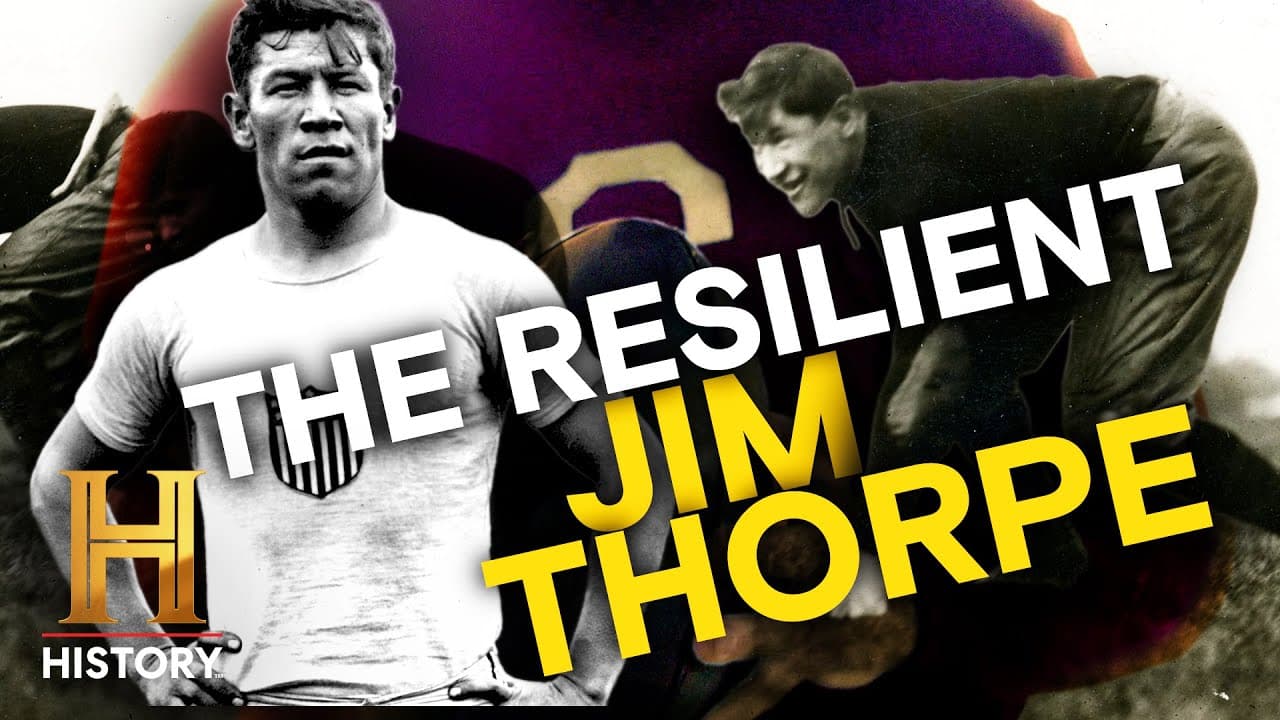
TL;DR
Jim Thorpe rose from poverty on a Sac and Fox reservation to become an Olympian and a transformative athlete. His story shows how early life hardship, boarding school assimilation, and rugged training shaped a modern symbol of athletic excellence and resilience in American sports.
Transcript
As a child, I had tried to emulate the spirited abandon of a running horse, head up and feet coming down with a thundering certainty. ♪♪ I ran and jumped and fought and wrestled and climbed trees as a youngster because it was as natural for an Indian child to do those things as it was to eat and sleep. Jim was born into poverty in Oklahoma in ... Read More
Key Insights
- Jim Thorpe was born in 1887 on a Sac and Fox reservation, an origin that shaped his early life and athletic drive.
- The Dawes Act and boarding school era aimed to erase Native cultures, a context Thorpe endured while pursuing sports and personal growth.
- Thorpe’s father, Hiram, taught him resilience and competition, instilling a mindset that would define his athletic approach.
- Carlisle Indian School became a turning point, where Thorpe transformed into a star and began shaping his career in football.
- The motto Kill the Indian, save the man reflects the assimilation goals of boarding schools and the harm to Indigenous identity.
- Football at Carlisle is portrayed as a pathway to leadership and national recognition, blending sport with broader social pressures.
- Public safety concerns in football during the era nearly led to abolition, which Roosevelt helped avert by pushing for safer play.
- Thorpe’s early labor as a farmhand and breaking horses contributed to his physical development and readiness for high-level competition.
- More videos from this channel:
- More from this channel: HISTORY
Install to Summarize YouTube Videos and Get Transcripts
Explore YouTube Video Summarizer or Get YouTube Transcript Extractor
Questions & Answers
Q: A real search query question about the video (e.g. 'How to...', 'What is...', 'Why does...', 'When should...'). Question 1
How did Jim Thorpe grow up and what early experiences shaped his athletic path? Thorpe grew up on a Sac and Fox reservation during a period of intense US expansion and assimilation policies. His father taught him to compete and to step up, while early labor as a farmhand and breaking horses built physical strength. These foundations fused with the cultural memory of Indigenous athleticism to drive his later success in multiple sports.
Q: Question 2
What role did boarding schools play in Thorpe’s life and in Indigenous education policies of the time? Boarding schools were used to assimilate Indigenous children, stripping culture and imposing Anglo names and uniforms. Thorpe endured three such schools, often against his will, which shaped his resilience and determination to excel in sports as a way to prove himself and maintain identity amidst suppression.
Q: Question 3
Why is Carlisle Indian School central to Thorpe’s emergence as an athlete? Carlisle provided a platform where Native athletes could showcase talent to broader audiences, making Thorpe a national figure. The school’s emphasis on leadership through sports helped him transition from a small-time player to a formidable football star, setting the stage for his Olympic success.
Q: Question 4
How did the Dawes Act context influence Thorpe’s generation and sports career? The Dawes Act aimed to divide Native land and disrupt communities, creating hardship and displacement but also fueling a drive to excel as a form of social mobility. Thorpe’s era framed his athletic pursuits as a pathway to broader recognition beyond the reservation.
Q: Question 5
What is the connection between football’s risks at the time and Thorpe’s legacy? The era faced calls to abolish dangerous football, with Roosevelt and others pushing for safer play. Thorpe’s success amid these concerns highlighted the sport’s potential to shape leadership and national identity while underscoring the need for safer, smarter play.
Q: Question 6
How did Thorpe’s family influence his character and ambitions? His father Hiram was both a teacher and disciplinarian, pushing Jim to be a man who competes. The father’s rough but guiding approach fostered grit, risk-taking, and a strong work ethic that carried Thorpe from river swims to elite athletic arenas.
Q: Question 7
What does the phrase Kill the Indian, save the man reveal about the era and Thorpe’s environment? The motto reflected a broader assimilation strategy in boarding schools, aiming to erase Native identity while training Indigenous youth to adopt Western ways. This clash between identity preservation and societal pressure framed Thorpe’s battles and his determination to excel.
Q: Question 8
How does Thorpe’s legacy illustrate a broader American story in sports and identity? Thorpe’s journey from reservation to Olympic glory embodies a narrative of resilience and cross-cultural achievement. His athletic versatility and leadership helped redefine what an American athlete could be, while the surrounding policies underscore a complex history of Indigenous struggles and integration.
Summary & Key Takeaways
-
Jim Thorpe’s story begins on a Sac and Fox reservation where hardship and poverty framed his childhood, guiding him toward sport and self-discipline.
-
The narrative traces his path through boarding schools designed for assimilation, highlighting how these experiences influenced his development as an athlete and his broader legacy.
-
The episode concludes by linking Thorpe’s legacy to the creation of a lasting athletic identity in American sports and culture.
Read in Other Languages (beta)
Share This Summary 📚
Summarize YouTube Videos and Get Video Transcripts with 1-Click
Try YouTube Summary with ChatGPT & Claude or YouTube Transcript Generator
Explore More Summaries from HISTORY 📚


Summarize YouTube Videos and Get Video Transcripts with 1-Click
Try YouTube Summary with ChatGPT & Claude or YouTube Transcript Generator