How to Build Multiple Profitable Online Businesses
TL;DR
Build one profitable business first, then install an operator before using its cash flow to incubate or acquire another company. Greg Isenberg’s audience-community-product funnel starts with attracting a niche audience, moves engaged members into an owned community, and ends by creating the product they want most. This approach helped his holding company reach eight figures in revenue and mid-seven figures in profit.
Transcript
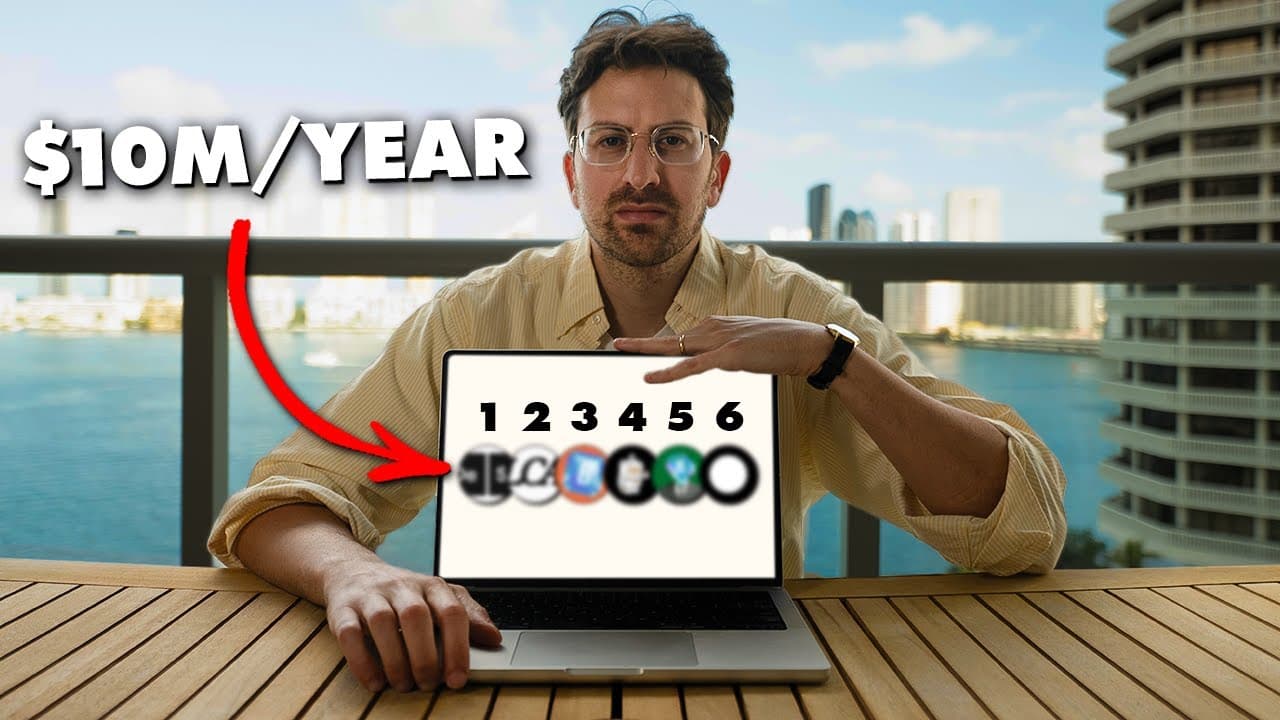
this guy makes over $10 million a year with six different businesses and the best part he started them all with 0 I drove out to Miami Florida to ask him exactly how he built these businesses and the blueprint he uses to make over $5 million a year in profit instead of charging $1,500 a month we charge on average $1.5 million a year you see Greg st... Read More
Key Insights
- Multipreneurship is the practice of building multiple products, companies, and revenue streams instead of depending on one large business. Isenberg argues that several smaller companies provide built-in insurance when a platform change or business setback harms one source of revenue.
- The audience-community-product funnel is Isenberg’s core business-building method. It starts with a social media audience, moves engaged followers into a community where the founder owns contact information and observes pain points, and concludes with a product designed around what those people want most.
- Late Checkout Agency sells high-value innovation rather than routine monthly agency services. Instead of charging around $1,500 per month, it charges an average of $1.5 million per year because its proposed products and strategic visions can generate nine or ten figures of revenue for clients.
- Trust is a foundation for landing valuable clients. Isenberg built a Twitter audience of more than 10,000 people, organized orange-wine disco parties in Williamsburg, met early clients through those gatherings, and received immediate interest when he introduced his innovation agency.
- Community-first validation reduced the risk of later launches. After closing Nice Break because it began directly with a product, Isenberg returned to his funnel, built a design-inspiration audience, and launched design subscriptions within 72 hours, producing seven figures of first-year revenue and $450,000 in profit.
- Boring Marketer turned content about advertising, SEO, and straightforward customer acquisition into a community and an AI-assisted software tool. The business produced $350,000 in profit during its first year, with Isenberg projecting $2 million to $3 million in profit during its second year.
- Strong operators can emerge from communities built around a company’s niche. Isenberg recruits highly active experts he calls nerds in residence, and he also cold-messages interesting people online, including candidates who already have jobs, because he believes many of the best prospective hires are currently employed.
- A second business should follow proven profitability in the first company. Isenberg recommends reaching at least $100,000 in profit, finding an operator, and only then using the resulting time and cash flow to incubate a new venture or purchase another business.
Install to Summarize YouTube Videos and Get Transcripts
Explore YouTube Video Summarizer or Get YouTube Transcript Extractor
Questions & Answers
Q: What is multipreneurship and how does it reduce business risk?
Multipreneurship means owning multiple products, companies, or revenue streams rather than relying on one business. Isenberg illustrates this with several companies that might each earn $25,000 per month instead of one company earning $100,000. If Google, Instagram, or another outside force damages one company, the remaining businesses provide built-in insurance and continued income.
Q: How does the audience-community-product funnel work?
The audience-community-product funnel begins by building a focused audience through a channel such as Twitter, Instagram, or TikTok. The founder then moves interested people into a community where contact details can be owned, conversations can happen, and pain points can be understood. Finally, the founder creates the product that this trusted community wants most, using observed demand rather than unsupported assumptions.
Q: How did Greg Isenberg win million-dollar agency clients?
Isenberg first built a Twitter audience of more than 10,000 people and then developed deeper relationships through community events, including orange-wine disco parties in Williamsburg. Some attendees became his first clients. Because trust already existed, prospects responded quickly when he introduced Late Checkout Agency and its innovation offering, which charges an average of $1.5 million per year.
Q: Why does Late Checkout Agency charge $1.5 million per year?
Late Checkout Agency helps large companies develop new ideas and future-proof their businesses rather than providing a standard low-cost agency service. Isenberg says the products and strategic visions created through this work can generate nine or ten figures of revenue for clients. On that basis, an average annual fee of $1.5 million can represent a favorable trade for the customer.
Q: Why should founders build a community before a product?
A community gives founders direct access to conversations, recurring pain points, active experts, and potential early customers before development begins. Isenberg learned this after launching Nice Break directly as a product and later closing it. He returned to a community-first approach with a design-inspiration account, identified an opportunity, and launched a design subscription business within 72 hours.
Q: When should a solopreneur become a multipreneur?
A founder should not launch several products on the first day. Isenberg recommends starting as a solopreneur, selecting a niche, building an audience, forming a community, and selling a product to that community. Once the first company generates at least $100,000 in profit, the founder can appoint an operator and use the newly available time and cash flow for another venture.
Q: How does Greg Isenberg find and hire business operators?
Isenberg identifies potential hires inside the communities surrounding his businesses, focusing on highly active specialists he calls nerds in residence. These people already demonstrate sustained interest and expertise in the relevant niche. He also sends cold direct messages and emails to interesting people online, including people with existing jobs, and invites them to have a short introductory call.
Q: How does Greg Isenberg research profitable business ideas?
Isenberg uses Redditlist to see how quickly particular subreddits are growing and to compare their rankings. He then uses GummySearch to examine a subreddit and identify the largest problems discussed by its members. His role as an entrepreneur is to interpret those visible problems and create solutions, connecting audience growth with specific evidence about what a community needs.
Summary & Key Takeaways
-
Greg Isenberg runs Late Checkout, a holding company containing six businesses across innovation consulting, AI communities, design, SEO, advertising, and entrepreneurship education. He says the group earns eight figures in revenue and mid-seven figures in profit, while giving him more income and requiring less work than his previous corporate leadership role.
-
His audience-community-product funnel begins with publishing useful niche content, gathering interested followers in a community where relationships and customer problems become visible, and then creating the product members want most. Isenberg used this sequence to establish trust before selling high-value innovation services and to launch additional internet businesses with demonstrated demand.
-
Multipreneurship should follow a successful first business rather than begin with several simultaneous launches. Isenberg recommends building one company to at least $100,000 in profit, finding an operator to manage it, and then using freed time and available cash flow to incubate or acquire the next business while diversifying platform and market risks.
Read in Other Languages (beta)
Share This Summary 📚
Summarize YouTube Videos and Get Video Transcripts with 1-Click
Try YouTube Summary with ChatGPT & Claude or YouTube Transcript Generator
Explore More Summaries from Starter Story 📚

Summarize YouTube Videos and Get Video Transcripts with 1-Click
Try YouTube Summary with ChatGPT & Claude or YouTube Transcript Generator