Prototyping with Applied Science: Design and build a bite sensor
TL;DR
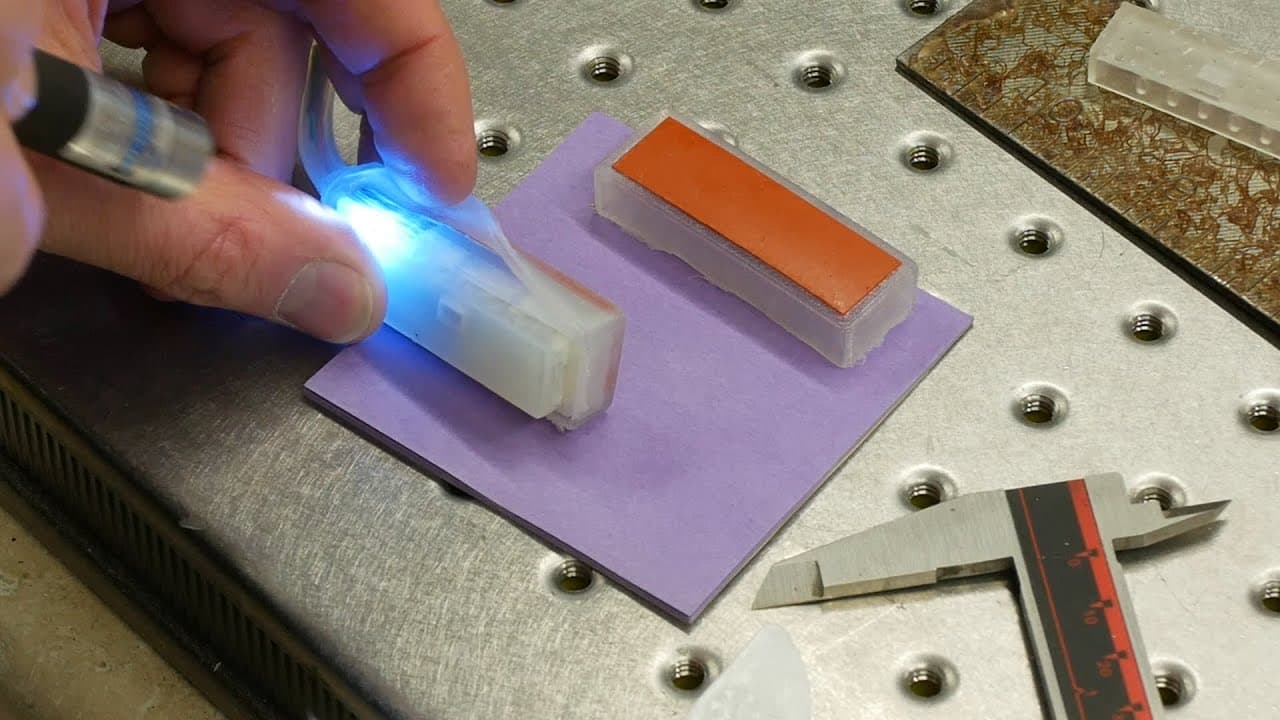
The video discusses the process of designing a bite sensor for a musician who needs to control the sustained pedal for a digital piano, exploring different construction techniques and design philosophies.
Transcript
today on applied science i'd like to show you this project that i've been working on this is a bite sensor for a computer human interface so you might want this for a lot of different reasons but this particular one was built for a musician who doesn't have the use of his legs but still needs to control the sustained pedal for his digital piano so ... Read More
Key Insights
- 🏛️ The design process often involves building prototypes and iterating based on feedback and discovered requirements.
- 🎮 Consideration of both electrical and physical feedback is crucial when designing an interface for expressive control.
- 🗯️ Finding the right mechanism and materials for construction is essential to ensure a smooth and reliable user experience.
- 🩹 The choice of lubricant and adhesive can significantly impact the performance and durability of the device.
- 😋 Creative problem-solving, such as drilling holes to remove o-rings, can overcome challenges during the design process.
- 😓 Custom-shaped silicone enclosures can be created using 3D printing and casting techniques, allowing for tailor-made designs.
- 🥺 Avoiding unnecessary complexity and focusing on user requirements can lead to more effective and elegant solutions.
Install to Summarize YouTube Videos and Get Transcripts
Explore YouTube Video Summarizer or Get YouTube Transcript Extractor
Questions & Answers
Q: Why did the designer choose to create a bite sensor for a musician?
The bite sensor was specifically developed for a musician who does not have the use of his legs but needs to control the sustained pedal for his digital piano.
Q: What were some of the challenges faced during the design process?
The main challenge was creating a continuous pedal with a linear output that would be compatible with the digital piano's circuitry. Additionally, finding a solution that provided both physical and expressive feedback proved to be difficult.
Q: Why were pneumatic and hydraulic control solutions not ideal?
While initially attractive, these solutions had limitations such as stiction, lack of physical feedback, and difficulty in achieving a consistent response. Additionally, implementing these solutions would require considering the compatibility of the digital circuitry within the piano.
Q: What was the final design solution?
The final design involved a linear potentiometer and a ramp mechanism, providing a controllable and consistent response. The design also incorporated a custom-shaped silicone enclosure for the device.
Summary & Key Takeaways
-
The project involves creating a bite sensor for a musician who needs to control the sustained pedal for a digital piano.
-
The initial design using a micro switch had limitations in terms of expressiveness and physical feedback.
-
The designer explores different construction techniques, including pneumatic and hydraulic control, before settling on a design with a linear potentiometer and a ramp mechanism.
Read in Other Languages (beta)
Share This Summary 📚
Summarize YouTube Videos and Get Video Transcripts with 1-Click
Try YouTube Summary with ChatGPT & Claude or YouTube Transcript Generator
Explore More Summaries from Applied Science 📚



Summarize YouTube Videos and Get Video Transcripts with 1-Click
Try YouTube Summary with ChatGPT & Claude or YouTube Transcript Generator