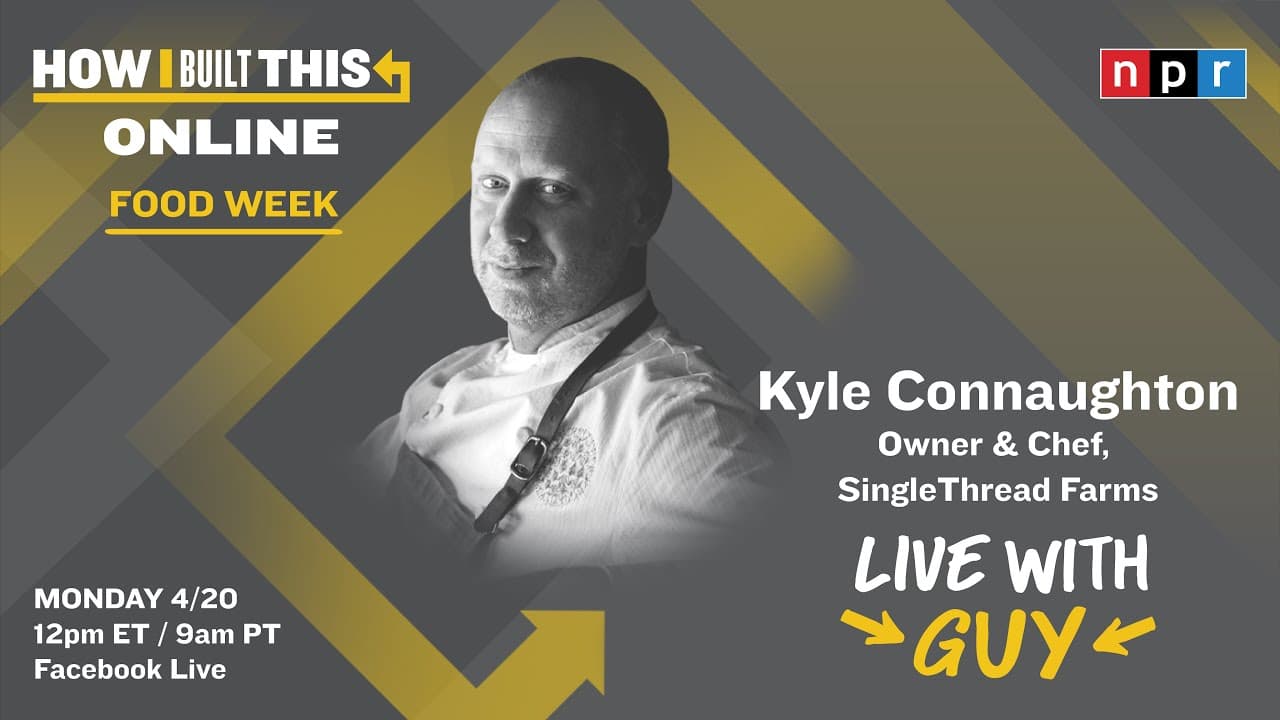
Kyle Connaughton Talks SingleThread Farms, Pivoting to Takeout, and Giving Back | NPR
TL;DR
SingleThread responded to its COVID-19 closure by retaining about 20 of its 80 team members, launching evening takeout, and preparing a few hundred donated meals during the day. Donations through Sonoma Family Meal funded food for seniors, displaced agricultural and hospitality workers, and a women's shelter, while the remaining management team worked to preserve the business and maintain employee benefits.
Transcript
hello everyone and welcome to how I built this online edition how are you doing how's everybody doing we are here to talk about how businesses are building resiliency and we are taking your questions right now on Facebook on Twitter on YouTube and this is a food week we've got some incredible chefs and restaurateurs on the show all this week to tal... Read More
Key Insights
- Independent restaurants operate on very slim margins, regardless of whether they are small businesses or larger fine-dining operations. Connaughton says the COVID-19 shutdown added an unprecedented and unplanned disruption to an industry that was already difficult to sustain during normal conditions.
- SingleThread employed 80 people across its farm, restaurant, inn, and administrative operations before the closure. The crisis forced the business to furlough most of the team while keeping about 20 people, primarily members of management, working on its replacement food programs.
- Employee health benefits remained a priority during the shutdown. SingleThread normally paid 100 percent of those benefits, and Connaughton designed the crisis programs partly to keep that support intact so furloughed team members would continue having access to medical care if needed.
- Hospitality is the central purpose of SingleThread's work, according to Connaughton. When the restaurant could no longer care for paying guests through its usual service, the team redirected its cooking, farm produce, restaurant inventory, and operational skills toward people facing greater needs.
- Sonoma Family Meal provided an established channel for community food assistance. The organization had emerged from the turmoil of earlier Sonoma County fires, giving SingleThread a partner that could receive donations and help distribute meals during the expanding COVID-19 crisis.
- Donations funded SingleThread's community meal production instead of serving as direct financial assistance to the restaurant. Connaughton asked friends, wineries, investors, and guests to support Sonoma Family Meal, allowing his team to prepare food while continuing to serve the surrounding community.
- SingleThread divided its revised operation into daytime relief cooking and nighttime takeaway service. During the day, the kitchen produced a few hundred donated meals, while evenings focused on reasonably priced meals for families who could pay and optionally contribute additional donations.
- Crisis management had become a repeated responsibility for SingleThread before COVID-19. The team had already navigated multiple years of fires and farm flooding, and Connaughton says the management group drew on that experience while adapting the business again under extraordinary pressure.
Install to Summarize YouTube Videos and Get Transcripts
Explore YouTube Video Summarizer or Get YouTube Transcript Extractor
Questions & Answers
Q: How did SingleThread pivot during the COVID-19 closure?
SingleThread replaced its normal fine-dining service with two connected programs. During the day, its reduced team prepared a few hundred donated meals for people in need. At night, it offered reasonably priced takeaway meals to families who could pay. Takeout customers could also donate to support the daytime relief work conducted with Sonoma Family Meal.
Q: How many SingleThread employees kept working after the closure?
About 20 of SingleThread's 80 team members continued working after the restaurant closed, and those workers were mostly part of the management team. The remaining employees were furloughed. The active team worked intensively on community meal production and evening takeout while making personal sacrifices intended to support the staff, the restaurant, and the business.
Q: Why did SingleThread prioritize employee benefits during the crisis?
SingleThread paid 100 percent of employee benefits, and Connaughton viewed preserving them as a central goal of the crisis response. Although most employees had to be furloughed, maintaining benefits meant team members could continue to have access to medical care if needed. The new operating programs were designed partly to help keep that protection intact.
Q: What role did Sonoma Family Meal play in SingleThread's response?
Sonoma Family Meal served as the community partner for SingleThread's donated food program. The organization had been created amid the turmoil of Sonoma County fires to get meals to people who needed them. During the COVID-19 closure, donations to the organization helped fund SingleThread's cooking, while meals were distributed to several vulnerable local groups.
Q: Who received SingleThread's donated meals?
SingleThread's daytime relief program prepared food for seniors, out-of-work agricultural workers, out-of-work hospitality workers, and a women's shelter. Connaughton described the kitchen as producing a few hundred donated meals during the day. The effort used the restaurant's staff, food inventory, farm produce, and partnership with Sonoma Family Meal to address growing community needs.
Q: How did SingleThread fund its community meal program?
Connaughton contacted friends of the restaurant, wineries, investors, and valued guests and asked them to donate to Sonoma Family Meal. He emphasized that he was not seeking a handout for the restaurant. Instead, those contributions funded community food preparation, allowing the reduced SingleThread team to keep cooking while helping local people whose needs were increasing.
Q: Why are independent restaurants especially vulnerable during a shutdown?
Independent restaurants are vulnerable because their margins are very slim even during good conditions, according to Connaughton. He says the difficulty applies to both small operators and larger fine-dining businesses. An unprecedented, unplanned shutdown removes normal guest revenue while leaving responsibilities to employees and the business, creating what he described as an almost impossible situation.
Q: How did earlier disasters prepare SingleThread for COVID-19?
SingleThread had already managed repeated crises involving Sonoma County fires and flooding that damaged farm crops. Connaughton says the team had completed more crisis management in the preceding six months or year than during the rest of his 26-year career. Those experiences strengthened the management team's ability to react, reorganize operations, and keep moving during the COVID-19 closure.
Summary
In this video, chef Kyle Connaughton from SingleThread Farms discusses the challenges that the restaurant industry has been facing due to the COVID-19 pandemic. He highlights the importance of crisis management and how his team has adapted to the situation. Kyle also talks about the initiatives his restaurant has taken to provide meals for those in need and the impact of donations on sustaining their operations. He shares his thoughts on the future of the restaurant industry and the need to support local businesses.
Questions & Answers
Q: How has the restaurant industry been impacted by the pandemic?
The restaurant industry has been heavily impacted by the pandemic, as many restaurants had to shut down and face economic struggles. The restaurant business operates on thin margins even during good times, making it even more difficult to sustain during a crisis like this. There are predictions that 75% of restaurants in the United States may not survive this crisis.
Q: How has SingleThread Farms dealt with the crisis?
SingleThread Farms had to furlough most of their team, keeping only about 20 people working. The management team has been working tirelessly to implement a program that supports their staff and keeps the business running. They have also started providing meals for those in need, such as seniors and hospitality workers, through donation programs funded by donations from wineries and other supporters.
Q: How did SingleThread Farms pivot their business to takeout and donation meals?
SingleThread Farms reoriented their cooking process to accommodate large-volume production for takeout and donation meals. They focused on utilizing the products from their farm and supporting local farms by purchasing their produce. They developed menus for takeout that offer a variety of dishes and explore different types of cooking. All of this is funded through donations from individuals, wineries, and other generous contributors.
Q: How do you manage the uncertainty and planning day-to-day?
SingleThread Farms takes it one day at a time and plans each day based on the available produce and supplies. They have to be flexible and nimble in their planning due to supply chain disruptions. The focus is on addressing the needs of the day and serving guests while supporting local farms and suppliers.
Q: How do you see the pandemic transforming the food and restaurant industry in the future?
Kyle hopes that the experience of this crisis will lead to a greater emphasis on community support and addressing the needs of those less fortunate. He believes that people will have a deeper appreciation for dining out and the experiences that restaurants provide. Additionally, he hopes that people will become more aware of the choices they make regarding food, supporting sustainable practices, and local businesses.
Takeaways
The COVID-19 pandemic has had a significant impact on the restaurant industry, forcing many businesses to close or adapt to new models of operation. SingleThread Farms is one such example, with a focus on providing takeout and donation meals. The crisis has highlighted the need for community support and conscious consumer choices. As the industry looks towards the future, there is hope that increased awareness and a deeper understanding of the value of dining experiences will emerge.
Summary & Key Takeaways
-
SingleThread entered the COVID-19 crisis after already managing wildfires and farm flooding in Sonoma County. Kyle Connaughton credits the restaurant's experienced management team with responding quickly, but emphasizes that independent restaurants operate on slim margins and that an unplanned shutdown can create an almost impossible financial and operational situation.
-
The business employed 80 people across its restaurant, inn, farm, and administration before the closure. About 20 people, primarily managers, continued working on the new programs while everyone else was furloughed. Preserving 100 percent of employee benefits remained a central priority so team members could retain access to medical care.
-
SingleThread partnered with Sonoma Family Meal to turn farm produce, restaurant inventory, staff skills, and donor funding into community support. The kitchen prepared donated meals during the day and reasonably priced takeaway dinners at night. Customers could also donate, helping serve seniors, displaced workers, and a women's shelter in Sonoma County.
Read in Other Languages (beta)
Share This Summary 📚
Summarize YouTube Videos and Get Video Transcripts with 1-Click
Try YouTube Summary with ChatGPT & Claude or YouTube Transcript Generator
Explore More Summaries from NPR 📚



Summarize YouTube Videos and Get Video Transcripts with 1-Click
Try YouTube Summary with ChatGPT & Claude or YouTube Transcript Generator