How Similar Are Chinese and Japanese?
TL;DR
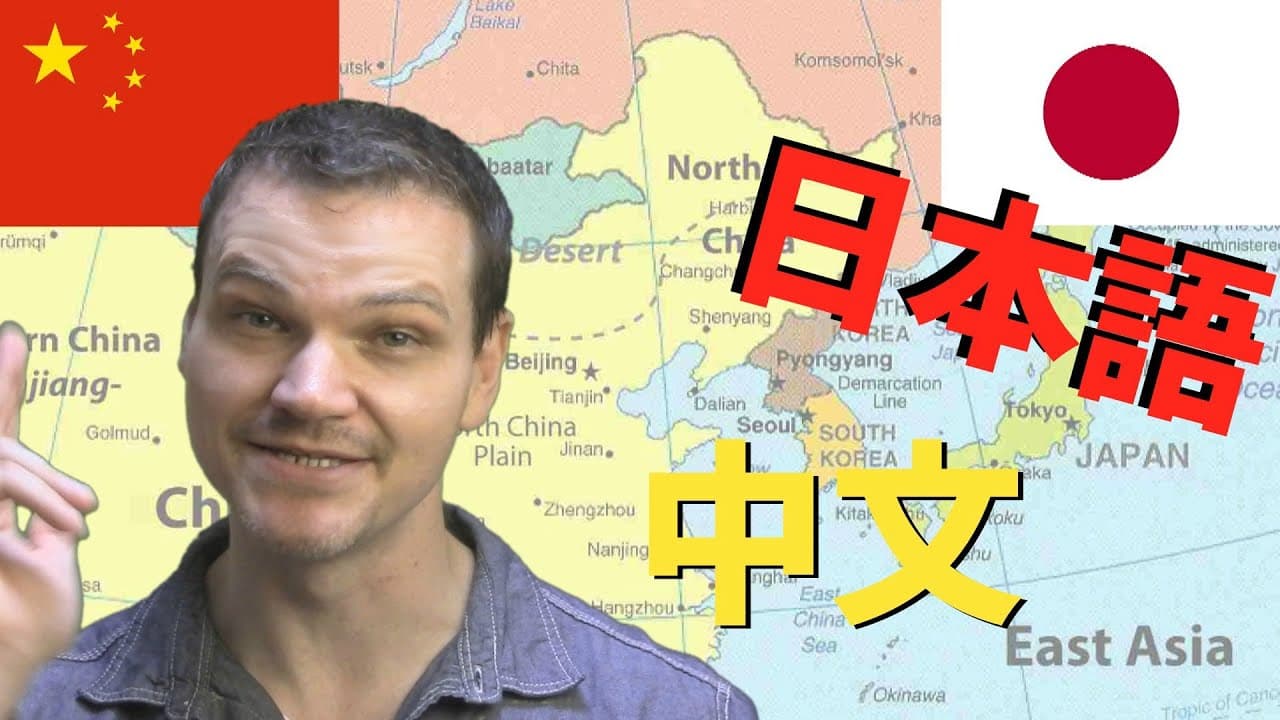
Chinese and Japanese are unrelated but share vocabulary influences.
Transcript
Learning a language ? Have a look at our partner website italki where you can meet language exchange partners for free or learn at home with convenient online lessons. Buy your first lesson and get your second lesson free. Check out the link in the description below. Quiz time: Are the following words Chinese or Japanese? First. Yes it's Japanese. ... Read More
Key Insights
- Chinese and Japanese are completely different languages with no common origin; Chinese is Sino-Tibetan and Japanese is Japonic.
- Chinese is a tonal language, whereas Japanese uses pitch accent, which does not affect word meaning.
- Chinese follows a Subject-Verb-Object (SVO) structure, while Japanese follows a Subject-Object-Verb (SOV) structure.
- Japanese is agglutinative, using inflection and affixes, while Chinese is analytic and uses independent elements.
- Japanese borrowed a significant amount of vocabulary and characters from Chinese during the 5th to 9th centuries.
- Chinese characters in Japanese can help Chinese speakers understand basic meanings but not detailed grammatical nuances.
- Japanese 'wasei kango' are Chinese-like words created in Japan, confusing Chinese speakers due to different usage.
- Some Japanese-created terms have been borrowed back into modern Chinese, accounting for about 30% of its vocabulary.
Install to Summarize YouTube Videos and Get Transcripts
Explore YouTube Video Summarizer or Get YouTube Transcript Extractor
Questions & Answers
Q: How do Chinese and Japanese differ in phonology?
Chinese is a tonal language, meaning that the pitch or tone used when pronouncing a word can change its meaning. Japanese, on the other hand, uses pitch accent, where syllables have either a higher or lower pitch, but this does not typically change the meaning of words. This fundamental difference makes the phonologies of the two languages distinct.
Q: What is the grammatical structure of Chinese compared to Japanese?
Chinese follows a Subject-Verb-Object (SVO) structure, where sentences are constructed with the subject first, followed by the verb, and then the object. In contrast, Japanese uses a Subject-Object-Verb (SOV) structure, where the subject is followed by the object, and the verb comes last. This basic structural difference is a significant distinction between the two languages.
Q: How does Chinese influence Japanese vocabulary?
Chinese has heavily influenced Japanese vocabulary, especially during the period from the 5th to 9th centuries CE, when many Chinese words and characters were borrowed into Japanese. Approximately 60% of Japanese words have Chinese origins, though this includes many specialized terms. In spoken Japanese, the proportion of Chinese loanwords is lower, around 18%.
Q: What challenges do Chinese speakers face when reading Japanese?
Chinese speakers can often understand the basic meaning of Japanese text due to the shared Chinese characters. However, they may struggle with the grammatical details conveyed through inflection and agglutination in Japanese. This can lead to misunderstandings, especially in sentences where the inflection changes the meaning, such as tense or negation.
Q: What are 'wasei kango' and how do they affect mutual comprehension?
Wasei kango are words created in Japan using Chinese characters to represent concepts unique to Japan or new Western ideas. These words can confuse Chinese speakers because they do not exist in Chinese. While the characters might be recognizable, their usage and meaning can differ, complicating comprehension for Chinese readers.
Q: How have Japanese words been incorporated into Chinese?
Some Japanese-created words, originally derived from Chinese roots, have been borrowed back into modern Chinese. These are known as 'returned loanwords' and account for about 30% of modern Chinese vocabulary. The pronunciation of these words in Chinese is based on the modern pronunciation of the characters in Mandarin.
Q: Why is there a difference in recognizing Japanese kanji between mainland China and Taiwan?
Mainland China uses Simplified Chinese characters, while Taiwan and Hong Kong use Traditional Chinese characters. As Japanese kanji are more similar to Traditional characters, people from Taiwan or Hong Kong may find it easier to recognize and understand Japanese text compared to those from mainland China.
Q: How does mutual intelligibility in writing manifest between Chinese and Japanese?
Mutual intelligibility in writing between Chinese and Japanese arises from the use of shared Chinese characters. A Chinese speaker can often understand the core meaning of a Japanese text, and vice versa, based on these characters. However, the details and nuances, such as grammatical inflections, are often lost without knowledge of the other language's specific usage.
Summary & Key Takeaways
-
Chinese and Japanese are linguistically unrelated, but Japanese has been significantly influenced by Chinese, especially in vocabulary and writing. Despite their proximity and shared characters, the two languages differ greatly in phonology, grammar, and structure.
-
Chinese is a tonal language, while Japanese relies on pitch accent, which does not alter word meaning. Chinese uses an SVO sentence structure, whereas Japanese uses SOV, and the languages differ in their use of inflection and agglutination.
-
The borrowing of Chinese vocabulary and characters into Japanese has created some mutual intelligibility in writing, though pronunciation and usage have diverged. Japanese 'wasei kango' and returned loanwords further intertwine the languages.
Read in Other Languages (beta)
Share This Summary 📚
Summarize YouTube Videos and Get Video Transcripts with 1-Click
Try YouTube Summary with ChatGPT & Claude or YouTube Transcript Generator
Explore More Summaries from Langfocus 📚






Summarize YouTube Videos and Get Video Transcripts with 1-Click
Try YouTube Summary with ChatGPT & Claude or YouTube Transcript Generator