Should Kashmir's Special Status Under Article 370 Be Revoked?
TL;DR
India revoked Jammu and Kashmir's special status under Article 370 to resolve a 72-year crisis at its root causes, arguing the article was labeled temporary and blocked 106 progressive laws. Opponents call it a constitutional violation, citing detained political leaders under house arrest, three months of shut shops, schools, and restricted movement.
Transcript
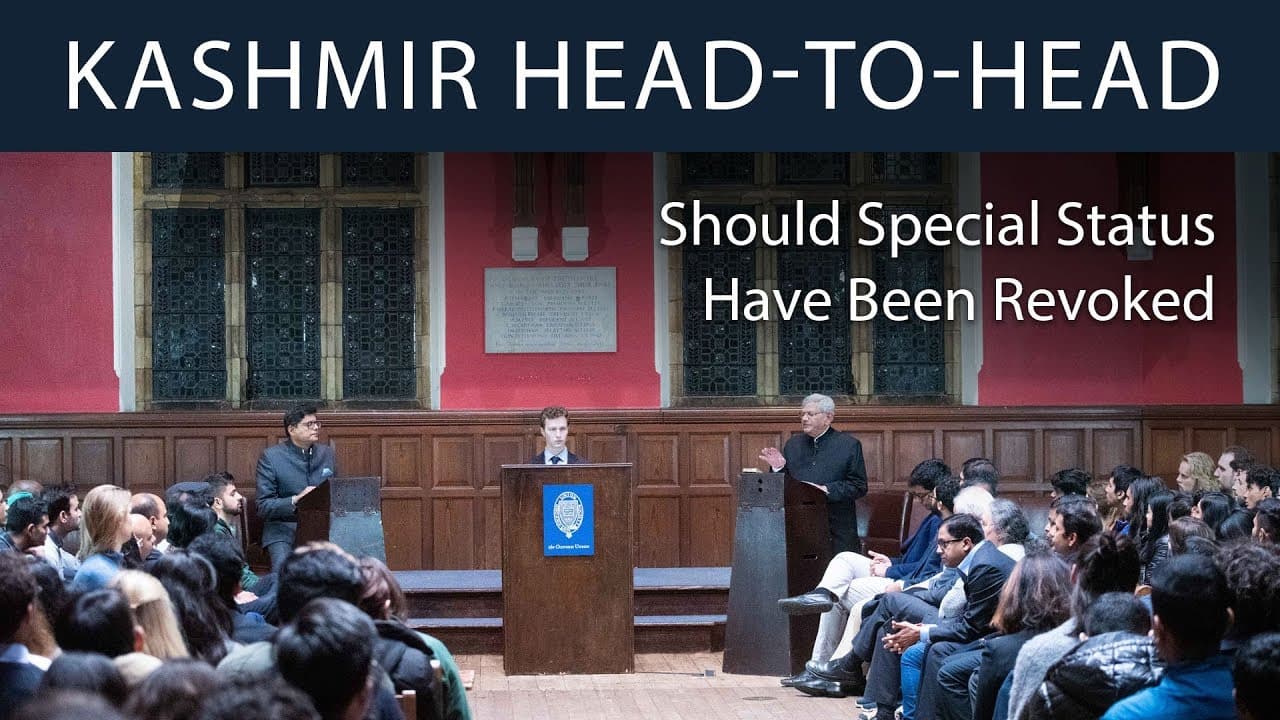
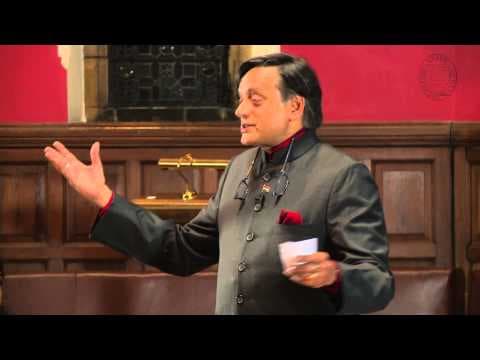
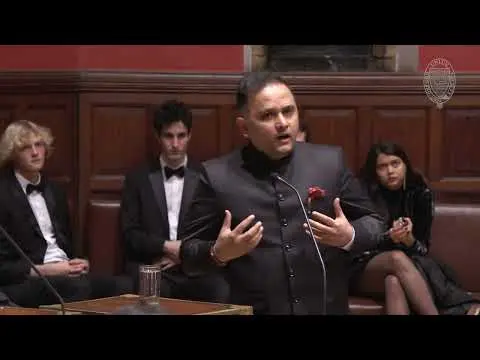
good evening ladies and gentlemen tonight we'll be debating the question should the special status of Jammu and Kashmir have been revoked speaking in the affirmative is mr. Jai Panda the national vice-president of the BJP speaking in the negative is dr. sitaramayya Cheree leader the Communist Party of india-marxist the debate will take place in two... Read More
Key Insights
- Jammu and Kashmir has been in crisis for 72 years, with about 42,000 people killed in terrorism-related violence over roughly the last three decades, so the affirmative frames the Article 370 change as resolving root causes rather than a sudden new crisis.
- Article 370 is described as the only article in the Indian Constitution carrying the word 'temporary' before it, and its amendment is presented as an internal matter for India with no bearing on international agreements or neighbors.
- Because of special status, 106 laws passed by the Indian Parliament did not apply in Jammu and Kashmir, including laws protecting women's rights, prohibiting child marriage, requiring mandatory education, and a Supreme Court judgment giving rights to the LGBTQ community.
- India is presented as the only legitimate successor state holding Jammu and Kashmir, while Pakistan is said to have invaded and still hold part of it (Pakistan Occupied Kashmir), and a portion was given by Pakistan to China (Chinese Occupied Kashmir).
- The Indian state invested four times the per capita amount in Jammu and Kashmir over seven decades compared to the rest of India, yet the affirmative argues results are not visible in infrastructure, industry, or jobs, blaming corruption sheltered by special status.
- The opposition argues the revocation violates the Constitution of India, which he holds as the single book for Indian patriots and on which he took an oath twice, making opposition an act of patriotism rather than anti-nationalism.
- Political leaders in Kashmir who fought to be part of India and took the constitutional oath are under house arrest and detained, which the opposition presents as a violation of democracy, naming Mohammed Yusuf Tarigami, elected for 24 years.
- For roughly three months there was no public transport, shops remained closed, schools and colleges were technically open but without students or teachers, and hospitals faced medicine shortages, which the opposition cites as human rights violations.
Install to Summarize YouTube Videos and Get Transcripts
Explore YouTube Video Summarizer or Get YouTube Transcript Extractor
Questions & Answers
Q: Why did India revoke the special status of Jammu and Kashmir under Article 370?
According to the affirmative speaker Baijayant Panda, India revoked the special status to resolve a 72-year crisis at its root causes rather than just managing its symptoms. He argues Article 370 sheltered terrorism, enabled enormous corruption of billions of dollars, allowed separatism, and blocked 106 progressive Indian laws from applying in the region. The goal is to fully integrate Jammu and Kashmir into the Indian state, granting equal rights to all citizens irrespective of religion, caste, creed, or gender.
Q: What laws did not apply in Jammu and Kashmir because of Article 370?
Because of the special status under Article 370, 106 laws passed by the Indian Parliament did not apply in Jammu and Kashmir. Panda specifies these included laws protecting the rights of women, laws prohibiting child marriage, laws requiring mandatory education, and a Supreme Court judgment providing protections and rights to the LGBTQ community. Certain Supreme Court judgments also did not apply. He argues that supporting women's rights, child rights, universal education, and LGBTQ rights means supporting the decision to amend Article 370.
Q: What is the argument that Article 370 was only temporary?
Panda argues that Article 370 was the only article in the entire Indian Constitution which had the word 'temporary' before it. He acknowledges one can argue about what temporary should mean, whether weeks, months, years, or as in this case many decades, but says that is beside the point. The key point is that the Indian Parliament had the authority to amend it, as it had been amended earlier, though this time much more drastically.
Q: How does the affirmative respond to the term 'Indian Occupied Kashmir'?
Panda rejects the phrase 'Indian Occupied Kashmir', arguing India is in fact the only state that is a legitimate successor of which Jammu and Kashmir is a part. He states the accession of Jammu and Kashmir followed the same rules applied to more than 550 princely states at partition. By contrast, he says Pakistan invaded Jammu and Kashmir without any legitimacy and still holds part of it, called Pakistan Occupied Kashmir, and gave a portion to China, making it Chinese Occupied Kashmir.
Q: What is Sitaram Yechury's main argument against revoking the special status?
Sitaram Yechury, leader of the Communist Party of India (Marxist), opposes the revocation as an Indian patriot who believes in one book, the Constitution of India, on which he took an oath twice to enter Parliament. He argues the Constitution is being violated in Kashmir, so his opposition is not anti-national but extremely patriotic. He wants India to remain a secular democratic republic, and says that character cannot be allowed to change through this action.
Q: What human rights concerns did the opposition raise about Kashmir?
Yechury pointed to conditions lasting almost three months, stating there was no public transport, shops remained closed, and schools and colleges were technically open but had no students or teachers. Hospitals faced shortages of medicines. He also emphasized that political leaders who fought to be part of India, took the constitutional oath, and entered the Indian Parliament were arrested and could not move, calling this a violation of democracy that is not permissible.
Q: How much did India invest in Jammu and Kashmir compared to the rest of the country?
According to Panda, if you look at per capita investment, the Indian state invested four times per capita in Jammu and Kashmir over seven decades compared to the rest of India. However, he argues you do not see the results of that investment in terms of infrastructure, industry, or jobs. He attributes this failure to the enormous corruption and the shelter for separatism and terrorism that the special status under Article 370 provided.
Q: How does the affirmative compare the treatment of minorities in India and Pakistan?
Panda argues the country was partitioned on the now discredited two-nation theory. He states that in Pakistan, minorities fell from 23 percent at the time of independence to less than 3 percent, and that country stopped counting minorities in its census. In India, by contrast, Muslims who were 10 percent of the population at independence are today 14 percent. He adds minorities have flourished, serving as President, Vice President, head of the Armed Forces, Chief Justice, sports and movie stars, and billionaires.
Summary & Key Takeaways
-
Baijayant Panda, national Vice President of the BJP, speaks in the affirmative, arguing Kashmir has been in crisis for 72 years with 42,000 terrorism-related deaths, and that revoking Article 370 addresses root causes rather than merely managing symptoms, framing it as the unfinished business of partition.
-
Panda stresses Article 370 was constitutionally temporary and internal to India, blocking 106 progressive laws on women's rights, child marriage, education, and LGBTQ rights. He notes democracy continues with voting rights intact and restrictions being gradually lifted, contrasting India's growing Muslim minority with Pakistan's decimated minorities.
-
Sitaram Yechury, leader of the CPI (Marxist), opposes the motion as a patriot defending the Constitution, citing detained political leaders under house arrest, closed shops, schools without students, and medicine shortages over three months as democratic and human rights violations, while agreeing cross-border terrorism must be fought.
Read in Other Languages (beta)
Share This Summary 📚
Summarize YouTube Videos and Get Video Transcripts with 1-Click
Try YouTube Summary with ChatGPT & Claude or YouTube Transcript Generator
Explore More Summaries from OxfordUnion 📚
Summarize YouTube Videos and Get Video Transcripts with 1-Click
Try YouTube Summary with ChatGPT & Claude or YouTube Transcript Generator