What Is Cellular Respiration and How Does It Work?
TL;DR
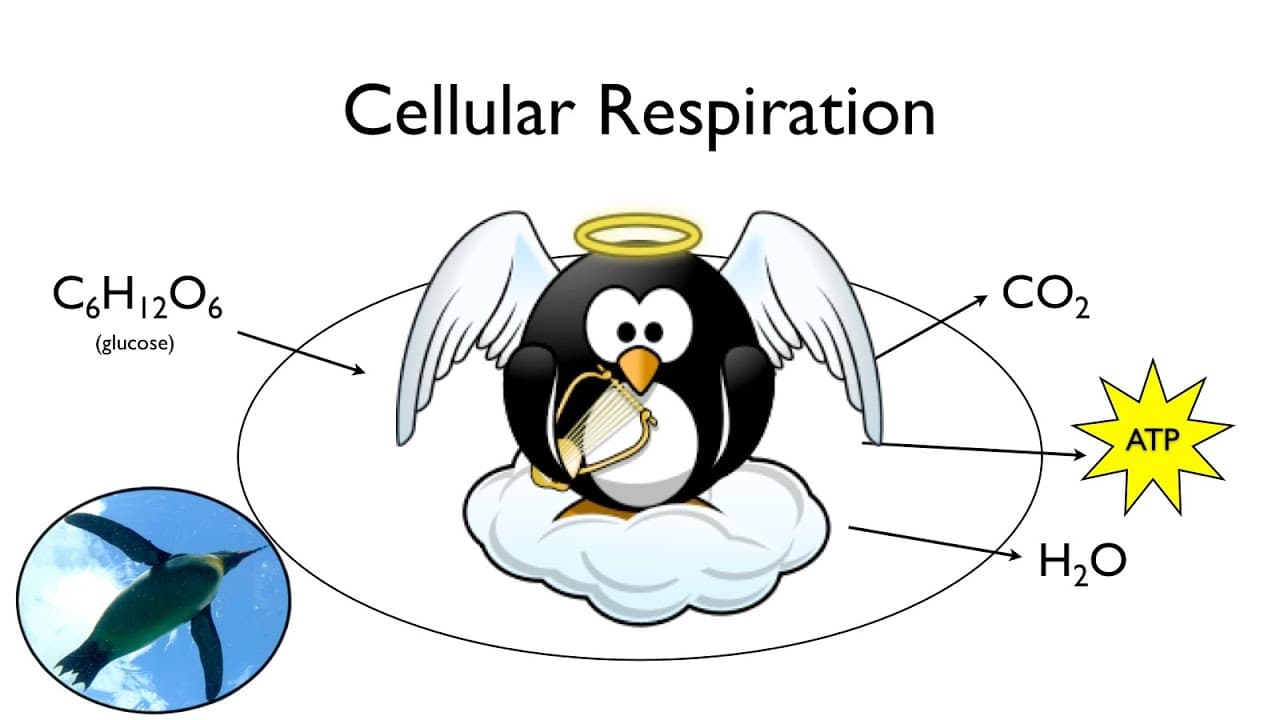
Cellular respiration is the process by which cells convert glucose into ATP, which supplies energy for cellular functions. This process includes glycolysis, the citric acid cycle, and the electron transport chain, requiring oxygen for aerobic respiration, which is significantly more efficient than anaerobic methods.
Transcript
Hello, and welcome to the Penguin Prof Channel. In today's episode I want to talk about cellular respiration. Oh my gosh. This is so ugly, isn't it? Don't worry. I've got some help for you. We're going to look at the big picture here. Overall, the equation -- you may or may not have seen it already -- looks like this. Most people think about bre... Read More
Key Insights
- 💁 Cellular respiration is a vital process for cells to obtain energy in the form of ATP.
- ⛽ Glucose is the primary fuel molecule used during cellular respiration.
- ❓ Autotrophs can make their own glucose, while heterotrophs must obtain it from others.
- 🏍️ The process of cellular respiration involves glycolysis, the citric acid cycle, and the electron transport chain, which ultimately produce ATP.
- ❓ Oxygen is required for aerobic respiration, which is much more efficient than anaerobic respiration.
- 💱 Cellular respiration is related to the respiratory system because of the exchange of oxygen and carbon dioxide.
- 👻 The efficiency of aerobic respiration allowed for the evolution of larger, multicellular organisms.
Install to Summarize YouTube Videos and Get Transcripts
Explore YouTube Video Summarizer or Get YouTube Transcript Extractor
Questions & Answers
Q: What is cellular respiration?
Cellular respiration is the process by which cells convert glucose into ATP, the energy currency of the cell.
Q: How is cellular respiration related to the respiratory system?
Cellular respiration is related to the respiratory system because the cells require oxygen and produce carbon dioxide during the process.
Q: How do autotrophs and heterotrophs obtain glucose?
Autotrophs can make their own glucose from energy sources such as sunlight or chemical bonds, while heterotrophs obtain glucose from other organisms.
Q: What happens to glucose during cellular respiration?
Glucose is broken down through a series of reactions, mainly in the mitochondria, to produce ATP.
Summary & Key Takeaways
-
Cellular respiration is the process by which cells convert glucose into ATP, which is used for cell work or stored for future use.
-
Organisms can either make their own glucose (autotrophs) or obtain it from others (heterotrophs).
-
Glucose is broken down through a series of reactions, mainly in the mitochondria, to produce ATP.
Read in Other Languages (beta)
Share This Summary 📚
Summarize YouTube Videos and Get Video Transcripts with 1-Click
Try YouTube Summary with ChatGPT & Claude or YouTube Transcript Generator
Explore More Summaries from ThePenguinProf 📚



Summarize YouTube Videos and Get Video Transcripts with 1-Click
Try YouTube Summary with ChatGPT & Claude or YouTube Transcript Generator