How Do Japan's Revised Overtime Rules Work?
TL;DR
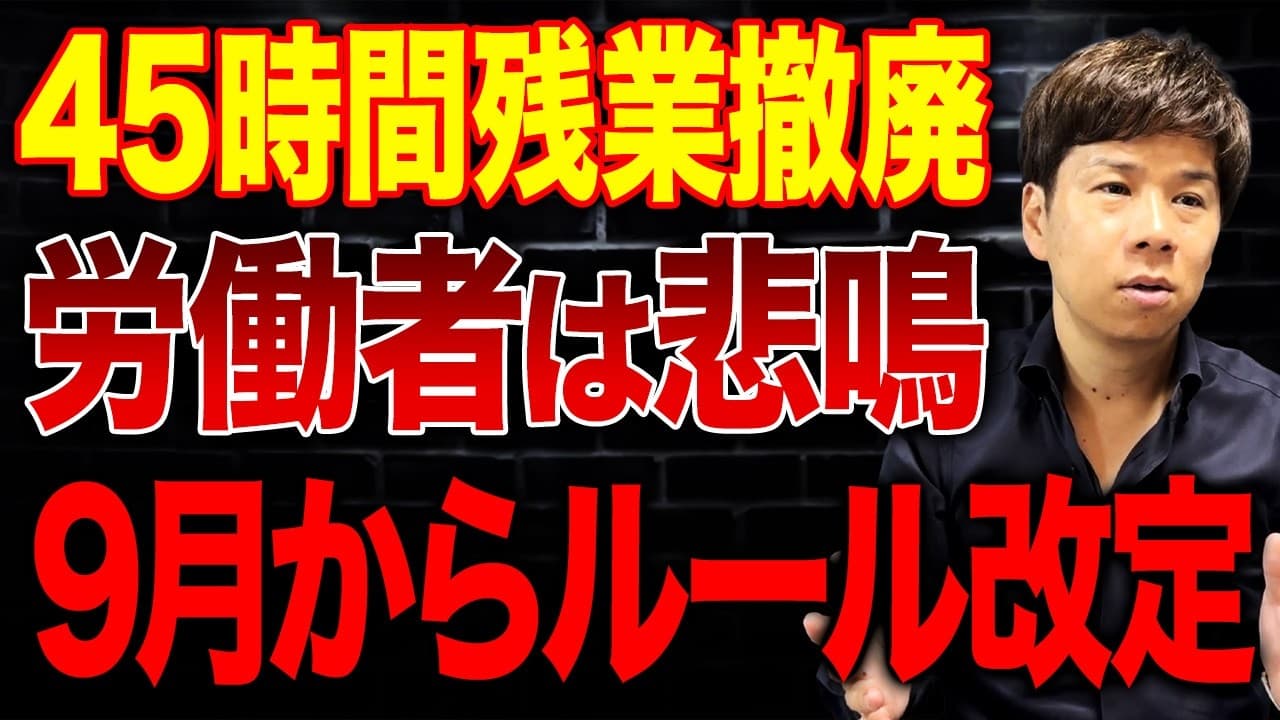
Overtime is directed by the employer, not chosen unilaterally by an employee, and it requires a properly filed Article 36 agreement. From September 2026, inspectors will reportedly focus less rigidly on the 45-hour threshold and more on whether the agreement, working conditions, and employee health are being properly managed, while exceptional circumstances remain necessary for higher limits.
Transcript
Like, it's okay to go over 45 hours. This rule change isn't something workers can just decide on. That was your own doing. Hello. This is Sugawara from Dutz Ellis . Suga-san, there was recent news about revising the 45-hour overtime limit, and I heard many small business owners and employees misunderstand overtime rules. Is that true? Yes... Read More
Key Insights
- Standard working time is up to 40 hours per week, according to the explanation, and work beyond that point requires overtime wages. The rules governing whether those additional hours may be assigned are separate from the obligation to pay the employee for overtime performed.
- An Article 36 agreement is required when a company directs employees to work overtime. The agreement records worker consent to employer-directed overtime, specifies the permitted conditions and hours, and must be properly filed with the Labor Standards Inspection Office before overtime can be managed under its terms.
- The conventional monthly overtime ceiling is 45 hours under the framework described in the discussion. Until August 2026, inspectors generally instructed companies exceeding that level without qualifying special circumstances to reduce overtime and remain within the standard monthly limit.
- Special circumstances can permit overtime beyond 45 hours, with the transcript identifying 100 hours in a month as the maximum. That exception cannot be used continuously throughout the year, and an ordinary project is not automatically exceptional merely because a company considers its completion unavoidable.
- The September 2026 guidance change shifts attention from rigid enforcement of 45 hours toward compliance with the Article 36 agreement, appropriate working conditions, and employee health. The discussion characterizes the threshold as less central to inspection guidance, not as an unrestricted right to demand longer hours.
- Overtime is determined by company direction rather than an employee's unilateral choice. Proper overtime occurs when an employer orders work to be completed beyond regular hours, while an employee cannot independently stay late, claim overtime, or override a company instruction prohibiting additional work.
- Most surveyed workers did not want longer working hours, according to the figures presented. The discussion states that 60 percent considered their current hours appropriate, 30 percent wanted shorter hours, and 10 percent wanted to work more, making expanded overtime attractive to only a minority.
- Deliberately slowing work to obtain additional overtime pay is described as harmful to the company and an improper understanding of overtime. Employees are expected to complete assigned work during regular hours where possible, while employers remain responsible for deciding when additional directed work is necessary.
Install to Summarize YouTube Videos and Get Transcripts
Explore YouTube Video Summarizer or Get YouTube Transcript Extractor
Questions & Answers
Q: What changes to overtime guidance begin in September 2026?
From September 2026, the Labor Standards Inspection Office is described as moving away from guidance that automatically tells employers to keep monthly overtime below 45 hours. Inspectors will instead ask whether the company is maintaining an appropriate working environment under its Article 36 agreement, whether the employer and workers properly agreed to the arrangement, and whether employee health concerns are being addressed.
Q: Can employees decide for themselves to work overtime?
Employees cannot unilaterally decide to work overtime under the framework explained in the discussion. Overtime is supposed to arise from an employer's direction, such as an instruction to finish assigned work within additional hours. If the company prohibits overtime, an employee's desire to stay longer does not override that decision, even when the employee wants additional overtime pay.
Q: What is an Article 36 agreement for overtime work?
An Article 36 agreement is presented as an agreement between a company and its workers that permits the employer to direct overtime under defined conditions. The company must properly file it with the Labor Standards Inspection Office. It identifies how much overtime the company may require and reflects worker consent to those directions, subject to the applicable limits and exceptional-circumstance rules.
Q: Is overtime above 45 hours automatically permitted after the change?
Overtime above 45 hours is not presented as automatically or freely permitted. The guidance change means inspectors may focus less rigidly on the numerical threshold, but companies must still operate under a properly established Article 36 agreement, maintain an appropriate working environment, and consider employee health. Higher overtime also remains connected to defined special circumstances rather than ordinary convenience.
Q: When can monthly overtime exceed 45 hours?
Monthly overtime can exceed 45 hours when qualifying special circumstances have been defined under the applicable arrangement. The transcript identifies a maximum of 100 hours in a month for such cases, while emphasizing that this level cannot continue throughout the year. Simply calling a routine project unavoidable does not make it a legitimate special circumstance, because every company could make the same claim.
Q: How much work counts as standard working time?
The discussion identifies up to 40 hours per week as standard working time. Once work exceeds that amount, the employee must receive overtime wages. Whether those extra hours may be worked also depends on company direction and the Article 36 agreement, so the requirement to pay overtime does not mean an employee may independently choose to extend working hours.
Q: Do most workers want longer working hours?
Most workers in the survey figures presented did not want longer hours. The discussion reports that 60 percent considered their current workload or working hours about right, 30 percent wanted to shorten them, and only 10 percent wanted to work more. The speakers therefore argue that a change facilitating additional overtime may be undesirable for the other 90 percent.
Q: Why is deliberately extending work to earn overtime improper?
Deliberately working slowly or creating delays to obtain overtime pay is described as improper and detrimental to the company. Overtime should result from an employer's instruction that necessary work continue beyond regular hours, not from an employee manufacturing extra time. Employees are expected to finish within scheduled hours when possible, while companies decide whether additional directed work is required.
Summary & Key Takeaways
-
Standard working time is described as up to 40 hours per week, with additional hours requiring overtime wages. An employer that wants employees to work overtime must establish an Article 36 agreement with workers and file it with the Labor Standards Inspection Office. Overtime is therefore an employer-directed activity, not an employee-selected option.
-
The previous guidance centered on keeping monthly overtime within 45 hours unless defined special circumstances applied. Under those circumstances, the transcript says overtime could reach a maximum of 100 hours in a month, but employers could not treat that level as a routine allowance throughout the year or justify it merely by calling work unavoidable.
-
From September 2026, inspection guidance is described as shifting away from automatic insistence on the 45-hour threshold. Inspectors will instead examine whether working conditions follow the Article 36 agreement and whether health concerns are addressed. The change does not give workers independent authority to choose additional overtime or disregard company instructions.
Read in Other Languages (beta)
Share This Summary 📚
Summarize YouTube Videos and Get Video Transcripts with 1-Click
Try YouTube Summary with ChatGPT & Claude or YouTube Transcript Generator
Explore More Summaries from 脱・税理士スガワラくん 📚

Summarize YouTube Videos and Get Video Transcripts with 1-Click
Try YouTube Summary with ChatGPT & Claude or YouTube Transcript Generator