Simon Hill on Evidence-Based Plant Nutrition
TL;DR
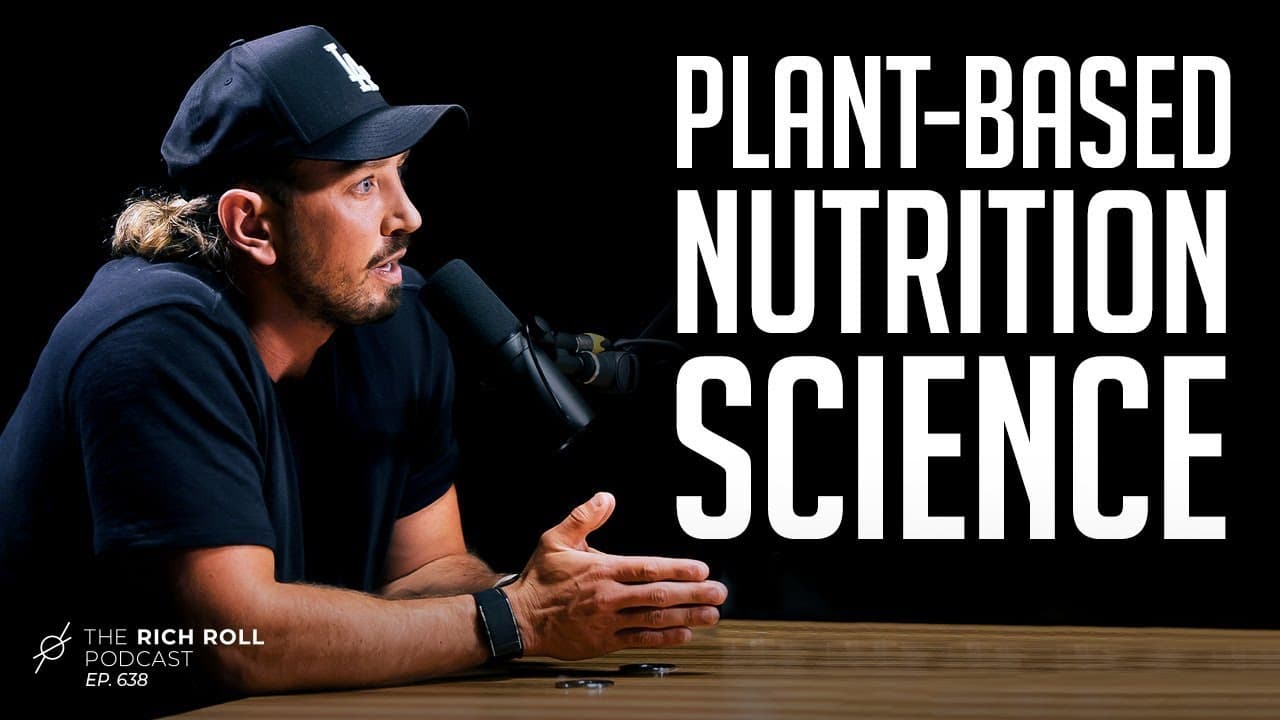
Plant-predominant eating is presented as the clearest evidence-based direction for supporting human and planetary health. Simon Hill recommends letting scientific data guide nutrition decisions, remaining open to changing conclusions, and resisting the absolute claims rewarded by social media, while focusing on practical dietary changes that may support performance, longevity, and disease prevention.
Transcript
(upbeat music) So, my approach with nutrition science has always been to let the science do the talking and be led by the data or be open to changing your mind. (upbeat music) Very few topics are more hotly debated than nutrition. It truly is right up there with politics and religion, but the irony is that in terms of the optimal diet that consider... Read More
Key Insights
- Science is a method for testing intuition and hypotheses, reducing uncertainty, and supporting decisions with greater confidence. Hill argues that nutrition guidance should follow the available data while remaining open to revision when stronger or different evidence changes what the science indicates.
- A plant-predominant diet is presented as the clearest nutritional direction when human health and planetary health are considered together. The conversation goes further by arguing that society should move toward eating patterns that are as plant-exclusive as possible, based on the scientific evidence discussed.
- Nutrition misinformation is a practical health problem because it can confuse and paralyze people who genuinely want to make better choices. The conversation connects that confusion with avoidable disease and calls for an evidence-based framework that separates supported conclusions from popular but misleading dietary claims.
- Social media algorithms reward absolute nutrition messages because those claims can reinforce one group’s identity while challenging another group’s identity. Hill says this engagement incentive helps push nuanced scientific discussion aside and contributes to the tribal, emotionally charged character of modern diet debates.
- Hill’s nutrition philosophy is data-led and non-absolutist, with conclusions treated as open to change rather than fixed by ideology. His stated goal is to communicate research objectively, translate the larger scientific picture, and help people make practical choices about health and the world around them.
- Hill’s father is a physiology professor with decades of academic research focused on how arteries function and dysfunction. His work examines mechanisms associated with type 2 diabetes and cardiovascular disease, giving Hill an early view of detailed scientific research and its importance.
- A serious health crisis can occur in someone who appears reasonably healthy and has no known diagnosis. Hill recalls his father experiencing severe chest pain at age 41 despite exercising, being in decent shape, taking no medication, and not relying on the healthcare system before the emergency.
- The conversation’s practical scope includes saturated fat, cholesterol, seed oils, environmental consequences, peak performance, disease prevention, and longevity. These subjects are framed as questions that should be addressed through scientific literature and actionable lifestyle changes, rather than through ideological allegiance to a dietary tribe.
Install to Summarize YouTube Videos and Get Transcripts
Explore YouTube Video Summarizer or Get YouTube Transcript Extractor
Questions & Answers
Q: Why does Simon Hill recommend a plant-predominant diet?
Simon Hill recommends moving toward a diet that is as plant-exclusive as possible because the scientific evidence discussed points in that direction when both human and planetary health are considered. His position is framed as evidence-led rather than ideological. He also connects plant-predominant eating with practical goals such as supporting health, promoting longevity, reducing avoidable disease, and living more consciously.
Q: How should people evaluate conflicting nutrition claims?
People should evaluate nutrition claims by letting scientific evidence guide their conclusions, using research to test intuition and reduce uncertainty. Hill emphasizes remaining open to changing one’s mind when the data changes. He also favors a calm, nuanced approach that distinguishes what science supports from what it does not, rather than accepting absolute claims driven by identity, ideology, or online engagement.
Q: Why are nutrition debates so polarized on social media?
Nutrition debates become polarized because social media algorithms often favor absolute messages that generate engagement. According to Hill, a categorical claim can reinforce the identity of people who already agree while triggering those on the opposing side. That dynamic rewards confrontation and certainty, causing nuanced scientific discussion to be lost even when careful interpretation is necessary for sound dietary decisions.
Q: What does science contribute to nutrition decisions?
Science provides a structured method for testing intuition and hypotheses, reducing uncertainty, and making decisions with greater confidence. Hill treats it as a tool for understanding the world rather than as a fixed ideology. In nutrition, this means following the available data, communicating conclusions as objectively as possible, and remaining willing to revise recommendations when the evidence supports a different interpretation.
Q: How does Simon Hill translate nutrition research into practical advice?
Hill focuses on the larger meaning of scientific findings for ordinary decisions. While detailed physiology research may examine mechanisms at a microscopic level, his work zooms out to ask what the evidence means for personal health and the surrounding world. His stated aim is to decipher scientific literature objectively and turn it into actionable, manageable diet and lifestyle choices.
Q: What health topics are addressed in the plant-based diet discussion?
The discussion covers saturated fat, cholesterol, seed oils, disease prevention, longevity, and strategies for performing at one’s peak. It also examines the environmental implications of food choices and the broader relationship between diet and planetary health. These subjects are presented as areas where scientific evidence should guide conclusions and help separate substantiated information from persistent nutrition myths.
Q: How did Simon Hill develop his respect for scientific evidence?
Hill developed an early appreciation for science through his father, who completed a doctorate in physiology and spent decades conducting academic research. Scientific papers filled their coffee table and car, showing Hill how seriously his father treated evidence. His father’s research examined arterial function and dysfunction, including processes associated with type 2 diabetes and cardiovascular disease.
Q: What did Simon Hill learn from his father’s health emergency?
Hill saw that serious health problems can emerge even when someone appears reasonably healthy and has no previous medical diagnosis. At age 41, his father developed chest pain, became pale and short of breath, and eventually needed emergency help despite exercising, being in decent shape, taking no medication, and showing no obvious dependence on healthcare beforehand.
Summary & Key Takeaways
-
Simon Hill describes nutrition science as a method for testing intuition, reducing uncertainty, and making decisions with greater confidence. His approach is to let evidence guide conclusions and remain willing to change his mind, especially in a field where identity, ideology, and social media incentives often replace nuance with absolute claims.
-
The conversation presents a diet that is as plant-exclusive as possible as the clearest direction when both human and planetary health are considered. Hill aims to translate scientific literature into practical choices, while the broader discussion addresses saturated fat, cholesterol, seed oils, environmental consequences, performance, disease prevention, and longevity.
-
Hill traces his respect for science to his father, a physiology professor whose research examined arterial function, type 2 diabetes, and cardiovascular disease. That scientific influence became personally urgent when his previously undiagnosed father experienced severe chest pain at age 41, exposing Hill to the sudden and frightening loss of health.
Read in Other Languages (beta)
Share This Summary 📚
Summarize YouTube Videos and Get Video Transcripts with 1-Click
Try YouTube Summary with ChatGPT & Claude or YouTube Transcript Generator
Explore More Summaries from Rich Roll 📚



Summarize YouTube Videos and Get Video Transcripts with 1-Click
Try YouTube Summary with ChatGPT & Claude or YouTube Transcript Generator