What Is Armoring and How Does Trauma Cause Body Tension?
TL;DR
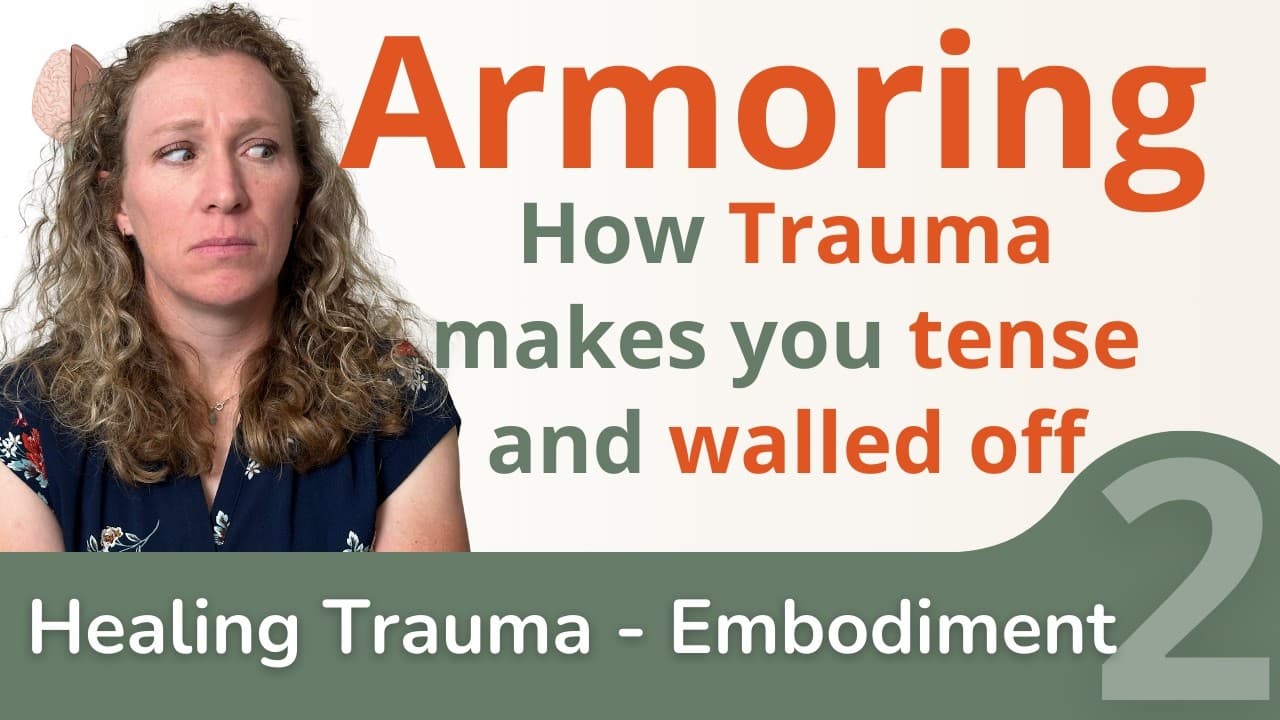
Armoring is the physical and emotional tension trauma survivors develop to protect themselves from danger, first described by somatic therapist Wilhelm Reich almost 100 years ago. It shows up physically as chronic muscle tension, emotionally as numbness or hyperindependence, and relationally as withdrawal or defensiveness. Gentle daily practices like mindfulness, breath work, yoga, and 5 to 10 minutes of stretching can slowly teach the body it is safe to let go.
Transcript
David Goggins was horrifically abused as a child by his father. He later became a Navy Seal and an ultra athlete who could run hundreds of miles through the desert, do push-ups or pull-ups for hours. And he's been a role model for millions on overcoming your mental limits and accomplishing more than you could ever imagine. But he had a problem.... Read More
Key Insights
- Armoring is the physical and emotional tension that survivors of trauma develop to protect themselves from danger. It was first described by somatic therapist Wilhelm Reich almost 100 years ago and is fueled by the fight, flight, freeze response.
- Chronic hypervigilance turns a temporary protective reflex into a habit. The brain and body get stuck in a feedback loop that leaves a person tight and tense without really noticing it, always ready to fight or run even when no threat is present.
- Armoring appears in three areas: physical, such as a tight jaw, shoulders, chest, gut, hunched posture, clenched fists and shallow breathing; emotional, such as numbness or dissociation; and relational, such as withdrawal, blame, and defensiveness.
- David Goggins reported extreme tightness in his psoas, hips, hamstrings, and lower back after years of running and weightlifting without recovery. He said his body was like cement, causing chronic pain, reduced mobility, and a number of injuries.
- Goggins described reaching a point about 6 years before the interview where he could not get out of bed, doctors could not identify the cause, and he had a lump on the back of his head from spinal compression plus lumps on his hip flexor area.
- Pete Walker, author of Complex PTSD: From Surviving to Thriving, grew up in an abusive and violent home and experienced full-body flinching around other swimmers at the public pool. He traced the startle response to frequent face slapping by his parents.
- Removing armor too fast can retraumatize rather than heal. A somatic practitioner working with a client who habitually clenched around a long-healed hernia injury saw uncontrolled jerking, backed off, and went slower until the body released the protective response.
- Stretching is presented as an essential somatic practice. Walker credited persistent practice with resolving decades-old back problems and with still being able to run, swim, and play basketball in his mid-60s, though he rarely enjoys the practice.
Install to Summarize YouTube Videos and Get Transcripts
Explore YouTube Video Summarizer or Get YouTube Transcript Extractor
Questions & Answers
Q: What is armoring in trauma recovery?
Armoring is the physical and emotional tension that survivors of trauma develop to protect themselves from danger. It was first described by somatic therapist Wilhelm Reich almost 100 years ago. When facing a physical threat such as being punched or hit, the body naturally tenses, a protective mechanism fueled by the fight, flight, freeze response. In a constant state of hypervigilance, that tensing becomes a habit, and the brain and body get stuck in a feedback loop that leaves a person feeling tight and tense without really noticing it.
Q: How does armoring show up in the body?
Physically, armoring appears as chronic muscle tension: a tight jaw, tight shoulders, chest, and gut. Posturally it shows up as a hunched stance, clenched fists, and tight, shallow breathing. Tension is especially noticeable in the back, the torso, and the neck muscles, and it can also produce headaches. Because the nervous system stays ready to fight or run away even when no threat is currently present, the body remains constantly tense rather than returning to a relaxed baseline after the danger has passed.
Q: What are the three areas where armoring appears?
Armoring appears physically, emotionally, and relationally. Physical armoring means chronic muscle tension, hunched posture, clenched fists, and shallow breathing. Emotional armoring can feel like numbness or dissociation, an inability to cry or feel anything, compulsive busyness, hyperindependence, or a stoic stance of not caring and letting things roll off. Relational armoring shows up as hyperindependence, always needing to do things alone, not trusting anyone, withdrawal, numbness toward others, isolating, blaming others, anger, and defensiveness, that is, any form of protecting yourself from caring or hurting.
Q: Why did David Goggins have so much body tension?
Years of running and weightlifting and pushing through pain without recovery had built up so much tension that he was breaking down physically. He said his body was extremely tight and locked up, especially his psoas, hips, hamstrings, and lower back, which caused chronic pain, reduced mobility, and a number of injuries. He described his body as being like cement. About 6 years before the interview he reached a point where he could not get out of bed, and doctors could not figure out what was wrong with him.
Q: Why does the body stay tense even when you know you are safe?
The tension has been a protective response applied to every situation, which makes it maladaptive or unhelpful. Even when a person knows they are safe or tries to relax, the body may reflexively tighten back up, as if the nervous system is saying it does not feel safe yet and the guard should stay up. This is why stopping the tension by decision alone tends not to work. Over time, though, the body can be gently taught that it is okay to let go.
Q: How should you start releasing armoring safely?
Go slowly, because ripping off the armor too fast can retraumatize rather than heal, and the body sometimes reacts to attempted removal by clenching. One example describes a client who had spent a long time clenching to protect a hernia injury. The injury healed long ago, but the body kept the subconscious clenching habit. When a somatic practitioner worked to soften those muscles, there was initially uncontrolled jerking and clenching, so the practitioner backed off and went slower until the body released the protective response.
Q: How much stretching is recommended for stored body tension?
For most people, practicing gentle stretches for 5 to 10 minutes a day might be enough to start softening stored body tension. David Goggins, who is an ultra athlete, stretches about 2 hours every day while watching a show, but that volume reflects his athletic demands rather than a general recommendation. Goggins hated stretching and resisted it for years, then said stretching saved his life because it helped him heal chronic injuries and illnesses, prevent further breakdown, and restore balance to an overloaded body.
Q: What did Pete Walker say about learning to stretch?
Walker said learning to stretch was a major ordeal because of his extreme body armoring. It was a task of self-nurturing that he resented intensely, and it took him a long time to adopt as a regular practice. He weathered many toxic shame attacks because he was the least flexible person in the group, and felt puzzled and further shamed when others said stretching felt good. Persistent practice gave results he could not discount, including resolution of decades-old back problems and the ability to run, swim, and play basketball in his mid-60s.
Q: How can you begin listening to your body's needs again?
You could start by setting a reminder on your phone to check in with your body a couple of times a day, asking what sensations you are experiencing. You might notice a small headache or tiredness, or that your body is asking for rest, food, or water. Many people with a history of trauma have built walls around their body's messaging, numbing or suppressing sensations that once felt too overwhelming, so the first step is learning to notice those needs and honor them.
Q: What role does mindfulness play in reducing armoring?
Mindfulness practice helps you learn to notice physical sensations or desires without immediately dismissing them or rushing to fill those needs. You notice the sensations in your body, observe them without judging them, get curious, and allow them to be there. You choose to be willing to feel them instead of struggling against them. This matters because protective habits, such as eating to numb out fear or stress, or deciding not to care about being loved, developed to avoid feelings that once had no safe outlet.
Q: What does the emotional work around armoring involve?
The emotional work is described as harder than the physical work, and is easiest with a good therapist, though it can be practiced on your own. Acknowledging the shame you may feel for having emotions is probably the first step. Many people with CPTSD have been punished for crying, for speaking up, or for feeling sad, hurt, or angry, and they feel ashamed and weak after having been told they are the problem. Letting yourself feel emotions requires letting go of the armor.
Q: Why is armoring described as harmful if it once helped?
Pete Walker said the armoring helped survivors get through intolerable emotional pain in childhood, but what once protected them now traps them, blocking connection, pleasure, and vitality. Chronic armoring, being tense, tight, and guarded, is not helpful in the long run because the protective response gets applied to every situation rather than only to genuine threats. Walker added that the freeze response can be slowly disarmed so a person feels safe enough in their body to begin to grieve and unthaw what has been frozen.
Summary & Key Takeaways
-
Armoring is the reflexive tightening response the body develops when facing fear, abandonment, and terror. Somatic therapist Wilhelm Reich first described it almost 100 years ago. Tensing is a normal protective mechanism during physical threat, but constant hypervigilance turns it into a habit, and the brain and body get locked in a feedback loop of unnoticed tension.
-
The pattern shows up in three areas. Physically it appears as chronic muscle tension in the jaw, shoulders, chest, gut, back, torso and neck, hunched posture, clenched fists, and shallow breathing. Emotionally it looks like numbness, dissociation, compulsive busyness, hyperindependence, or stoicism. Relationally it shows as withdrawal, isolation, blame, anger, and defensiveness.
-
David Goggins and Pete Walker both illustrate the cost. Goggins built up so much tension from years of pushing through pain without recovery that his body felt like cement and he could not get out of bed. Walker flinched around other swimmers at the pool. Walker notes armoring helped survive childhood pain but now blocks connection, pleasure, and vitality.
-
Recovery starts slowly, because ripping off the armor too fast can retraumatize. Practical steps include setting a phone reminder to check in with body sensations a couple of times a day, mindfulness that observes sensations without judgment, and somatic work such as breath work, yoga, and stretching for 5 to 10 minutes a day for most people.
-
The emotional work involves acknowledging the shame many people with CPTSD feel about having emotions at all, after being punished for crying, speaking up, or feeling sad, hurt, or angry. Letting yourself feel requires dropping the armor. The goal of body work is not a milestone but daily, present, non-judgmental practice with whatever sensations arise.
Read in Other Languages (beta)
Share This Summary 📚
Summarize YouTube Videos and Get Video Transcripts with 1-Click
Try YouTube Summary with ChatGPT & Claude or YouTube Transcript Generator
Explore More Summaries from Therapy in a Nutshell 📚




Summarize YouTube Videos and Get Video Transcripts with 1-Click
Try YouTube Summary with ChatGPT & Claude or YouTube Transcript Generator