How to Share Private AI Skills Across Repositories
TL;DR
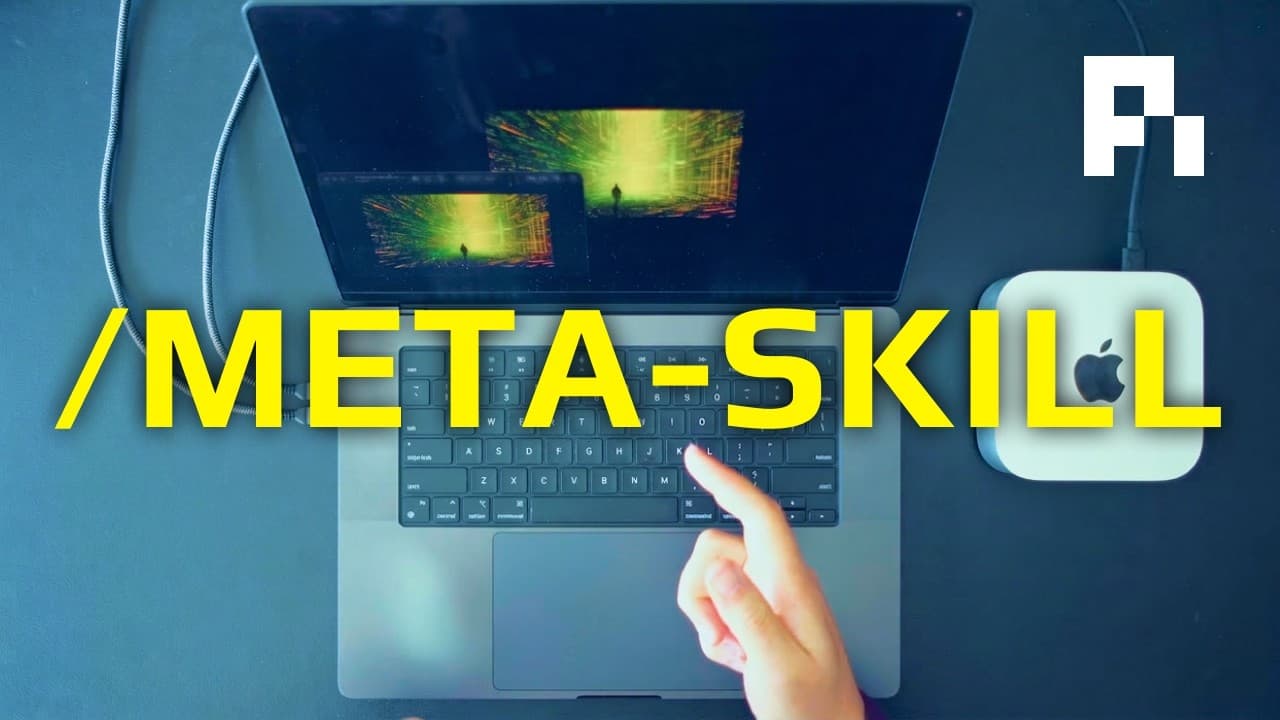
Use a library meta-skill and a single YAML catalog to reference private skills, agents, and prompts stored in GitHub repositories or local paths. The workflow is to build assets inside their original repositories, catalog them, distribute them to authorized environments, and sync the underlying repositories so every device, teammate, and agent can access current versions without repeated copying.
Transcript
What's up engineers? Indie Dev Dan here. As you go from base agents to better agents to more agents to custom agents all the way up to orchestrator agents and even give your agents their own devices to operate, you'll quickly approach a problem. Where did you put that notion CLI skill? Where did you put that cracked review agent? Where is your new ... Read More
Key Insights
- The library is a meta-skill that unlocks access to other skills, agents, and prompts through a shared catalog. It is intended for engineers managing specialized agentic assets across many repositories, devices, teammates, or agent environments rather than developers working in only one or two repositories.
- The central problem is uncontrolled duplication of agentic assets. Copying deploy skills, prompts, or agent definitions between repositories creates disconnected versions that become outdated and difficult to coordinate, especially when several developers and their agents work across the same collection of codebases.
- The catalog is a single YAML file that functions like a reference manifest. It stores pointers to existing GitHub repositories or local files instead of containing the full skills, agents, and prompts, allowing those assets to remain in the repositories where they are originally developed.
- The workflow is build, catalog, distribute, and use. Developers first create assets within value-generating repositories, register their locations with the library add command, distribute the catalog to authorized environments, and then retrieve or invoke those assets wherever they are needed.
- The library API supports adding, using, updating, listing, searching, and syncing catalog entries. These operations provide a consistent interface for discovering assets and returning improvements to their source repositories while maintaining a coordinated reference point for the engineering team.
- The sync operation updates more than the catalog itself. It also synchronizes referenced codebases so participating devices and environments can obtain current asset versions, reducing the version drift caused by manually copied files that no longer track their original sources.
- Private GitHub repositories are central to distributing specialized internal tooling. The approach assumes that agents, devices, and team members already have appropriate access to the team’s private repositories, while also permitting references to public repositories and local file paths when appropriate.
- Skills, agents, and prompts serve different roles in the proposed agentic stack. Skills provide raw capabilities, agents provide scale and parallelism, and one-off prompt files orchestrate those lower layers, so developers do not need to place every responsibility inside a single oversized skill.
Install to Summarize YouTube Videos and Get Transcripts
Explore YouTube Video Summarizer or Get YouTube Transcript Extractor
Questions & Answers
Q: How can teams share private AI skills across repositories?
Teams can maintain a shared YAML catalog that references each skill’s source repository or local path. An authorized developer or agent uses the library meta-skill to add, find, retrieve, and sync those references. Because the files remain in their original repositories, teams can distribute access without repeatedly copying implementations into every codebase and creating disconnected versions.
Q: What problem does a library meta-skill solve?
A library meta-skill solves duplication, poor discoverability, and version drift among skills, agents, and prompts spread across many codebases. Instead of asking where a particular asset was copied or which version is current, developers, coworkers, and agents consult one catalog that points to the original source and supports coordinated retrieval and synchronization.
Q: What information does the library YAML file store?
The YAML file stores organized references for skills, agents, and prompts. Those references can point to private GitHub repositories, public repositories, or local file paths. It does not need to contain the actual asset implementations. Its purpose is to provide a compact, shared catalog that tells authorized users and agents where each reusable capability is maintained.
Q: How does the build, catalog, distribute, and use workflow work?
The workflow begins by building a skill, agent, or prompt inside the repository where it provides value. The developer then catalogs its source with the library add command. The shared catalog can be distributed to authorized teammates, agents, devices, or cloud environments. Those environments use the reference to access the asset and synchronize its current source when required.
Q: Why should agentic assets remain in their original repositories?
Keeping agentic assets in their original repositories avoids interrupting the development flow in the codebases where those assets are created and refined. The library records pointers rather than relocating the implementations. This arrangement gives teams centralized discovery and distribution while preserving the source repository as the place where updates are made and maintained.
Q: How does syncing differ from copying skills between projects?
Copying creates an independent file that can quickly become outdated because it no longer follows changes in the source repository. The library’s sync operation updates the referenced codebases, not just the central catalog. As a result, authorized environments can retrieve the latest available source rather than accumulating unrelated copies whose changes are difficult to reconcile.
Q: When is a private agentic library worth adopting?
A private agentic library is most relevant when engineers manage specialized skills, agents, and prompts across ten or more codebases, multiple devices, several teammates, or multiple agent environments. The transcript says it is unnecessary for engineers working in only one or two repositories, where agentic files can remain together without creating a serious coordination problem.
Q: What roles do skills, agents, and prompts play in the library?
Skills represent raw capabilities, agents provide scale and parallel execution, and single-file prompts can orchestrate those capabilities and agents. The library catalogs all three categories so they can be found and reused together. This separation also discourages developers from placing an entire workflow inside one skill when other agentic primitives can handle orchestration or parallelism.
Summary & Key Takeaways
-
The library addresses duplication and version drift when specialized skills, agents, and prompts are copied among many repositories. A central YAML catalog records references to their source locations, creating one shared access point without requiring developers to relocate assets from the repositories where they naturally build and improve them.
-
The proposed workflow has four stages: build, catalog, distribute, and use. Developers create agentic assets within value-generating repositories, add their references through the library command, and make the catalog available to authorized devices, teammates, and agents. This preserves the original development flow while enabling reuse across environments.
-
The library supports references to private GitHub repositories, public repositories, and local file paths. Its commands can add, use, update, list, search, and sync catalog items. Syncing covers the referenced codebases, not merely the YAML catalog, helping each authorized environment retrieve the latest available versions of its selected assets.
Read in Other Languages (beta)
Share This Summary 📚
Summarize YouTube Videos and Get Video Transcripts with 1-Click
Try YouTube Summary with ChatGPT & Claude or YouTube Transcript Generator
Explore More Summaries from IndyDevDan 📚
Summarize YouTube Videos and Get Video Transcripts with 1-Click
Try YouTube Summary with ChatGPT & Claude or YouTube Transcript Generator