How to Train Your Back With Dorian Yates' Form
TL;DR
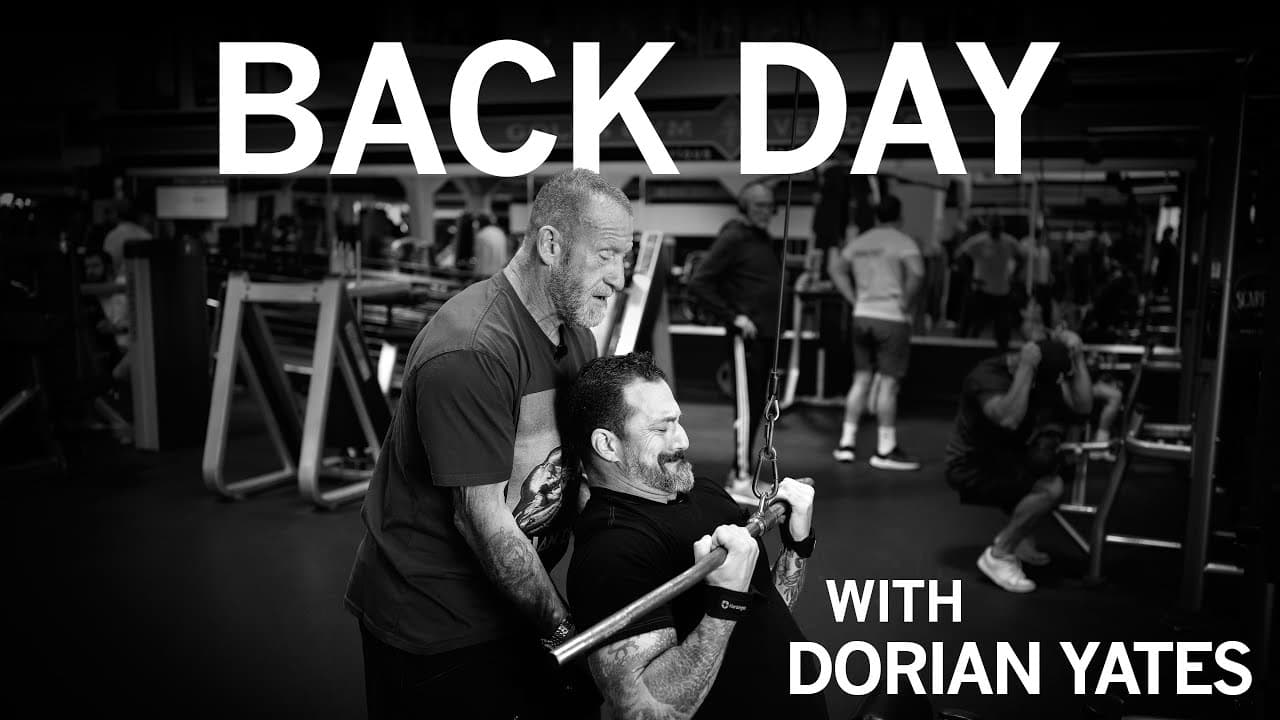
Train the lats by moving the upper arms down and back, controlling every repetition, and returning immediately after reaching a full stretch. Dorian Yates begins with pullovers to isolate and pre-exhaust the lats, then uses underhand pulldowns and one-arm dumbbell rows, emphasizing precise body position, strong contractions, slow negatives, steady breathing, and sufficient rest between sides.
Transcript
(upbeat music) Today, we're training at Gold's Gym, Venice, California, with six-time consecutive Mr. Olympia winner, the Dorian Yates. And today is back day. We're gonna hit the whole back. We're gonna start with the emphasis on the lats, let's say. So, it's to bring the upper arm down and back actually. That's the movement of the lats. So, it cou... Read More
Key Insights
- The primary movement of the lats is bringing the upper arm down and back relative to the torso. Yates applies this principle across pullovers, pulldowns, and dumbbell rows, using elbow direction and body position to keep the intended region of the back involved.
- The pullover machine isolates the lats because the movement does not depend on the biceps. Yates places it first to pre-exhaust the lats, making their contractions easier to feel when compound pulling exercises later introduce assistance from the forearms and biceps.
- Controlled repetitions tax more than the lifting phase alone. Yates instructs Huberman to drive the weight through the positive phase, pause in the contracted position, and slow the negative phase because the body remains stronger while resisting the returning load.
- A full stretch should lead directly into the next contraction. Yates warns against lingering at the top of the pullover, instead cueing an immediate return once the stretch is felt so the repetition remains controlled and tension stays focused on the working muscles.
- Steady breathing supports proper execution during demanding sets. Yates tells Huberman to breathe in as the pullover rises and breathe out as it comes down, specifically cautioning him not to hold his breath while maintaining the prescribed cadence.
- Pre-exhaustion makes subsequent pulldowns more effective at targeting the lats. After the pullover sets, Huberman reports feeling the contraction more clearly during close-grip underhand pulldowns, particularly through the lower portion of the lats.
- Dumbbell-row direction determines which back muscles receive greater emphasis. Pulling the weight up and back toward the hip supports lat involvement, while pulling more vertically encourages greater contribution from the upper back, including the trapezius region.
- Rest between unilateral dumbbell-row sets protects performance on the second side. Yates treats each arm as a separate set because moving immediately from one side to the other can leave breathing too elevated and cause the second side to suffer.
Install to Summarize YouTube Videos and Get Transcripts
Explore YouTube Video Summarizer or Get YouTube Transcript Extractor
Questions & Answers
Q: How should the lats move during back exercises?
The lats should move the upper arm down and back relative to the torso. Dorian Yates uses this same mechanical idea for pullovers, pulldowns, and dumbbell rows. The exact body orientation can change, but the intended upper-arm path remains consistent. Thinking about driving the elbow in that direction helps maintain the desired contraction instead of turning the exercise into a primarily upper-back movement.
Q: Why should pullovers come before compound back exercises?
Pullovers come first because the pullover machine isolates the lats without relying on the biceps. This pre-exhausts the target muscles before compound pulling movements bring in the forearms and biceps. As a result, the already-fatigued lats are easier to feel during the next exercise. Huberman notices this effect when he performs close-grip underhand pulldowns after completing the pullover work.
Q: How do you perform a pullover with Dorian Yates' technique?
Place the upper arms against the machine pads and push through them rather than focusing on the hands. Rise under control until a lat stretch is felt, then return immediately without resting in the stretched position. Drive down strongly, pause and squeeze at the bottom, and control the upward phase slowly. Breathe in while rising and breathe out while pressing down.
Q: Why should the negative phase of a back exercise be slow?
The negative phase should be slow because Yates says the body is stronger while resisting the returning weight than during the mechanically weaker positive phase. Controlling the negative therefore taxes a part of the repetition that would be wasted if the weight simply swung back. His cadence combines a forceful positive, a static contraction, and a deliberate negative to make the full repetition productive.
Q: How should close-grip underhand pulldowns be performed?
Use a close underhand grip, position yourself so the handle can travel toward the chest, and pull through a full contraction without leaning so far back that the emphasis shifts. Return the weight slowly, following the same controlled cadence used during pullovers. Proper positioning beneath the machine should allow the elbows to travel effectively and help the lats contract through the complete movement.
Q: How can dumbbell rows target the lats instead of the upper back?
Set the supporting position so the dumbbell can travel up and back toward the hip. Yates explains that placing the weight too far forward forces a more vertical pull, which emphasizes the upper back. Directing the elbow backward and keeping the intended body position allows the contraction to extend lower through the lat rather than remaining around the scapular and trapezius region.
Q: Should you rest between sides during one-arm dumbbell rows?
Yes, Yates recommends treating the two sides as separate sets, especially when the weight becomes heavy. Moving directly from one arm to the other can leave breathing too elevated after the first side. That fatigue may reduce the quality and strength of the second side. A short recovery helps each arm receive a focused effort with consistent positioning and execution.
Q: What are the most important form cues for back training?
The main cues are to establish the correct body position, move the upper arm in the intended direction, achieve a full contraction, and control the return. For lat-focused work, drive the upper arm or elbow down and back. Avoid swinging, lingering in the stretched position, or letting the negative phase collapse. Continue breathing and adjust the setup when joint position prevents complete movement.
Summary & Key Takeaways
-
Dorian Yates begins the back session with a pullover machine because it isolates the lats without significant biceps involvement. He teaches Andrew Huberman to press through the upper arms, pause at the contracted position, control the upward phase, breathe continuously, and reverse direction immediately after reaching a comfortable full stretch.
-
After pre-exhausting the lats, Yates moves to close-grip underhand pulldowns toward the chest. Huberman can feel the lower lats more clearly because they are already fatigued. Yates emphasizes a full contraction, an appropriate position beneath the machine, forceful pulling, and a deliberately slower return during demanding repetitions near muscular failure.
-
Yates then teaches one-arm dumbbell rows as a more skilled free-weight movement. The dumbbell travels up and back toward the hip to emphasize the lats, while pulling vertically shifts more work toward the upper back. Each side is treated separately, with rest between them so heavy breathing does not impair performance.
Read in Other Languages (beta)
Share This Summary 📚
Summarize YouTube Videos and Get Video Transcripts with 1-Click
Try YouTube Summary with ChatGPT & Claude or YouTube Transcript Generator
Explore More Summaries from Huberman Lab Clips 📚

Summarize YouTube Videos and Get Video Transcripts with 1-Click
Try YouTube Summary with ChatGPT & Claude or YouTube Transcript Generator